Fatigue is one of the most common complaints I hear from patients on semaglutide or tirzepatide, especially during the first few months. It is also one of the most fixable, but only if you look at the right things in the right order. Most patients blame the dose first. The dose is rarely the actual problem.

GLP-1 Skin + WeightMay 18, 2026 · 10 min read
Why You're Tired on a GLP-1: Causes, Fixes, and When to Look Deeper

Dr. Brandon Kirsch, MD, FAAD
Chief Medical Officer
Here is the version of this conversation I would have if you walked into my clinic tired on week eight.
The Protein Math First
The single most common cause of GLP-1 fatigue in my practice is undereating protein. The appetite suppression is doing its job. You are eating less. The problem is that "less" turned into "less of everything," not "less of the calories I do not need." Protein went down with everything else, and fatigue followed.
Here is the rough target. The general rule on a weight-loss GLP-1 is 0.7 to 0.8 grams of protein per pound of goal body weight. A 200-pound patient with a goal of 170 would target 120 to 135 grams. A 130-pound patient with a goal of 125 would target around 90. At 5'4" and 158 pounds on 1,200 to 1,400 calories per day, the target lands somewhere between 100 and 110 grams of protein daily to avoid the fatigue spiral. That is more than most people eat when their appetite is suppressed. It does not happen by accident. It requires intention.
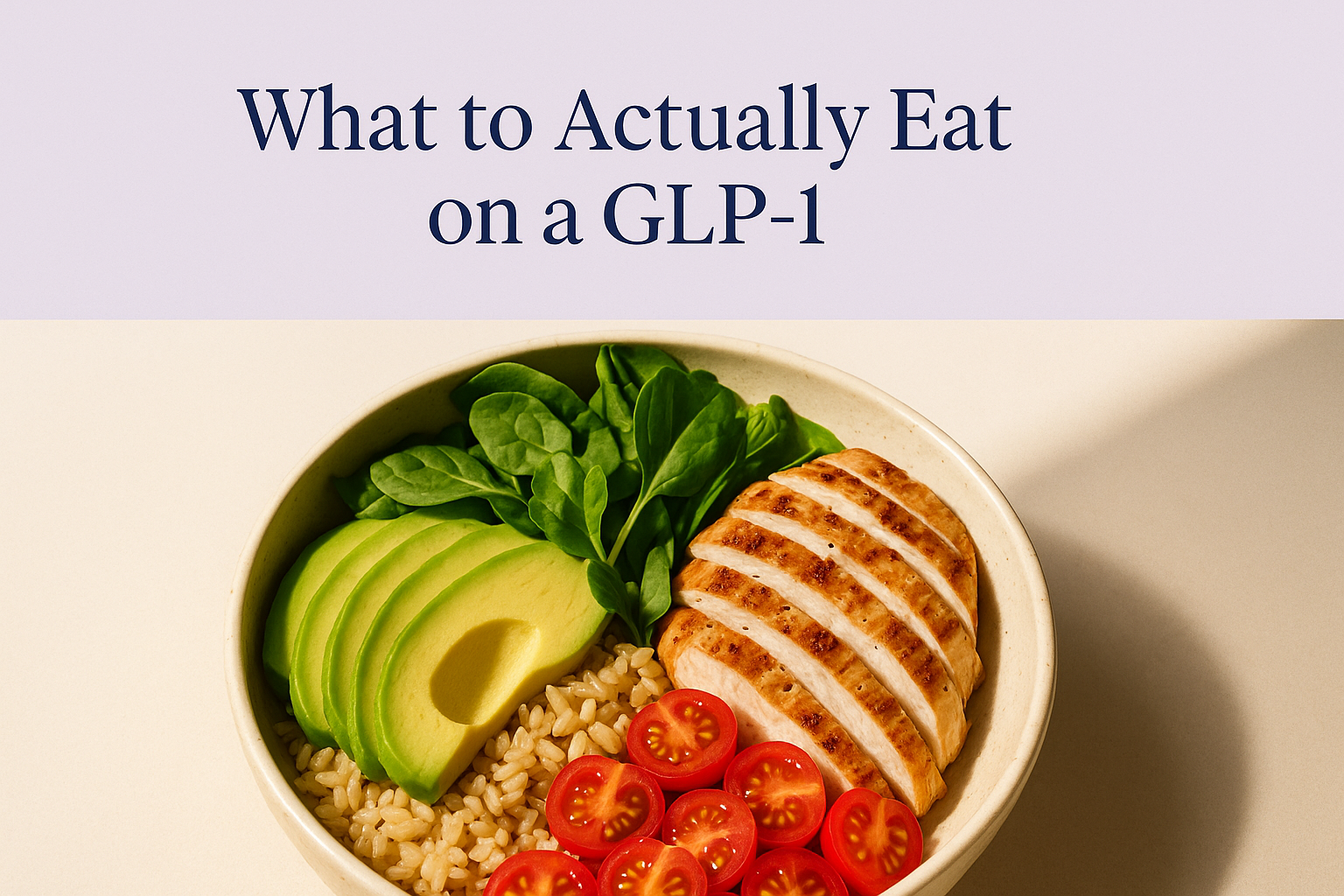
In practice, hitting 100 grams looks like this. A Greek yogurt or two eggs at breakfast (20 to 25 grams). Six ounces of chicken or fish at lunch (30 to 40 grams). A protein shake or cottage cheese in the afternoon (20 to 25 grams). Another lean protein at dinner (25 to 30 grams). The math adds up if you pay attention. It does not add up if you let the GLP-1 decide the menu. And watch your total intake, not just protein: if appetite suppression has pushed you below roughly 1,000 to 1,200 calories a day for more than a few days, that degree of undernutrition is itself a driver of fatigue, hair shedding, and muscle loss, and it is a reason to slow the pace with your prescriber rather than push through.
Our piece on what to eat on a GLP-1 walks through specific food choices that hit those numbers reliably.
Iron Is the Silent Crash
The second cause I think about, particularly in menstruating women, is iron deficiency. Iron supports oxygen delivery to every tissue in the body, including muscle and brain. Low iron presents as fatigue that does not respond to sleep, exercise intolerance, brain fog, and sometimes hair shedding. It is one of the most common causes of fatigue in any context. It is more common during rapid weight loss because the patient is eating less iron-rich food (red meat, dark leafy greens, beans) and absorbing less of what they do eat.
The labs worth asking for, if fatigue persists after you fix the protein, are ferritin, a complete blood count, thyroid stimulating hormone, vitamin B12, and a comprehensive metabolic panel. Ferritin is the most informative single lab for iron status. The target above 50 ng/mL is generally where I want my patients to land for energy and hair, even though the technical "normal" range starts much lower.
B12 is worth checking because reduced food intake on a GLP-1, particularly reduced animal protein, can lower B12. So can chronic proton-pump inhibitor or metformin use. Low B12 presents as fatigue, brain fog, and occasionally hair changes. Hypoglycemia is rare in non-diabetics on a GLP-1, but it can happen with very low caloric intake or skipped meals. Lightheadedness, shakiness, or sweating between meals that resolves with eating is the pattern to watch.
The CBC shows you whether you are frankly anemic. The TSH catches subclinical hypothyroidism, which is another common fatigue driver and which sometimes worsens during rapid weight loss because thyroid function adapts to lower caloric intake. The CMP confirms kidney and liver function and screens for electrolyte issues.
Yes, the Medication Itself Can Cause Fatigue
Once protein and iron are addressed, the medication itself is on the list. Fatigue appears on the semaglutide FDA label at roughly 11 percent, which is more than placebo and more than most patients expect. The mechanism is partly the caloric deficit (any rapid weight loss can cause fatigue) and partly direct CNS effects of GLP-1 signaling. Tirzepatide carries a similar fatigue rate.
For most patients, this fatigue is most pronounced in the first few weeks at a new dose level and improves as the body adjusts. If you are five or six weeks into a stable dose and the fatigue has not improved, it is reasonable to consider whether a slower titration is right for you. Holding the current dose for an extra four weeks before stepping up, or dropping back one step if the fatigue started after a dose increase, is a reasonable move with your prescriber.
Dehydration is also a contributor that often gets missed. GLP-1 medications blunt the thirst signal itself, so most patients underdrink without realizing it. Aim for 64 to 80 ounces of water per day spread across the day on a schedule rather than waiting until you feel thirsty, with some sodium if you are losing weight rapidly. Patients who add a daily electrolyte packet (LMNT, Pedialyte, or similar) often notice the fatigue lifts within a few days.
Two to three short resistance-training sessions per week are also one of the more reliable interventions for sustained energy after the first month. Even bodyweight or band work counts. Preserving lean muscle protects metabolic rate and supports stable energy throughout the day.
Sleep Is Half the Story
One thing patients consistently underweight in the fatigue conversation is sleep. GLP-1 medications can affect sleep in a couple of ways. Some patients experience nighttime reflux or nausea that fragments sleep without fully waking them up. Others find their sleep architecture shifts as their body weight changes. And rapid weight loss in general is associated with sleep apnea improvement, which is good, but the sleep can take weeks to feel restored.
If you are sleeping fewer than seven hours, or if you snore loudly, gasp, or wake up unrefreshed even after eight hours, sleep apnea is worth screening for. A primary care visit can start that conversation. A home sleep study is non-invasive and increasingly common.
What Most Telehealth Programs Miss
The GLP-1-only telehealth platforms tend to treat fatigue as a low-priority complaint. The standard response is some variant of "give it time" or "drink more water." That is sometimes the right answer. But it is the right answer only after you have ruled out the fixable causes, which most of those platforms are not set up to help you do.
A clinician-led program should look at protein intake, ask about iron-related symptoms, and order or help you order the basic workup if the fatigue persists. That is what good follow-up looks like for any weight management program, and it matters more on a GLP-1 because the appetite suppression makes it easier to undereat the things that prevent fatigue in the first place.
For the broader view on what is normal versus what is not in the first three months of therapy, see our first three months piece. For more on supplements that might help (and the ones that mostly will not), see the vitamins article.
Bottom Line
Before blaming the dose, run through the checklist. Protein at 100 grams or more per day. Ferritin, CBC, TSH, and CMP if fatigue persists. Hydration with sodium. Sleep at seven hours or more. The fatigue is real and on the label at around 11 percent for semaglutide, but most of the fatigue I see in my practice has a fixable cause that is not the medication itself.
Important Information
Compounded medications are prepared by accredited US compounding pharmacies under a licensed prescriber and are not FDA-approved drug products in the way that brand-name medications such as Wegovy, Ozempic, Mounjaro, and Zepbound are. Persistent or severe fatigue can have many causes and warrants medical evaluation. Lab work referenced in this article is for diagnostic workup of symptoms and should be ordered through a licensed clinician. GLP-1 medications carry possible side effects including nausea, fatigue, constipation, gallbladder issues, pancreatitis risk, and temporary hair shedding. GLP-1 therapy requires evaluation and prescription by a licensed clinician. This article is educational and is not medical advice.
Sources
- US Food and Drug Administration labeling for semaglutide (Wegovy, Ozempic) and tirzepatide (Zepbound, Mounjaro).
- STEP-1: Wilding JPH, et al. Once-weekly semaglutide in adults with overweight or obesity. N Engl J Med. 2021;384(11):989-1002.
- Camaschella C. Iron-deficiency anemia. N Engl J Med. 2015;372(19):1832-1843.
- Phillips SM, et al. Protein requirements beyond the RDA. Appl Physiol Nutr Metab. 2016;41(5):565-572.
- American Academy of Sleep Medicine clinical practice guidelines on adult obstructive sleep apnea.