
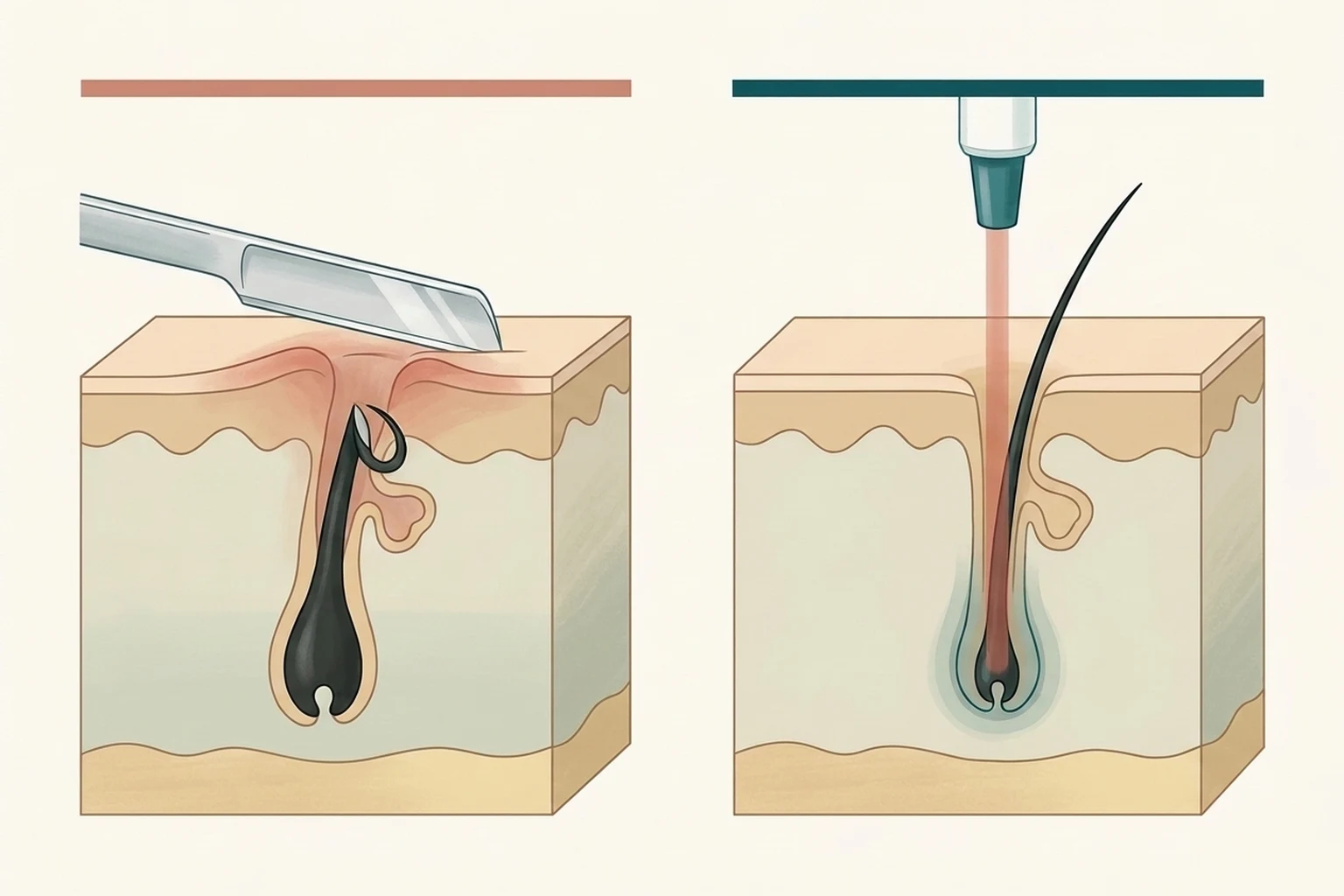
Artificial intelligence-generated image. Not an actual patient or treatment result.
Laser Hair Removal, Shaving, Sweat, Exercise, and Smoking: Cutting Everyday Hidradenitis Suppurativa Triggers

Chief Medical Officer
Hidradenitis suppurativa (HS) starts inside plugged hair follicles subjected to heat, sweat, and skin-on-skin friction, so reducing follicle density with 1,064 nm laser hair removal and eliminating close razor trauma are two of the highest-return everyday upgrades you can make (Tierney 2009; Naik 2026). Small mechanical changes in the bathroom, gym bag, and wardrobe prevent dozens of avoidable flares each year while medical therapy works underneath.
In this article
Why does 1,064 nm laser hair removal reduce hidradenitis suppurativa flares?
HS is not a sweat-gland infection; it begins when hair-follicle units plug, swell, and rupture inside warm skin folds. Permanently shrinking and thinning terminal hair follicles removes the physical trigger chamber where new nodules start.
Two landmark Henry Ford Hospital clinical trials proved how well the long-pulsed 1,064 nm neodymium-doped yttrium aluminum garnet (Nd:YAG) laser works for HS:
- Prospective randomized controlled trial (22 patients, Hurley Stage 2 and Stage 3): after 3 monthly Nd:YAG laser sessions, overall HS severity dropped 65.3% across treated anatomic zones (73.4% in the groin, 62.0% in the underarms, and 53.1% in the under-breast folds), while untreated control sides did not improve significantly (Tierney 2009).
- Controlled clinical and biopsy trial (19 Stage 2 patients): after 2 monthly Nd:YAG sessions, severity dropped 31.6% overall (36.8% groin, 24.4% underarms), and serial biopsies showed deep follicular destruction and calmed dermal inflammation by months 1 and 2 (Xu 2011).
Specific procedural interventions (including laser hair removal for appropriate patients) hold conditional support in the October 20, 2026 joint American Academy of Dermatology (AAD) and Hidradenitis Suppurativa Foundation (HSF) guidelines (Naik 2026). Expect brief transient inflammation during the first week after early sessions before the treated fold calms down (Xu 2011), and plan a full series of 4 to 6 monthly sessions for durable hair reduction.
Is laser hair removal safe for darker skin tones and can insurance cover it?
Safety across skin complexions depends entirely on the wavelength of the laser machine:
- Choose a true 1,064 nm Nd:YAG laser for medium-to-deep skin tones: the 1,064 nm wavelength bypasses surface epidermal melanin to heat the deep hair bulb safely. Xu 2011 specifically enrolled patients across Fitzpatrick skin types II through VI with strong efficacy and safety (Xu 2011). Skip bargain intense pulsed light (IPL) deals on darker skin tones, which risk surface burns and dark post-inflammatory patches.
- Medical dermatology clinic versus spa chains: active or recently scarred HS skin should be lasered by a dermatology clinic familiar with HS, not a cosmetic mall spa that may turn away anyone with active bumps or misuse energy settings.
- Insurance reality: most commercial United States insurers still reflexively label laser hair removal "cosmetic," so many patients end up paying out of pocket. Still, some academic dermatology clinics win medical-necessity exceptions by submitting your L73.2 diagnosis code, prior antibiotic and biologic records, Tierney 2009 / Xu 2011 trial citations, and an appeal letter explaining that follicular destruction is medical HS disease prevention rather than cosmetic grooming.
What should you do instead of close shaving or waxing in hidradenitis suppurativa folds?
If laser hair removal is not in the budget right now, changing how you groom at home still eliminates one of the top preventable flare triggers:
| Hair Removal Method | Effect on HS-Prone Follicles | Dermatologist Verdict |
|---|---|---|
| Long-pulsed 1,064 nm Nd:YAG laser | Permanently thins follicular units and lowers flare density across folds (Tierney 2009) | Best long-term medical upgrade (safe across skin types II to VI; Xu 2011) |
| Electric trimmer with short guard (1 to 3 mm above skin) | Keeps hair tidy without cutting below the skin surface or nicking tender bumps | Safest daily at-home method (disinfect trimmer head with rubbing alcohol after use) |
| Multi-blade razor shaving | Creates sharp beveled hair tips that curl back into plugged follicles and slices microscopic skin nicks | Avoid in active HS zones (top preventable trigger) |
| Waxing, epilators, and chemical depilatories | Violently traumatizes deep follicles or chemically burns thin intertriginous skin | Avoid completely in HS-prone folds |
How can you exercise, sweat, and swim without triggering a hidradenitis suppurativa flare?
Staying active improves insulin sensitivity, mood, sleep, and cardiovascular health (all major allies in HS), yet patients frequently quit exercising after one painful inner-thigh friction flare. Cross-sectional research from University of North Carolina (UNC) HS specialist Christopher Sayed and Rayad Shams highlights heat, sweating, and friction among patient-reported exacerbating factors (Shams 2024). Five practical adjustments keep movement comfortable:
- Eliminate seam shear before you sweat: wear smooth, flat-seam moisture-wicking compression-style biker shorts (whose hems end mid-thigh, far below the groin crease) under loose athletic wear, and swap tight narrow-strap sports bras for wide, soft, wire-free bands.
- Shield intact rubbing zones beforehand: dab a thin layer of plain petroleum jelly, silicone anti-chafe balm, or zinc oxide barrier ointment onto intact inner-thigh skin before walking or running so damp fabric glides instead of sawing.
- Rinse and dry within 15 minutes of finishing: never sit around in damp gym leggings or sweaty underwear. Hop into a brief lukewarm shower (or use gentle fragrance-free rinse wipes if away from home), change into dry breathable cotton immediately, and dry folds thoroughly with cool air.
- Modify workouts during active groin or underarm flares: swap heavy cycling seats (direct perineal pressure) or aggressive overhead pressing during a throbbing flare for gentle walking, lower-friction strength work, or restorative stretching until the bump settles.
- Swimming pool and beach sanity check: chlorinated pool water is generally well tolerated on intact or mildly scarred skin (similar in principle to mild diluted sodium hypochlorite), as long as you cover any open draining spot cleanly with a waterproof silicone foam border (or skip public water until deep open holes close), rinse chlorine off promptly afterward, and get out of wet swimsuits right away.
How does tobacco smoking change hidradenitis suppurativa patterns and quitting help?
Nicotine and cigarette smoke directly promote follicular keratin plugging, impair wound oxygen delivery, and amplify inflammatory immune signals around apocrine glands. Recent 2026 research from UNC dermatology researchers Teja Mallela and Christopher Sayed demonstrates that tobacco smoking is linked with specific clinical HS phenotypes (Mallela 2026).
The October 20, 2026 joint guidelines issue a conditional recommendation for tobacco cessation (Naik 2026). Two compassionate reminders matter here:
- Quitting helps long-term control, though HS is still an immune disease: some lifelong non-smokers still get severe HS, and quitting smoking does not erase existing scar tunnels overnight, so never let anyone lecture you or withhold medical treatment or clinic deroofing surgery simply because you smoke.
- Use real medical cessation tools rather than willpower alone: nicotine replacement patches, lozenges, prescription varenicline or bupropion, and state quitlines (1-800-QUIT-NOW) double or triple quit rates compared with cold turkey.
Important Information
This article is educational and is not personal medical advice. Laser hair removal settings must be individualized by a qualified licensed clinician based on skin tone, active inflammation, and medications (including photosensitizing oral antibiotics such as doxycycline). Never swim in shared pools, hot tubs, or natural bodies of water with large open, actively draining surgical or abscess wounds without clinician clearance. Discuss smoking-cessation medications with your primary-care clinician.
Sources
- Tierney E, Mahmoud BH, Hexsel C, Ozog D, Hamzavi I. Randomized control trial for the treatment of hidradenitis suppurativa with a neodymium-doped yttrium aluminium garnet laser. Dermatologic Surgery 2009.
- Xu LY, Wright DR, Mahmoud BH, Ozog DM, Mehregan DA, Hamzavi IH. Histopathologic study of hidradenitis suppurativa following long-pulsed 1064-nm Nd:YAG laser treatment. Archives of Dermatology 2011.
- Naik HB, Yeung H, Frazer-Green L, et al. Joint American Academy of Dermatology-Hidradenitis Suppurativa Foundation guidelines of care for the management of hidradenitis suppurativa. Journal of the American Academy of Dermatology 2026.
- Mallela T, Sayed C. Smoking Tobacco Is Associated With Specific Phenotypes of Hidradenitis Suppurativa. International Journal of Dermatology 2026.
- Shams RB, Sayed CJ. Patient-reported exacerbating factors for hidradenitis suppurativa: A cross sectional study. Journal of the American Academy of Dermatology 2024.
Related Articles
Hidradenitis Suppurativa
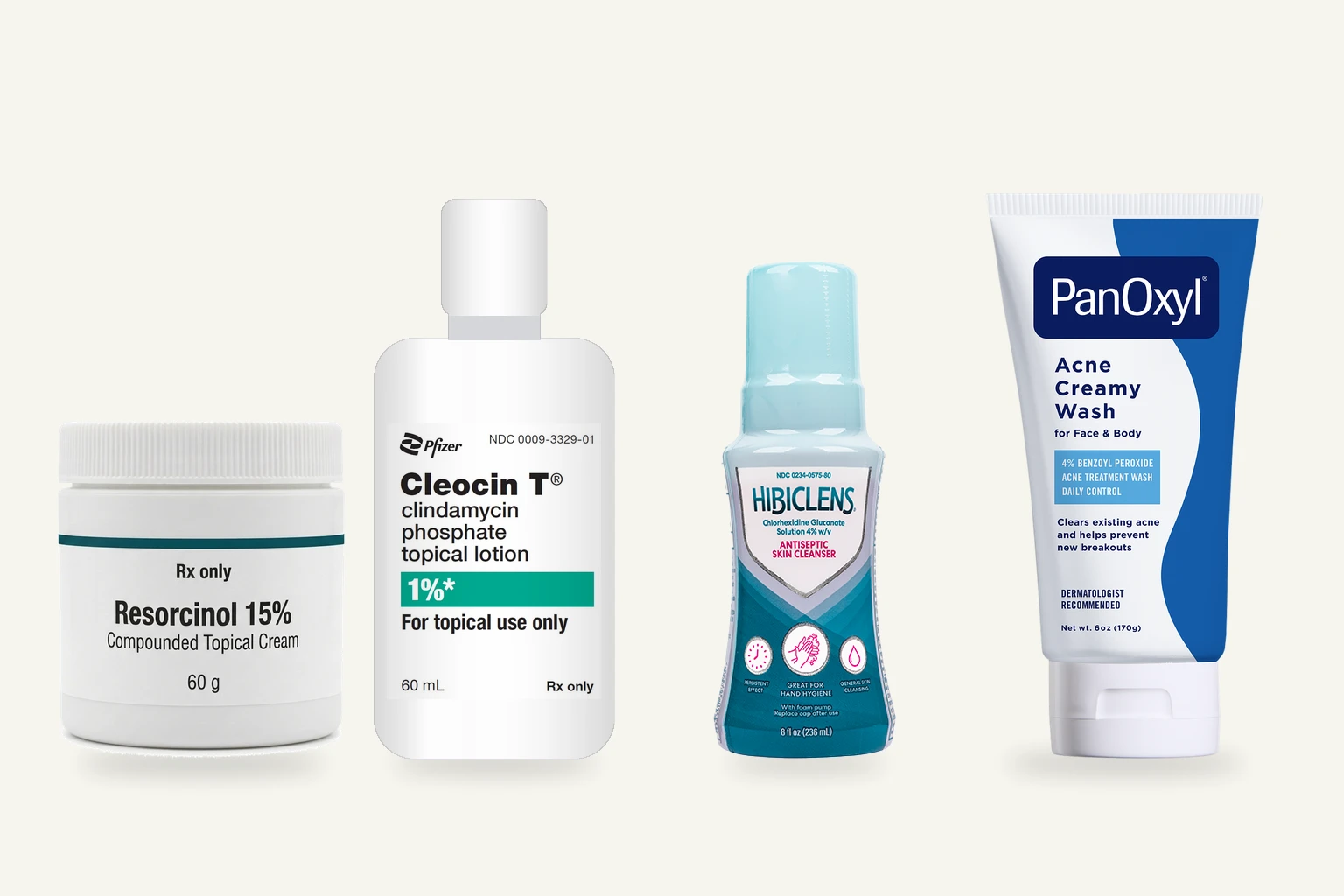
Topical Resorcinol 15% Versus Clindamycin 1% and Daily Washes for Hidradenitis Suppurativa
Nov 25, 2026 · 14 min read
Hidradenitis Suppurativa
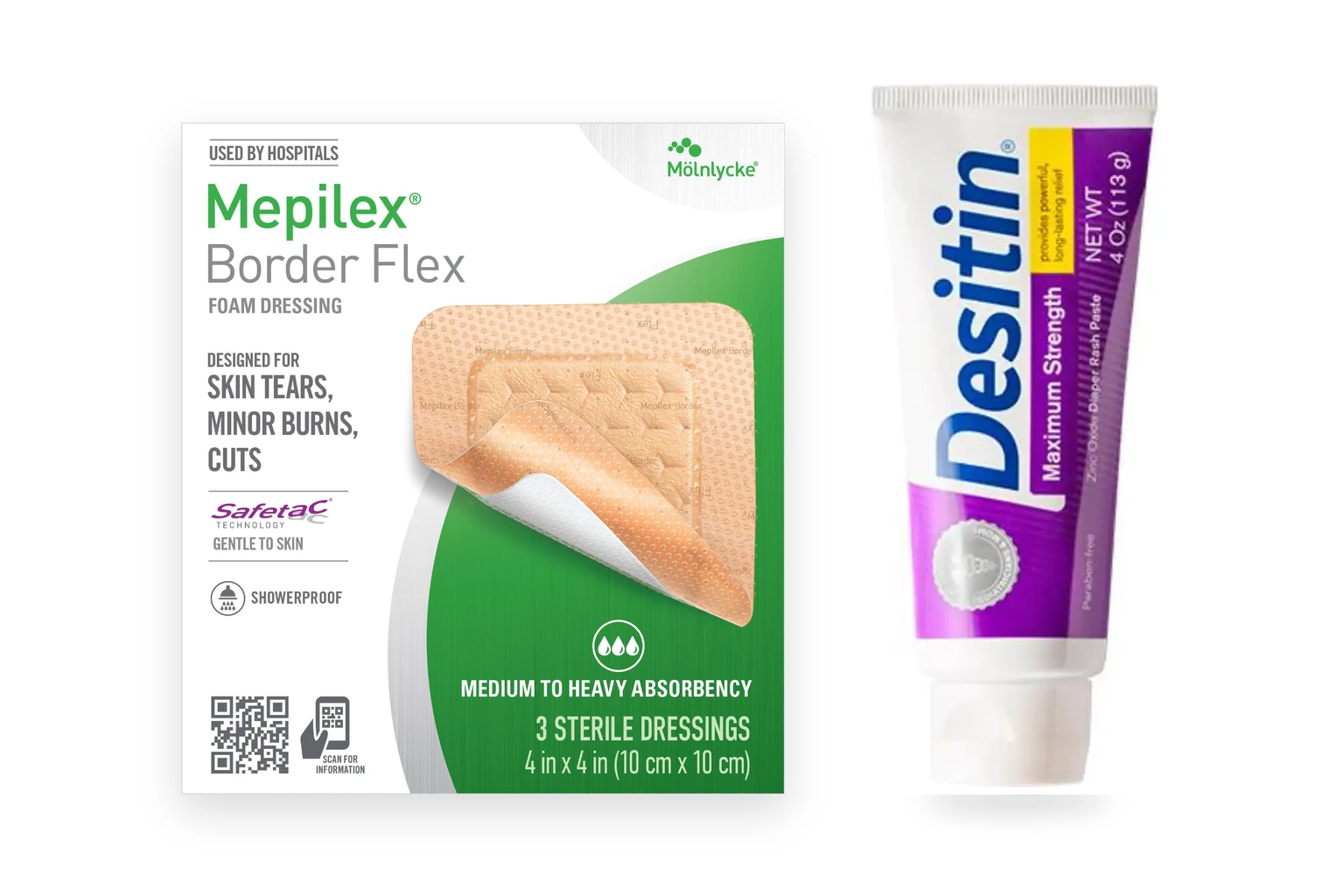
Hidradenitis Suppurativa Wound Care: Silicone Bandages, Hydrocolloids, Desitin 40% Zinc Oxide, Odor, and Everyday Comfort
Nov 25, 2026 · 10 min read

Hidradenitis Suppurativa
Hidradenitis Suppurativa Diet and Supplements: Dairy, Nightshades, Brewer's Yeast, Zinc, and Vitamin D
Nov 25, 2026 · 10 min read