
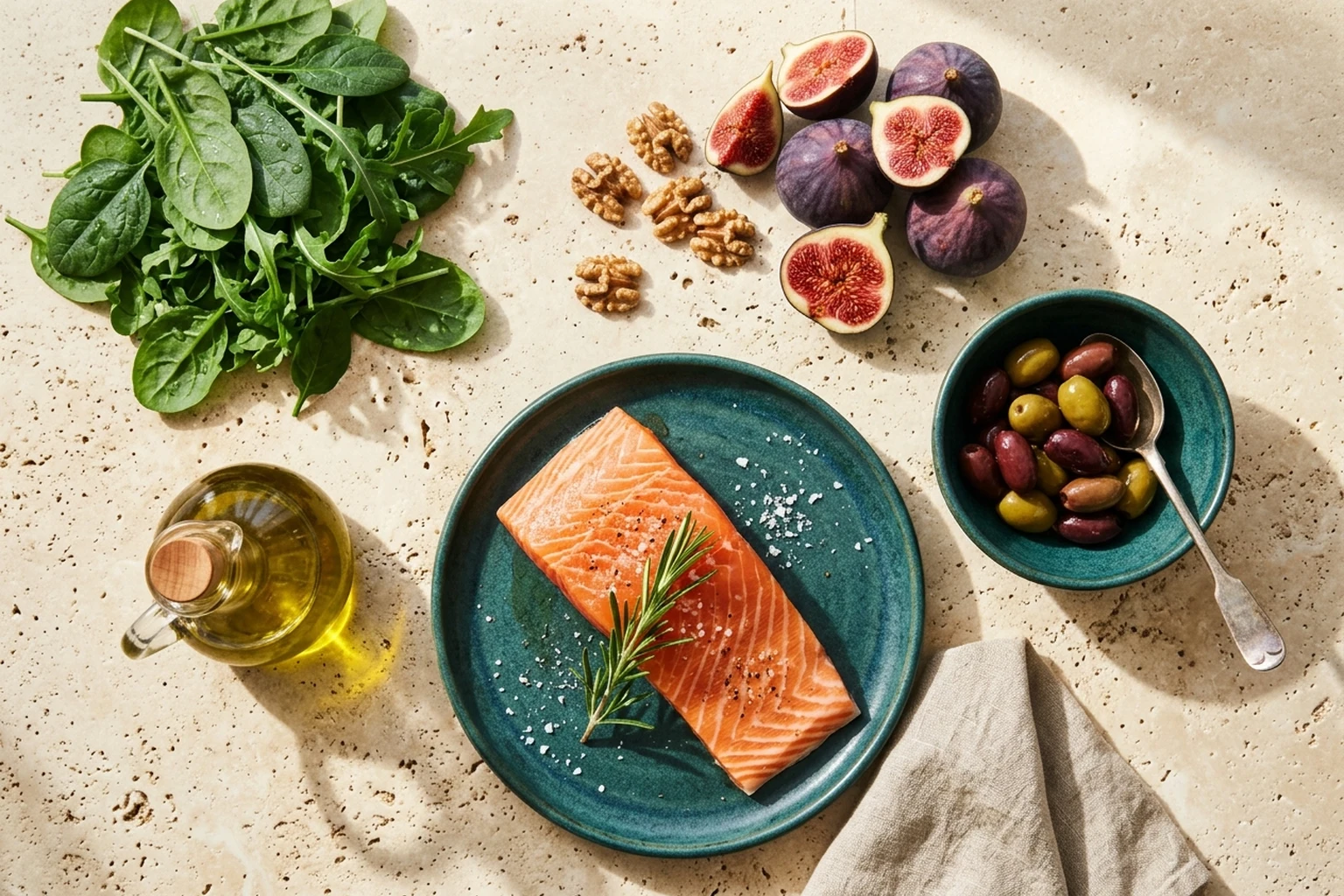
Artificial intelligence-generated image. Not an actual patient or treatment result.
Hidradenitis Suppurativa Diet and Supplements: Dairy, Nightshades, Brewer's Yeast, Zinc, and Vitamin D

Chief Medical Officer
In 2026, no single diet cures hidradenitis suppurativa (HS), but Mediterranean-style anti-inflammatory eating, individualized single-trigger trials (such as dairy, added sugar, or brewer's yeast), vitamin D repletion, and carefully monitored zinc supplementation can meaningfully support medical therapy (Naik 2026; Barrea 2018). Online HS communities are packed with dramatic testimonials blaming tomatoes, milk, bread, or yeast for every flare. Separating real clinical signals from rigid internet food fear helps you feel better without starving yourself.
In this article
Does any diet cure hidradenitis suppurativa, or are food triggers individual?
HS is an immune-driven follicular disorder shaped by genetics, hormones, mechanical friction, smoking, and metabolic inflammation. Cross-sectional research from University of North Carolina (UNC) HS specialist Christopher Sayed and Rayad Shams has documented how commonly patients report everyday lifestyle and dietary exacerbating factors, yet triggers vary dramatically from person to person (Shams 2024).
Cutting out five food groups simultaneously creates two problems: you never learn which single food mattered, and restrictive diets add stress and nutrient gaps on top of a chronic inflammatory disease. A smarter strategy is pairing proven dermatologic treatment with a calm anti-inflammatory baseline and testing one food group at a time.
What does the evidence show on dairy, sugar, brewer's yeast, nightshades, and the Mediterranean diet?
Here is an honest, evidence-graded scorecard of the five dietary approaches debated most often in HS forums:
| Dietary Approach | What Clinical Studies Found | Strength of Evidence | Practical Clinical Take |
|---|---|---|---|
| Mediterranean eating pattern (olive oil, fish, vegetables, legumes, nuts, whole foods) | In a cross-sectional case-control study of 41 HS patients and 41 controls, lower Mediterranean diet adherence and lower omega-3 intake tracked with worse HS severity scores independent of body weight (Barrea 2018) | Observational association, supported by strong cardiometabolic evidence | Safest default everyday template: cuts insulin spikes, lowers systemic inflammation, and protects heart health without restrictive elimination |
| Dairy and high-glycemic sugar reduction | Preliminary dermatology observations proposed that dairy hormones and insulin-spiking refined carbohydrates stimulate follicular androgen signaling (Danby 2015) | Preliminary clinical observations; no large randomized trial | Reasonable 6-to-8-week single-group test, especially if you notice flares after whey protein shakes, cow's milk, or sugary drinks; preserve calcium intake |
| Brewer's yeast exclusion (beer, yeast-leavened breads, nutritional yeast) | In a tiny 2013 Italian surgical series of 12 patients who tested positive for brewer's yeast antibodies and underwent surgery plus a 12-month yeast-free diet, lesions stabilized and recurred after eating yeast-containing foods (Cannistra 2013) | Tiny uncontrolled post-surgery series (12 patients) | Worth a focused trial if you notice predictable flares after beer, pizza dough, or bakery items, but far from universal |
| Nightshade elimination (tomatoes, potatoes, eggplant, peppers) | Frequently cited in online HS blogs and surveys, yet lacks controlled randomized HS clinical trials | Patient anecdote only | No need to cut nutrient-rich tomatoes or peppers automatically unless a clean symptom diary points directly toward them |
How well does zinc gluconate work for hidradenitis suppurativa and why must you watch copper?
Oral zinc is one of the rare over-the-counter supplements backed by the October 20, 2026 joint American Academy of Dermatology (AAD) and Hidradenitis Suppurativa Foundation (HSF) guidelines, which issue a conditional recommendation for zinc supplementation (Naik 2026).
Interest started with a 2007 French pilot study of 22 adults with Hurley Stage 1 or Stage 2 HS who took 90 mg of elemental zinc daily (delivered as six 15 mg zinc gluconate capsules): all 22 saw clinical improvement (8 complete remissions and 14 partial remissions), with doses tapered down once calm and 4 of 22 reporting mild gastrointestinal upset (Brocard 2007). A 2026 review noted that while zinc dampens innate neutrophil inflammation and wound-healing pathways, existing HS studies remain small and uncontrolled, so randomized trials are still needed (Spiniello 2026).
The safety trap almost every social-media post skips: high-dose daily zinc triggers an intestinal protein (metallothionein) that traps and blocks copper absorption. Taking high-dose zinc (above the standard adult upper limit of 40 mg elemental zinc per day) for months without supervision can cause severe copper deficiency, leading to anemia, low white blood cells, and nerve tingling or walking difficulty, a complication specifically documented in an HS patient taking supplemental zinc (Stashower 2022). Before starting therapeutic zinc for HS:
- Confirm the exact dose and salt with your clinician (zinc gluconate and elemental zinc labels differ on the bottle back).
- Ask about copper balance and blood monitoring: dermatologists who prescribe higher-dose zinc often pair a small separate copper supplement (typically 1 to 2 mg daily, taken apart from zinc) and check periodic complete blood counts and serum copper levels.
- Take zinc with food to prevent nausea and stomach cramping, and separate zinc by at least 2 hours from oral doxycycline or tetracycline, because zinc binds those antibiotics in the gut and blocks absorption.
Should you test and correct vitamin D deficiency with hidradenitis suppurativa?
The October 20, 2026 joint guidelines also issue a conditional recommendation for vitamin D repletion (Naik 2026). Low blood vitamin D is remarkably common in adults with HS (especially patients who cover skin folds year-round and avoid summer sun), and vitamin D helps regulate innate immune signaling around hair follicles.
Instead of mega-dosing blindly, ask your primary-care clinician or dermatologist for a simple 25-hydroxy vitamin D blood test alongside routine hemoglobin A1c (HbA1c) and lipid screening. If your level comes back deficient, standard repletion doses tailored to your lab value are inexpensive, safe, and easy to recheck after 3 months.
How can you run a safe 6-to-8-week food trial without developing restrictive eating?
If you want to know whether dairy, high-glycemic snacks, or brewer's yeast truly affects your own skin without falling into food anxiety:
- Test one single category at a time (for example, cow's milk and whey products only) while keeping your medical regimen completely steady so you know what caused any change.
- Track objective numbers for 6 to 8 weeks: log active tender nodule count, peak flare pain (0 to 10), and drainage days each week rather than relying on vague memory.
- Reintroduce deliberately for 2 weeks: if flares stayed identical during elimination, bring the food right back into your diet. Only keep a food out long term if clearing was unmistakable and flares reliably returned on reintroduction.
- Stay anchored on whole-body metabolic health: remember that weight and insulin sensitivity also influence HS flares. Read our guides on hormonal and metabolic HS care and shaving, sweat, exercise, and smoking triggers.
Important Information
This article is educational and is not medical or nutritional advice. Dietary supplements including zinc and vitamin D are not approved by the Food and Drug Administration to treat, cure, or prevent hidradenitis suppurativa. Prolonged high-dose zinc supplementation can cause copper deficiency, anemia, and neurologic injury, and zinc reduces absorption of tetracycline antibiotics if taken together. Always discuss supplement dosing, blood testing, and elimination diets with a licensed clinician.
Sources
- Naik HB, Yeung H, Frazer-Green L, et al. Joint American Academy of Dermatology-Hidradenitis Suppurativa Foundation guidelines of care for the management of hidradenitis suppurativa. Journal of the American Academy of Dermatology 2026.
- Brocard A, Knol AC, Khammari A, Dreno B. Hidradenitis suppurativa and zinc: a new therapeutic approach. A pilot study. Dermatology 2007.
- Stashower J, Pollack K, Flowers RH. Severe anemia and copper deficiency in a patient treated with supplemental zinc for hidradenitis suppurativa. International Journal of Dermatology 2022.
- Spiniello S, Termini D, Tavoletti G, Avallone G, Alberti-Violetti S, et al. Oral Zinc Supplementation in Acne Vulgaris and Hidradenitis Suppurativa: An Updated Comprehensive Review. Nutrients 2026.
- Barrea L, Fabbrocini G, Annunziata G, Muscogiuri G, Donnarumma M, et al. Role of Nutrition and Adherence to the Mediterranean Diet in the Multidisciplinary Approach of Hidradenitis Suppurativa. Nutrients 2018.
- Cannistra C, Finocchi V, Trivisonno A, Tambasco D. New perspectives in the treatment of hidradenitis suppurativa: surgery and brewer's yeast-exclusion diet. Surgery 2013.
- Danby FW. Diet in the prevention of hidradenitis suppurativa (acne inversa). Journal of the American Academy of Dermatology 2015.
- Shams RB, Sayed CJ. Patient-reported exacerbating factors for hidradenitis suppurativa: A cross sectional study. Journal of the American Academy of Dermatology 2024.
Related Articles
Hidradenitis Suppurativa
Spironolactone, Birth Control, and Metformin for Hidradenitis Suppurativa: Hormonal Flares and Metabolic Screening
Nov 25, 2026 · 11 min read
Hidradenitis Suppurativa
Laser Hair Removal, Shaving, Sweat, Exercise, and Smoking: Cutting Everyday Hidradenitis Suppurativa Triggers
Nov 25, 2026 · 9 min read
Hidradenitis Suppurativa
Hidradenitis Suppurativa: The Complete 2026 Dermatologist Guide (Stages, Causes, and New Guidelines)
Nov 25, 2026 · 14 min read