
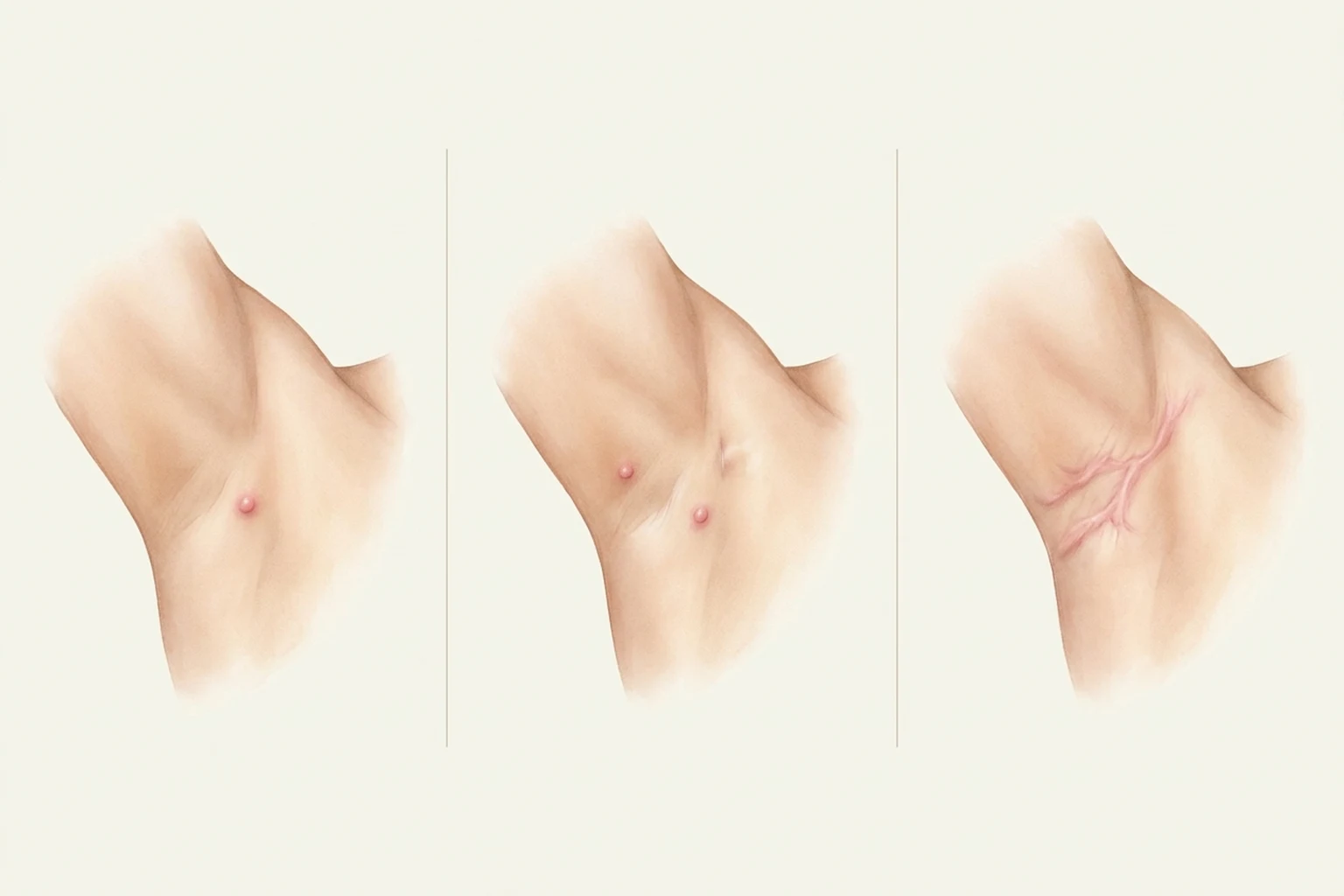
Artificial intelligence-generated medical illustration. Not an actual patient or clinical photograph.
Hidradenitis Suppurativa: The Complete 2026 Dermatologist Guide (Stages, Causes, and New Guidelines)

Chief Medical Officer
Hidradenitis suppurativa (HS) is a chronic, recurring inflammatory condition of hair follicles in skin folds, including the underarms, groin, inner thighs, under the breasts, and buttocks, and its treatment standards were substantially updated by the first-ever joint American Academy of Dermatology (AAD) and Hidradenitis Suppurativa Foundation (HSF) guidelines published on October 20, 2026 (Naik 2026). Most patients spend years believing they have stubborn ingrown hairs or recurring staph boils. Getting the correct diagnosis early matters more in HS than in almost any other inflammatory skin condition, since uncontrolled flares gradually build epithelial-lined tunnels and thick rope-like scars that no cream can erase later.
In this article
What causes hidradenitis suppurativa, and why is it not an infection?
HS begins inside the hair follicle, not inside the sweat gland and not from dirty skin. For decades, textbooks mislabeled HS as an apocrine sweat-gland infection. Modern pathology confirms the primary defect is follicular occlusion: keratin plugs and widens the upper hair follicle until the follicle wall ruptures beneath the skin surface (Zouboulis 2015; Goldburg 2020).
Once that plugged follicle bursts into the dermis, it spills keratin, hair fragments, and normal skin flora into deeper tissue. Your immune system treats that spill like a foreign splinter, flooding the area with inflammatory signals (including tumor necrosis factor alpha and interleukin-17) (Sabat 2020). That reaction builds a deep, tender, rounded nodule often called a "blind boil."
Two clinical facts confirm HS is not a routine contagious skin infection:
- Bacteria are secondary players, not the original trigger: routine clinical swabs of HS discharge mostly grow mixed normal skin flora, and a negative culture can support an HS diagnosis rather than ruling it out (Alikhan 2019 Part I). Using prolonged specialized cultures across 102 HS lesions, French researchers found polymicrobial anaerobic flora in 24 in 100 nodules or abscesses, climbing to 87 in 100 chronic draining lesions, showing how secondary anaerobes colonize established tunnels later and fuel odor and flares (Guet-Revillet 2014).
- You can't catch or spread HS: touching skin folds, sharing towels, or intimate contact never transmits HS to a partner or family member.
Genetics and lifestyle triggers both shape who develops HS and how hard it flares. Roughly 30 in 100 patients (51 of 170 in a 2025 hospital dermatology cohort) report a first-degree relative with HS (Koumaki 2025). Friction and shear in skin folds, smoking, excess body weight, and hormonal fluctuations around menstrual cycles or puberty amplify follicular inflammation (Sabat 2020). That metabolic connection is why weight-loss glucagon-like peptide-1 (GLP-1) medications and HS inflammation have become such an active research area alongside standard dermatology treatments.
How do dermatologists stage hidradenitis suppurativa using Hurley stages?
Dermatologists classify structural HS severity with the Hurley staging system (Stages 1, 2, and 3). Hurley staging measures permanent tissue architecture (scars and tunnels) rather than how angry a flare looks on a single Tuesday. A patient with Hurley Stage 1 disease can still have excruciatingly painful monthly nodules, and a patient can have Stage 1 in one armpit and Stage 2 in the groin.
| Hurley Stage | What skin looks like | Scarring and tunnels | Primary medical focus |
|---|---|---|---|
| Stage 1 (Mild structural) | Single or scattered deep, tender nodules and inflammatory abscesses in one or more folds | No sinus tracts (tunnels) and no thickened rope-like scarring | Topical resorcinol 15%, topical clindamycin 1%, off-label topical ruxolitinib 1.5%, short oral flare bursts, spironolactone, friction and smoking control |
| Stage 2 (Moderate structural) | Recurrent painful nodules and abscesses separated by patches of normal-appearing skin | Discrete sinus tracts (tunnels) and localized thickened scars | Earlier biologic therapy (adalimumab, secukinumab, bimekizumab, or infliximab), targeted antibiotic bridge therapy, tunnel deroofing, steroid injections |
| Stage 3 (Severe structural) | Diffuse, widespread involvement across an entire region with frequent drainage and pain | Multiple interconnected tunnels and cord-like scars with little normal skin between them | First-line biologic or Janus kinase inhibitor escalation, intravenous ertapenem rescue for severe flares, wide surgical excision paired with ongoing medical control |
Hurley staging stays fixed even when inflammation calms down, so dermatologists also track active inflammation over time using lesion counts, the International Hidradenitis Suppurativa Severity Score System (IHS4) (which weights nodules as 1 point, abscesses as 2 points, and draining tunnels as 4 points), and numeric pain ratings (Naik 2026).
What changed in the October 2026 hidradenitis suppurativa guidelines?
Before October 2026, most United States clinicians relied on the 2019 North American HS guidelines, written when adalimumab was the only Food and Drug Administration (FDA)-approved HS biologic (Alikhan 2019 Part II). On October 20, 2026, the AAD and HSF published their first joint evidence-based guidelines in the Journal of the American Academy of Dermatology, issuing 37 graded recommendations for adults, teens, and children aged 9 and older (Naik 2026).
| October 2026 Guideline Tier | Therapies and Clinical Actions | Practical Takeaway for Patients |
|---|---|---|
| Strong recommendations for | Adalimumab (Humira), bimekizumab (Bimzelx), infliximab (Remicade), secukinumab (Cosentyx); plus routine pain assessment as a core clinical practice standard | Moderate-to-severe HS now has four strongly backed biologics, and pain must be measured and addressed at every visit (Naik 2026) |
| Conditional recommendations for | Topical clindamycin, topical resorcinol, off-label topical ruxolitinib; oral doxycycline, tetracycline, clindamycin plus rifampin, intravenous ertapenem; spironolactone, short-term systemic steroids, upadacitinib; deroofing, wide excision, acute abscess drainage, intralesional triamcinolone, continuing adalimumab during surgery, laser hair removal, botulinum toxin; tobacco cessation, supportive pain care, zinc supplementation, and vitamin D repletion for documented deficiency or insufficiency | Expands evidence-backed non-biologic topicals (including resorcinol and topical ruxolitinib), affirms targeted procedures, and confirms patients do not need to stop adalimumab before HS surgery (Naik 2026) |
| Conditional recommendations against | Oral retinoids (isotretinoin and acitretin), etanercept, guselkumab, risankizumab, vilobelimab, avacopan, and methotrexate or azathioprine as primary HS therapy | Prevents wasted months on Accutane or psoriasis biologics that underperform in HS (Naik 2026) |
| Insufficient evidence for direct HS treatment | Chlorhexidine and benzoyl peroxide washes, metformin, oral roflumilast, dapsone, colchicine, and weight-reduction or GLP-1 interventions directly for HS lesions | Does not ban adjunctive hygiene or metabolic care, yet clarifies these should not delay proven primary HS therapy when disease is active (Naik 2026) |
One policy position in the October 2026 document deserves special attention. The AAD and HSF workgroup explicitly stated that insurance-mandated step therapy ("fail first" rules) lacks evidence of clinical benefit in HS and causes harmful delays (Naik 2026). Forcing a patient with draining Hurley Stage 2 or Stage 3 tunnels to spend six months failing oral antibiotics before approving a biologic only allows more scarring to accumulate.
Why does hidradenitis suppurativa take over 7 years on average to diagnose?
HS hides in plain sight. In a landmark multinational study of 517 HS patients across 24 countries, the average delay from first bump to accurate diagnosis was 7.2 years, compared with 1.6 years for psoriasis, and roughly 73 in 100 HS patients waited more than 2 years for answers (Saunte 2015). Simple standardized screening questionnaires have now been validated across 25 studies in 23 countries (showing 88% pooled sensitivity and 86% pooled specificity) to help clinicians catch cases far earlier (Bouazzi 2026).
Three patterns drive that delay in everyday practice:
- Fragmented urgent-care visits: painful groin or underarm nodules send patients to walk-in clinics or emergency rooms, where clinicians see one acute lump, diagnose a bacterial boil, lance it, prescribe a 7-day antibiotic, and never see the recurrent pattern over 6 to 12 months.
- Embarrassment and silence: lesions sit in intimate folds and drain with odor, leading many patients to hide flares from partners and primary care clinicians for years.
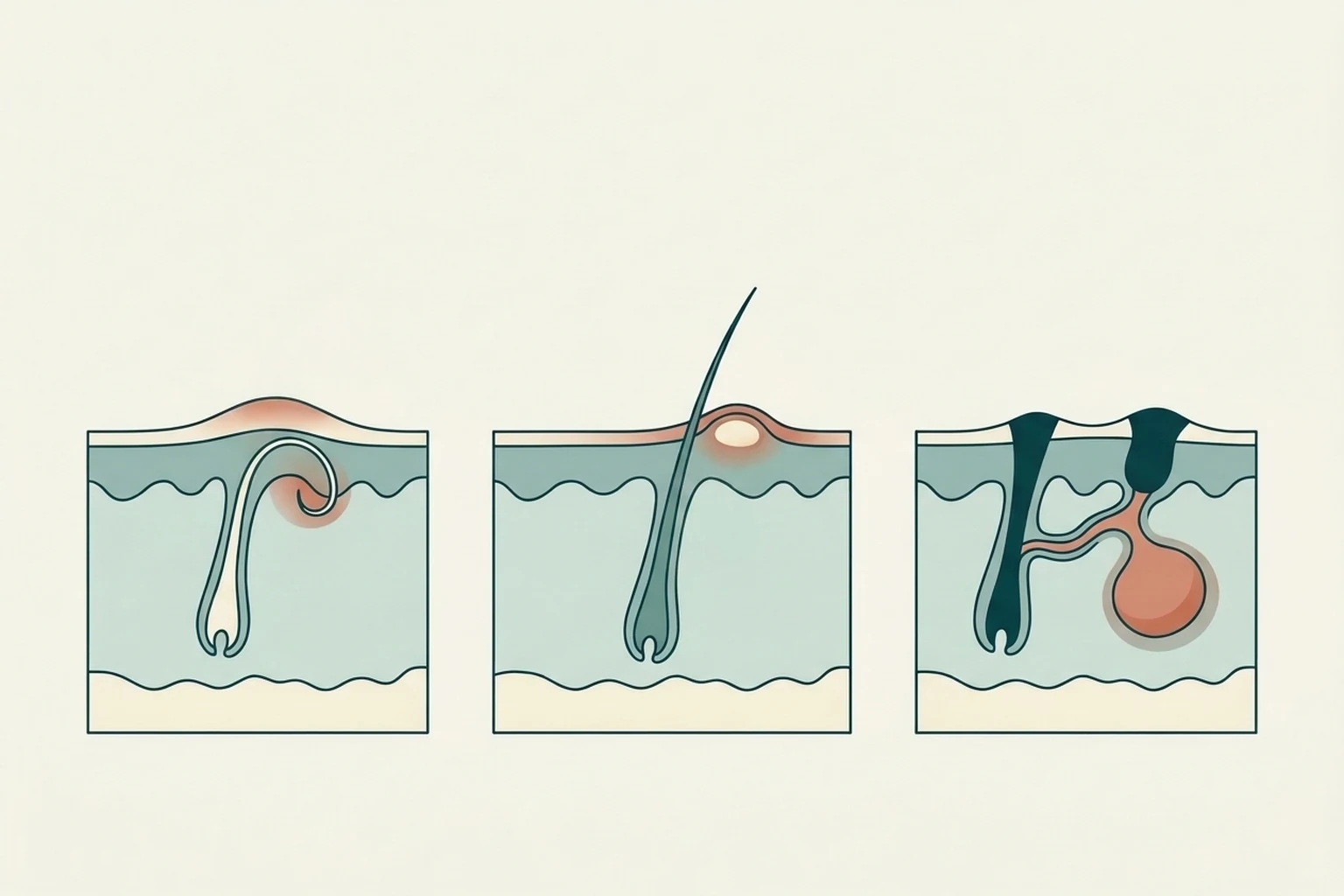
- Diagnostic look-alikes: ingrown hairs, bacterial furuncles, Bartholin gland cysts, and ruptured epidermoid cysts mimic early HS. Read our detailed breakdown of 7 clues dermatologists use to separate HS from boils and ingrown hairs.
Dermatologists use three simple bedside criteria: typical deep nodules, abscesses, tunnels, or scars; typical skin-fold areas (underarms, groin, under the breasts, or perineal folds); and recurrence of at least 2 flares within 6 months (or persistent lesions lasting 3 months or longer) (Saunte 2017). Answering yes to all three strongly points to HS and warrants a dedicated dermatology plan, not another isolated round of urgent-care drainage.
How do you build a practical hidradenitis suppurativa treatment plan by stage?
Successful HS management almost always combines daily skin-fold maintenance, flare control, and disease-modifying systemic therapy matched to structural severity. No single pill or cream fixes every layer of the disease.
- For mild Hurley Stage 1 flares: Start with targeted topical therapy and friction reduction. Compare topical resorcinol 15% versus topical clindamycin 1% and daily washes to calm early nodules without driving bacterial antibiotic resistance. Short targeted antibiotic bursts or hormonal support (such as spironolactone in appropriate female patients) can back up topicals when flares cluster around menstrual cycles (Naik 2026).
- For frequent or worsening flares: Understand why dermatologists are moving away from months of chronic oral antibiotics toward short 2-to-3-week flare bursts or a time-limited 10-to-12-week clindamycin plus rifampin bridge while preparing biologic approval.
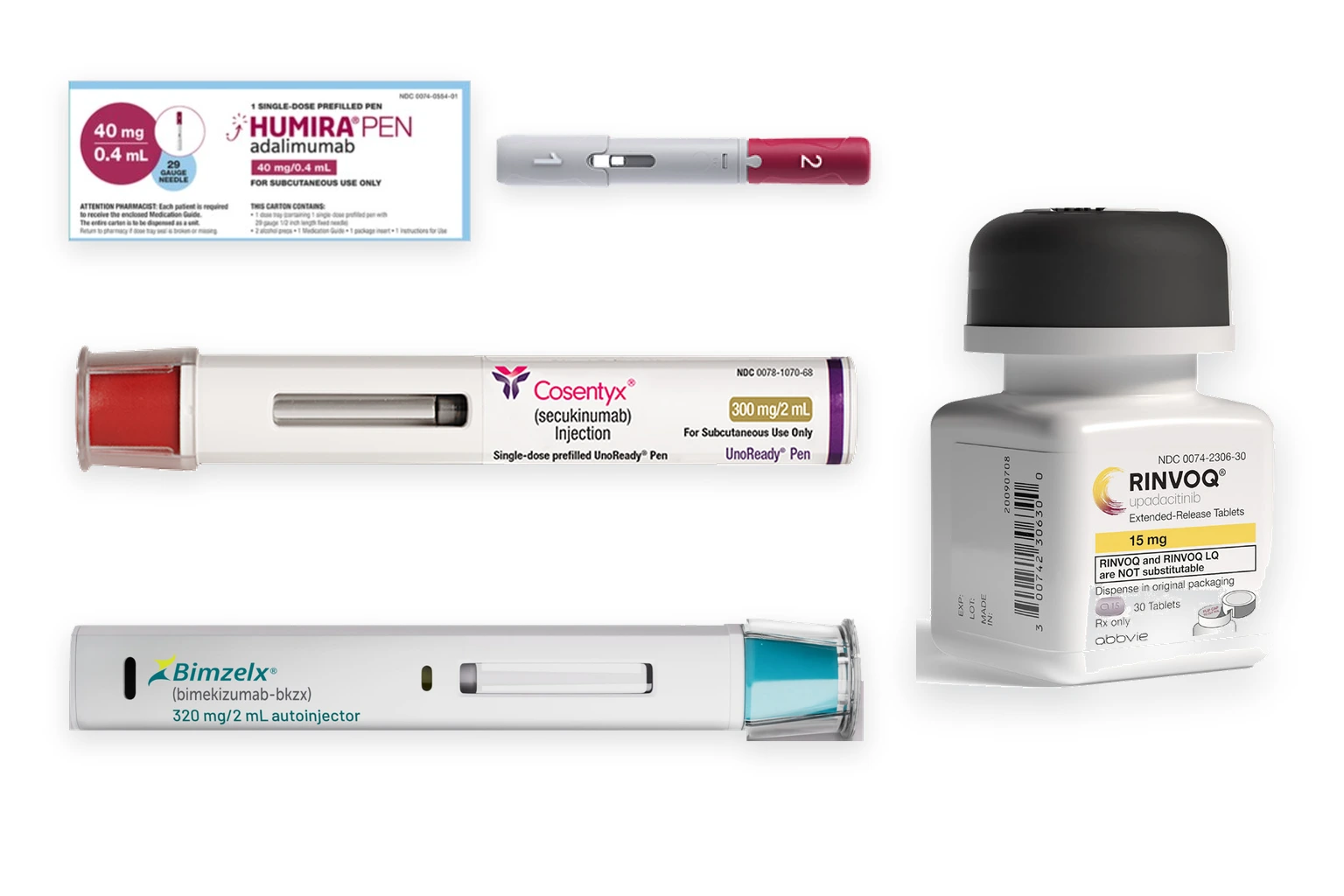
- For moderate-to-severe Stage 2 or Stage 3 disease: Early targeted systemic therapy changes the long-term trajectory. Review how Humira, Cosentyx, Bimzelx, infliximab, and Rinvoq compare on the 2026 biologic ladder. Once epithelial-lined sinus tracts form, combining medical control with targeted in-office surgical deroofing or wide excision removes the chronic pocket that keeps refilling (Ritz 1998).
- For pain, triggers, and metabolic health: Ask your clinician directly about a pain plan at every appointment, since routine pain assessment is now a core October 2026 standard (Naik 2026). Tobacco cessation, avoiding tight friction and close shaving in affected folds, and addressing coexisting obesity or metabolic syndrome (see our overview of GLP-1 medications and HS care) support medical skin therapy over the long haul.
When should you see an in-person dermatologist versus exploring online care?
Online dermatology works well for education, early Hurley Stage 1 and mild-to-moderate Stage 2 evaluations, prescription topical plans, short-course oral antibiotics, spironolactone, and structured flare planning, whereas moderate-to-severe tunnels, biologic lab screening, steroid injections, and surgical deroofing belong in an in-person dermatology clinic (such as an HS specialty clinic listed through the Hidradenitis Suppurativa Foundation). See our full guide to treating HS online, cash generic costs, and office red flags.
KindleeRx does not currently offer a live online HS treatment page. If you have a general question about a skin condition not listed on our site and want to ask whether KindleeRx can help, you can text 850-888-8751 or email support@kindleerx.com (please avoid sharing sensitive medical history or photos by standard text or general email).
Important Information
This guide summarizes published peer-reviewed dermatology literature and the October 20, 2026 joint American Academy of Dermatology and Hidradenitis Suppurativa Foundation guidelines for educational purposes only and is not personal medical advice. Several therapies discussed in dermatology guidelines for HS (including topical resorcinol, topical ruxolitinib, spironolactone, oral antibiotics, infliximab, and upadacitinib) are used off-label for HS; only adalimumab, secukinumab, and bimekizumab carry specific United States Food and Drug Administration approvals for HS as of late 2026. KindleeRx is not affiliated with or endorsed by AbbVie, Novartis, UCB, Janssen, or any pharmaceutical manufacturer named in this guide. Always review diagnosis, screening, and prescription choices with a qualified licensed clinician.
Sources
- Naik HB, Yeung H, Frazer-Green L, et al. Joint American Academy of Dermatology-Hidradenitis Suppurativa Foundation guidelines of care for the management of hidradenitis suppurativa. Journal of the American Academy of Dermatology 2026.
- American Academy of Dermatology. Hidradenitis Suppurativa Clinical Guideline Portal (2026).
- Garg A, Kirby JS, Lavian J, Lin G, Strunk A. Sex- and Age-Adjusted Population Analysis of Prevalence Estimates for Hidradenitis Suppurativa in the United States. JAMA Dermatology 2017.
- Saunte DM, Boer J, Stratigos A, et al. Diagnostic delay in hidradenitis suppurativa is a global problem. British Journal of Dermatology 2015.
- Saunte DML, Jemec GBE. Hidradenitis Suppurativa: Advances in Diagnosis and Treatment. JAMA 2017.
- Bouazzi D, Lophaven S, Hagan PG, Botvid S, et al. Evaluating the diagnostic accuracy of a screening questionnaire for detecting hidradenitis suppurativa. British Journal of Dermatology 2026.
- Zouboulis CC, Desai N, Emtestam L, Hunger RE, et al. European S1 guideline for the treatment of hidradenitis suppurativa/acne inversa. Journal of the European Academy of Dermatology and Venereology 2015.
- Goldburg SR, Strober BE, Payette MJ. Hidradenitis suppurativa: Epidemiology, clinical presentation, and pathogenesis. Journal of the American Academy of Dermatology 2020.
- Sabat R, Jemec GBE, Matusiak Ł, Kimball AB, et al. Hidradenitis suppurativa. Nature Reviews Disease Primers 2020.
- Koumaki D, Gregoriou S, Evangelou G, Chlouverakis G, Katoulis A, et al. Familial Hidradenitis Suppurativa on the Island of Crete: Distinct Patterns in Clinical Characteristics. The Journal of Dermatology 2025.
- Guet-Revillet H, Coignard-Biehler H, Jais JP, Quesne G, et al. Bacterial pathogens associated with hidradenitis suppurativa, France. Emerging Infectious Diseases 2014.
- Alikhan A, Sayed C, Alavi A, et al. North American clinical management guidelines for hidradenitis suppurativa: Part I: Diagnosis, evaluation, and complementary and procedural management. Journal of the American Academy of Dermatology 2019.
- Alikhan A, Sayed C, Alavi A, et al. North American clinical management guidelines for hidradenitis suppurativa: Part II: Topical, intralesional, and systemic medical management. Journal of the American Academy of Dermatology 2019.
- Ritz JP, Runkel N, Haier J, Buhr HJ. Extent of surgery and recurrence rate of hidradenitis suppurativa. International Journal of Colorectal Disease 1998.
- Hidradenitis Suppurativa Foundation. Patient and Clinician Education Resources.
Related Articles

Hidradenitis Suppurativa
Can Hidradenitis Suppurativa Be Treated Online? What Works Virtually, Costs Without Insurance, and When You Need an Office Visit
Nov 25, 2026 · 12 min read
Hidradenitis Suppurativa
Boil, Ingrown Hair, or Hidradenitis Suppurativa? 7 Clues Dermatologists Use to Tell the Difference
Nov 25, 2026 · 12 min read
Hidradenitis Suppurativa
Humira, Cosentyx, Bimzelx, and Rinvoq for Hidradenitis Suppurativa: The 2026 Targeted Therapy Ladder
Nov 25, 2026 · 16 min read