

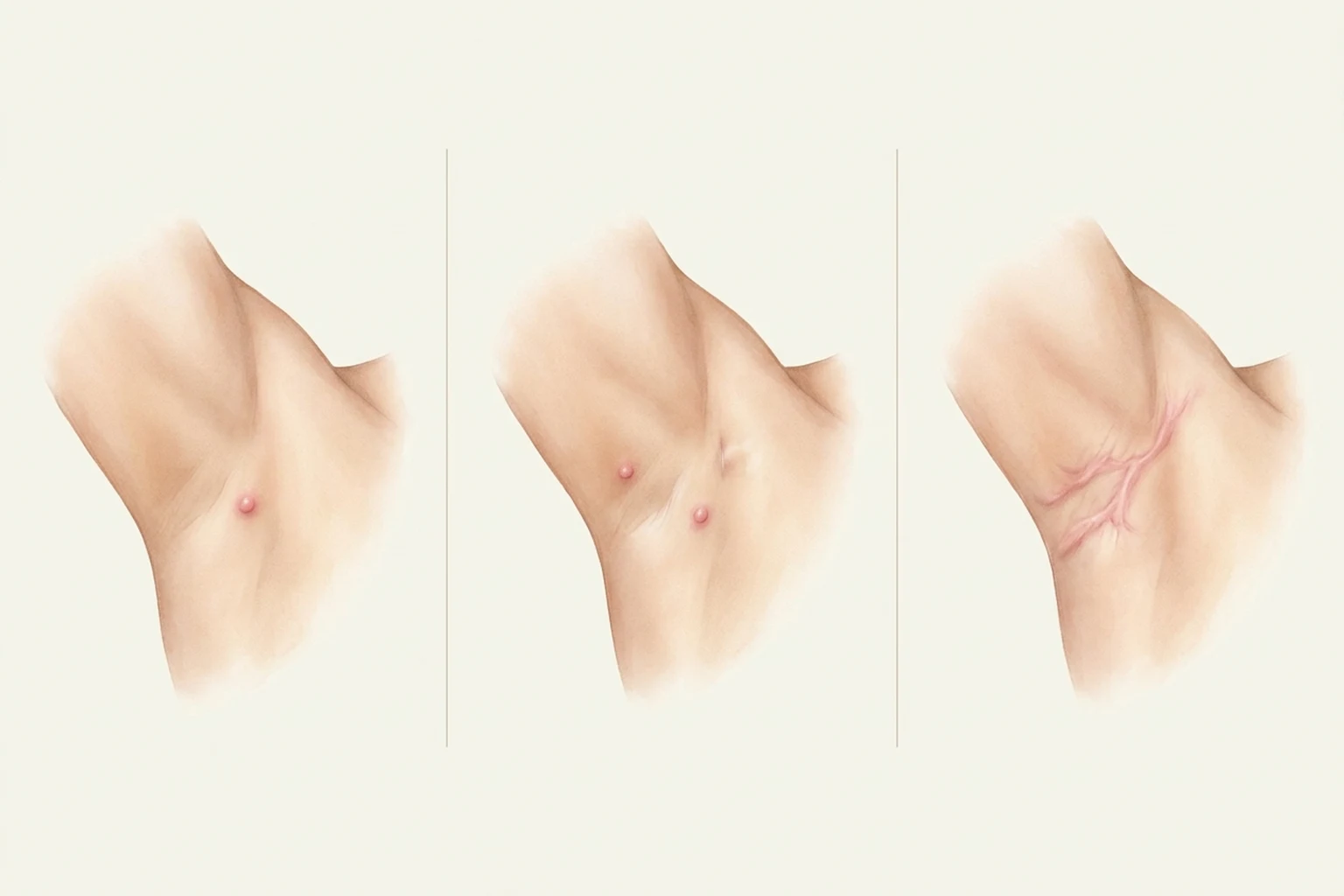
Artificial intelligence-generated medical illustration. Not an actual patient or clinical photograph.
Antibiotics for Hidradenitis Suppurativa: Why Dermatologists Are Stopping Long-Term Courses

Chief Medical Officer
Oral antibiotics still play a legitimate, guideline-backed role in calming hidradenitis suppurativa (HS) flares, yet board-certified dermatologists are rapidly moving away from open-ended 6-to-12-month antibiotic courses toward short flare bursts, 10-to-12-week biologic bridges, and earlier targeted biologics (Naik 2026; Fischer 2017). Antibiotics work in HS primarily by dialing down white-blood-cell inflammation and calming secondary bacterial biofilm inside tunnels, not by "curing" the underlying follicular defect. Keeping patients on continuous pills for years disrupts the gut microbiome, raises antibiotic stewardship risks, and delays therapies that halt permanent scarring.
In this article
Why are dermatologists stopping long-term oral antibiotics for hidradenitis suppurativa?
In the 1990s and 2000s, before FDA-approved biologics existed for HS, staying on oral doxycycline or minocycline for a year or longer was routine. Four real-world findings have flipped that habit across dermatology practices:
- Measurable antimicrobial resistance: In the Johns Hopkins cross-sectional study of 239 HS patients, topical clindamycin raised clindamycin-resistant Staphylococcus aureus from 17 in 100 to 63 in 100; ciprofloxacin raised fluoroquinolone-resistant methicillin-resistant Staphylococcus aureus from 10 in 100 to 100 in 100; and trimethoprim-sulfamethoxazole raised resistant Proteus species from 0 in 100 to 88 in 100, though no statistically significant resistance signal was seen with oral tetracyclines or oral clindamycin in that cohort (Fischer 2017).
- Gut microbiome disruption and Clostridioides difficile risk: Months of broad-spectrum antibiotics wipe out protective bowel flora, triggering chronic loose stools, yeast overgrowth, and potentially severe Clostridioides difficile colitis (Cleocin hydrochloride label).
- Fading benefit and relapse after stopping: Even when oral tetracyclines calm bumps at week 8, flares typically bounce back once the prescription ends, especially in Hurley Stage 2 and Stage 3 disease with established sinus tracts.
- Better primary therapies exist in 2026: With four strongly recommended biologics in the October 2026 joint guidelines and an explicit panel rejection of insurance step therapy, patients with moderate-to-severe HS no longer need to burn through half a year of failing oral antibiotics to earn effective care (Naik 2026).
Today, dermatologists treat systemic antibiotics like a fire extinguisher or a bridge, not a permanent roof: short 2-to-3-week bursts for acute painful flares, a 10-to-12-week bridge while prior authorization clears a biologic, or targeted pre-surgical calming before tunnel deroofing.
How do doxycycline and clindamycin plus rifampin compare in clinical studies?
Both oral tetracyclines (doxycycline or tetracycline) and combination oral clindamycin plus rifampin received conditional recommendations in the October 20, 2026 joint AAD and HSF guidelines (Naik 2026). Until 2021, many clinicians assumed clindamycin plus rifampin dramatically outperformed doxycycline for every Stage 2 patient. A large multicenter European cohort put that assumption to the test.
In the prospective study of 283 HS patients evaluated at 12 weeks (where roughly 1 in 5 could not be scored on Hidradenitis Suppurativa Clinical Response due to low baseline lesion count), 40 in 100 (40.1%) of evaluable patients taking oral tetracyclines achieved clinical response versus 48 in 100 (48.2%) taking oral clindamycin plus rifampin, and both groups achieved meaningful drops in severity score with no statistically reliable advantage for one regimen over the other regardless of baseline disease severity (van Straalen 2021). In an earlier landmark French cohort of 116 consecutive severe HS patients given clindamycin 300 mg twice daily plus rifampin 600 mg daily for 10 weeks, median Sartorius severity scores dropped in half from 29 to 14.5, while 8 of 116 patients (about 7 in 100) had to stop early because of side effects (Gener 2009).
| Antibiotic Regimen | Typical Dermatology Schedule | Evidence Summary | Main Safety Watchouts |
|---|---|---|---|
| Oral doxycycline (or tetracycline) | Doxycycline 100 mg once or twice daily; short flare burst or up to 12 weeks with reassessment | 40 in 100 (40.1%) of evaluable patients hit clinical response at week 12 (van Straalen 2021); conditionally backed in October 2026 (Naik 2026) | Esophageal irritation (never take at bedtime), sun sensitivity, stomach upset; avoid in pregnancy, children under age 8, and alongside isotretinoin (doxycycline label) |
| Oral clindamycin + rifampin | Clindamycin 300 mg twice daily + rifampin 300 mg twice daily (or 600 mg once daily) for 10 to 12 weeks as a flare or biologic bridge | 48 in 100 (48.2%) of evaluable patients hit clinical response at week 12 (van Straalen 2021); halved median severity in 116 patients (Gener 2009) | Rifampin breaks hormonal birth control and turns fluids orange; clindamycin carries Clostridioides difficile colitis boxed warning; rifampin also lowers clindamycin blood levels over time (Rifampin capsules label; Cleocin hydrochloride label) |
| Triple oral rescue (rifampin + fluoroquinolone + metronidazole) | Specialist-directed intensive rescue (studied as 6 weeks triple therapy, 4 weeks consolidation, plus maintenance) | In 28 severe Hurley Stage 1 patients (9 substituted pristinamycin, unavailable in the United States), 21 of 28 (75%) reached remission at week 12 and annual flares fell from 21 to 1 (Delage 2023) | Fluoroquinolone tendon and nerve boxed warnings, metronidazole neuropathy and alcohol reaction, nausea, thrush, and rifampin drug interactions |
| Intravenous ertapenem | 1 g intravenous once daily for 6 weeks via home infusion or clinic for severe refractory Stage 3 HS | In 30 severe HS patients, dropped median severity score from 49.5 to 19.0; 59% of affected zones reached remission at 6 months with consolidation (Join-Lambert 2016); conditionally backed in October 2026 | Requires intravenous catheter placement and monitoring; relapses rapidly without consolidation therapy or surgery afterward |
What critical safety warnings apply to rifampin, clindamycin, and doxycycline?
Patients frequently start clindamycin plus rifampin without hearing the three warnings that matter most in everyday life:
- Rifampin cancels out hormonal birth control: Rifampin is one of the strongest liver cytochrome P450 enzyme inducers in medicine. It speeds up clearance of estrogen and progestin from birth control pills, patches, rings, and implants, risking unintended pregnancy (Rifampin capsules label). Use reliable non-hormonal backup contraception (such as condoms or a copper intrauterine device) during rifampin therapy and for at least one full cycle afterward, and review every heart, blood-thinner, seizure, or cholesterol medication on your list for interactions.
- Orange-red body fluids are expected on rifampin: Urine, sweat, saliva, and tears turn bright orange-red during rifampin treatment. That color change is harmless, yet it can permanently stain soft contact lenses, so wear glasses during the course (Rifampin capsules label).
- Clindamycin carries a boxed warning for Clostridioides difficile colitis: Severe watery diarrhea, abdominal cramping, or fever can emerge during treatment or even weeks after finishing clindamycin (Cleocin hydrochloride label). Call your prescribing clinician promptly if persistent watery diarrhea starts rather than masking it with over-the-counter antidiarrheals.
- Tetracycline pregnancy and age boundaries: Avoid routine oral doxycycline and other tetracyclines during pregnancy and in children under age 8 due to permanent tooth discoloration and enamel effects (doxycycline label).
How should you take oral doxycycline to prevent heartburn and drug interactions?
Most patients who quit doxycycline early don't quit because of an allergy; they quit because nobody explained two simple dosing rules:
- Take doxycycline in the morning with breakfast and a full glass of water, never at bedtime: Swallowing a doxycycline pill dry and lying flat lets the capsule lodge in the lower esophagus, causing painful pill esophagitis (a searing burning feeling behind the breastbone). Staying upright for at least 30 to 60 minutes after a morning meal with plenty of fluid prevents almost all stomach and esophageal irritation (doxycycline label).
- Separate doxycycline from mineral supplements and protect skin from sun: Calcium, iron, magnesium, aluminum antacids, and zinc supplements bind doxycycline in the gut and block absorption; separate them by at least 2 hours. Daily sunscreen prevents intense sunburn reactions.
- Never combine doxycycline (or any tetracycline) with isotretinoin: Pairing tetracyclines with oral isotretinoin raises the risk of pseudotumor cerebri (dangerous pressure around the brain causing severe headache and vision changes) (doxycycline label).
When do dermatologists use triple rescue antibiotics or intravenous ertapenem?
When severe, draining Hurley Stage 2 or Stage 3 disease erupts uncontrollably, or when surgeons need a heavily inflamed fold quieted before wide excision, HS specialists turn to short, intensive rescue protocols rather than endless low-dose pills:
- Triple oral rescue therapy (rifampin plus a fluoroquinolone such as moxifloxacin or levofloxacin plus metronidazole): In specialist practice, structured triple-antibiotic courses target both aerobic and anaerobic bacteria in severe refractory flares. In a prospective French study of 28 consecutive patients with severe Hurley Stage 1 HS (19 treated with 6 weeks of rifampin, moxifloxacin, and metronidazole followed by 4 weeks of dual consolidation and maintenance trimethoprim-sulfamethoxazole, while 9 replaced moxifloxacin with pristinamycin, which is not Food and Drug Administration-available in the United States), 21 of 28 patients (75%) reached complete clinical remission at week 12 and median annual flares dropped from 21 per year to 1 per year (Delage 2023). Some United States specialists adapt shorter acute triple bursts for severe flares, reserving fluoroquinolones for refractory cases under close supervision due to tendon, nerve, and gastrointestinal risks.
- Intravenous ertapenem (6-week rescue): Newly earning a conditional recommendation in the October 2026 AAD and HSF guidelines for severe refractory HS, intravenous ertapenem 1 g daily dropped median Sartorius severity scores from 49.5 to 19.0 in 30 severe patients (Naik 2026; Join-Lambert 2016). Ertapenem acts as an emergency reset button: patients who transitioned directly into consolidation therapy or surgery held improvements (59% of affected body regions in remission at 6 months), while those who stopped without a follow-up plan relapsed back to baseline.
Important Information
This article is educational and is not medical advice. Oral antibiotics discussed for HS (including doxycycline, tetracycline, clindamycin, rifampin, fluoroquinolones, metronidazole, and intravenous ertapenem) are prescribed off-label for HS in the United States. KindleeRx is not affiliated with ANI Pharmaceuticals, Pharmacia & Upjohn, Actavis, AbbVie, Novartis, UCB, or any pharmaceutical manufacturer cited in this article. Never start, stop, or combine prescription antibiotics without consulting a qualified licensed clinician, and seek urgent in-person medical care for severe watery diarrhea, fever, tendon pain, vision changes, or signs of an allergic reaction.
Sources
- Naik HB, Yeung H, Frazer-Green L, et al. Joint American Academy of Dermatology-Hidradenitis Suppurativa Foundation guidelines of care for the management of hidradenitis suppurativa. Journal of the American Academy of Dermatology 2026.
- van Straalen KR, Tzellos T, Guillem P, et al. The efficacy and tolerability of tetracyclines and clindamycin plus rifampicin for the treatment of hidradenitis suppurativa. Journal of the American Academy of Dermatology 2021.
- Gener G, Canoui-Poitrine F, Revuz JE, et al. Combination therapy with clindamycin and rifampicin for hidradenitis suppurativa: a series of 116 consecutive patients. Dermatology 2009.
- Fischer AH, Haskin A, Okoye GA. Patterns of antimicrobial resistance in lesions of hidradenitis suppurativa. Journal of the American Academy of Dermatology 2017.
- Join-Lambert O, Coignard-Biehler H, Jais JP, et al. Efficacy of ertapenem in severe hidradenitis suppurativa: a pilot study in a cohort of 30 consecutive patients. Journal of Antimicrobial Chemotherapy 2016.
- Delage M, Jais JP, Lam T, Guet-Revillet H, et al. Rifampin-moxifloxacin-metronidazole combination therapy for severe Hurley stage 1 hidradenitis suppurativa: prospective short-term trial and 1-year follow-up in 28 consecutive patients. Journal of the American Academy of Dermatology 2023.
- ANI Pharmaceuticals, Inc. Rifampin Capsules Prescribing Information. DailyMed 2026.
- Pharmacia & Upjohn. CLEOCIN HYDROCHLORIDE (clindamycin hydrochloride) Prescribing Information. DailyMed 2026.
- Actavis Pharma. Doxycycline Hyclate Tablets Prescribing Information. DailyMed 2026.
Related Articles
Hidradenitis Suppurativa
Hidradenitis Suppurativa: The Complete 2026 Dermatologist Guide (Stages, Causes, and New Guidelines)
Nov 25, 2026 · 14 min read
Hidradenitis Suppurativa
Topical Resorcinol 15% Versus Clindamycin 1% and Daily Washes for Hidradenitis Suppurativa
Nov 25, 2026 · 14 min read
Hidradenitis Suppurativa
Humira, Cosentyx, Bimzelx, and Rinvoq for Hidradenitis Suppurativa: The 2026 Targeted Therapy Ladder
Nov 25, 2026 · 16 min read