

Artificial intelligence-generated image. Not an actual patient or treatment result.
Hidradenitis Suppurativa Pain, Fatigue, Intimacy, Mental Health, and Workplace or Disability Documentation

Chief Medical Officer
Hidradenitis suppurativa (HS) is never "merely a skin rash": in 2026, national dermatology guidelines treat routine pain tracking as a strong clinical standard, and organized chart documentation unlocks real workplace accommodations, medical leave, and disability protections when severe flares limit daily life (Naik 2026; SSA Blue Book Section 8.00). Patients on HS forums talk constantly about exhaustion, canceling plans, avoiding intimacy, and fearing job loss during bad flare weeks. Naming those realities directly with your care team changes the treatment plan.
In this article
Why did the October 2026 guidelines make routine pain assessment a strong standard?
For decades, dermatologists counted bumps while barely asking how much walking, sitting, or sleeping hurt. In the multinational Global VOICE survey of HS patients, 61.4% (798 respondents) rated recent HS-related pain as moderate or higher, 4.5% described pain as the worst possible, and 45.9% were dissatisfied with their medical treatment (Garg 2020).
Responding directly to that patient burden, the October 20, 2026 AAD and HSF guidelines elevated routine pain assessment to one of only five strong recommendations in the entire document (right alongside the four top biologics) (Naik 2026). Bring a written 0-to-10 peak flare pain score and concrete examples ("I could not lift my arm to wash my hair" or "I stood during work meetings for four days because sitting hurt") to every visit. Those concrete notes drive faster biologic escalation and stronger insurance approvals.
What helps acute and chronic hidradenitis suppurativa pain and fatigue?
In an anonymous online survey of 438 adults with HS (93.8% female; 53.4% Hurley Stage 2 and 38.4% Stage 3), respondents tried a wide mix of pain tools: warm compresses (82.4%), ibuprofen or naproxen (74.7%), Epsom salt baths (57.8%), cold compresses (45.4%), and acetaminophen (44.7%) (Fernandez 2022). Strikingly, even the highest-rated single modalities scored under 3 out of 5 ("moderately effective"), while acetaminophen and gabapentin alone scored below 2.
That survey reveals two vital truths about managing HS pain and systemic fatigue:
- Control the inflammatory engine first: rapid in-office intralesional steroid shots for tense discrete nodules, targeted biologic therapy for active Stage 2 and Stage 3 inflammation, and clinic deroofing for chronically draining scar tunnels reduce pain far more durably than any pain pill alone.
- Layer multimodal supportive pain relief safely: alternating warm compresses (for deep throbbing pressure) or cool packs wrapped in clean cloth (for burning surface swelling), short-term oral anti-inflammatories (such as ibuprofen or naproxen when stomach and kidney safe), topical lidocaine strictly on intact surrounding skin (never over large raw open wounds where excess absorption is unsafe), and referral to a pain specialist for chronic neuropathic or scar pain all play supportive roles (Naik 2026).
- Investigate underlying fatigue causes: deep bone-tiredness during HS flares comes partly from circulating inflammatory cytokines and disrupted sleep, yet treatable lab causes are common too. Ask your doctor to check a complete blood count and ferritin (iron stores) for anemia of chronic inflammation, hemoglobin A1c (HbA1c), thyroid function, and vitamin D.
How can you navigate genital hidradenitis suppurativa, intimacy, and dating with confidence?
Genital, groin, inner-thigh, and perianal flares affect a huge share of adults with HS, yet embarrassment keeps many people silent at clinic visits and anxious about romantic relationships. Multidisciplinary review work co-authored by University of North Carolina (UNC) HS specialist Christopher Sayed emphasizes that specialized dermatology, gynecology, urology, and reconstructive teams can restore both comfort and confidence in genital HS (Hamad 2020).
Practical steps that help real couples:
- Use one clear, calm sentence when telling a partner: "I have a chronic inflammatory hair-follicle condition called hidradenitis suppurativa. It is not contagious and not a sexually transmitted infection, and some spots are tender during flares so let's adjust positions gently." Most partners respond with relief and care once they understand it cannot be caught and they are not hurting you unknowingly.
- Cut friction during intimacy: choose fragrance-free, gentle silicone-based lubricants to minimize chafing, place a soft protective silicone foam border over a quiet healing spot if helpful, pause penetrative friction when active groin abscesses throb, and shower calmly with lukewarm water afterward.
- Do not settle for chronic genital pain: targeted biologics and tissue-sparing clinic deroofing often transform comfort in the groin and inner thighs.
How do you protect your mental health when hidradenitis suppurativa feels isolating?
In the VOICE survey, mood disorders were the single most common comorbidity reported by HS patients, and 43.3% (563 respondents) described an extreme impact on quality of life (Garg 2020). Feeling anxious about odor, staining clothes, missing family milestones, or being brushed off across five or more physician visits over 10.2 years of diagnostic delay is an understandable reaction to chronic unpredictable pain, not personal weakness.
- Screen openly for depression and anxiety: tell your dermatologist or primary-care clinician honestly if flares are dragging down your mood, sleep, or hope (and report any mood shifts immediately if taking medications with behavioral warnings such as bimekizumab).
- Connect with moderated peer support: structured patient communities through the Hidradenitis Suppurativa Foundation and Hope for HS break isolation and share practical product tips without shaming.
- Consider chronic-illness therapy: therapists experienced in chronic pain and medical trauma teach pacing and boundary tools tailored specifically to flaring bodies.
How do workplace accommodations, Family and Medical Leave Act leave, and Social Security disability work for hidradenitis suppurativa?
When severe flares interfere with sitting, standing, walking, lifting arms, or attending shifts reliably, three United States legal and benefit frameworks can protect your livelihood, and all three hinge on specific medical-chart wording, not vague diagnosis codes alone.
| Program / Protection | What It Provides | What Your Dermatologist Should Document |
|---|---|---|
| Americans with Disabilities Act (ADA) workplace accommodations | Reasonable adjustments at covered employers: cushioned ergonomic chair, flexible remote/hybrid flare days, relaxed breathable uniform fabric, extra restroom/dressing-change breaks, or reduced overhead reaching | Concrete physical limits (no need to share graphic skin details with human resources) and exact adjustments requested |
| Family and Medical Leave Act (FMLA) intermittent leave | Job-protected unpaid leave (up to 12 weeks per year at eligible employers) usable in intermittent single-day bursts for severe flares, steroid shots, infusions, or clinic deroofing recovery | Certification noting episodic chronic condition (L73.2), estimated flare days per month, and scheduled clinic procedures |
| Social Security Administration (SSA) disability (Listing 8.09 or Residual Functional Capacity [RFC]) | Monthly federal disability benefits when severe HS prevents sustained full-time work for at least 12 continuous months (SSA Blue Book Section 8.00) | Consistent longitudinal notes showing diagnosis, Hurley stage, at least 3 consecutive months of adherence to prescribed treatment, persistent chronic lesions or scar contractures, and specific sitting, standing, walking, or arm-reaching limits |
One crucial update many older online posts miss: the Social Security Administration updated its Skin Disorders Blue Book rules and moved HS out of the old Listing 8.06 into Listing 8.09 (Chronic conditions of the skin or mucous membranes) (SSA Blue Book Section 8.00). To meet Listing 8.09, medical records must show chronic skin lesions or scar contractures causing chronic pain or physical limitations (such as inability to reach or use arms from axillary scarring, or inability to stand, walk, or sit reliably from groin or perineal disease) that persist despite adhering to prescribed medical treatment for at least 3 consecutive months. Even if a case does not match every bullet of Listing 8.09 strictly, the SSA evaluates Residual Functional Capacity (RFC), measuring how flare frequency, wound care, pain, and missed days prevent holding steady full-time employment. Keeping consistent dermatology visits and detailed flare logs builds the exact longitudinal record those reviewers require.
Important Information
This article is educational and is not medical, mental health, or legal advice. Employment accommodations, Family and Medical Leave Act eligibility, and Social Security disability claims depend on employer size, work history, state rules, and detailed medical records; consult a qualified healthcare clinician, human resources specialist, or disability attorney for individual guidance. If you are experiencing a mental health crisis or thoughts of self-harm, call or text 988 in the United States to reach the Suicide and Crisis Lifeline immediately.
Sources
- Naik HB, Yeung H, Frazer-Green L, et al. Joint American Academy of Dermatology-Hidradenitis Suppurativa Foundation guidelines of care for the management of hidradenitis suppurativa. Journal of the American Academy of Dermatology 2026.
- Garg A, Neuren E, Cha D, Kirby JS, Ingram JR, et al. Evaluating patients' unmet needs in hidradenitis suppurativa: Results from the Global Survey Of Impact and Healthcare Needs (VOICE) Project. Journal of the American Academy of Dermatology 2020.
- Fernandez JM, Thompson AM, Borgstrom M, Orenstein LAV, Hsiao JL, Shi VY. Pain management modalities for hidradenitis suppurativa: a patient survey. Journal of Dermatological Treatment 2022.
- Hamad J, McCormick BJ, Sayed CJ, Paci K, Overton M, et al. Multidisciplinary Update on Genital Hidradenitis Suppurativa: A Review. JAMA Surgery 2020.
- Social Security Administration. Disability Evaluation Under Social Security: Section 8.00 Skin Disorders (Adult, Listing 8.09).
Related Articles
Hidradenitis Suppurativa
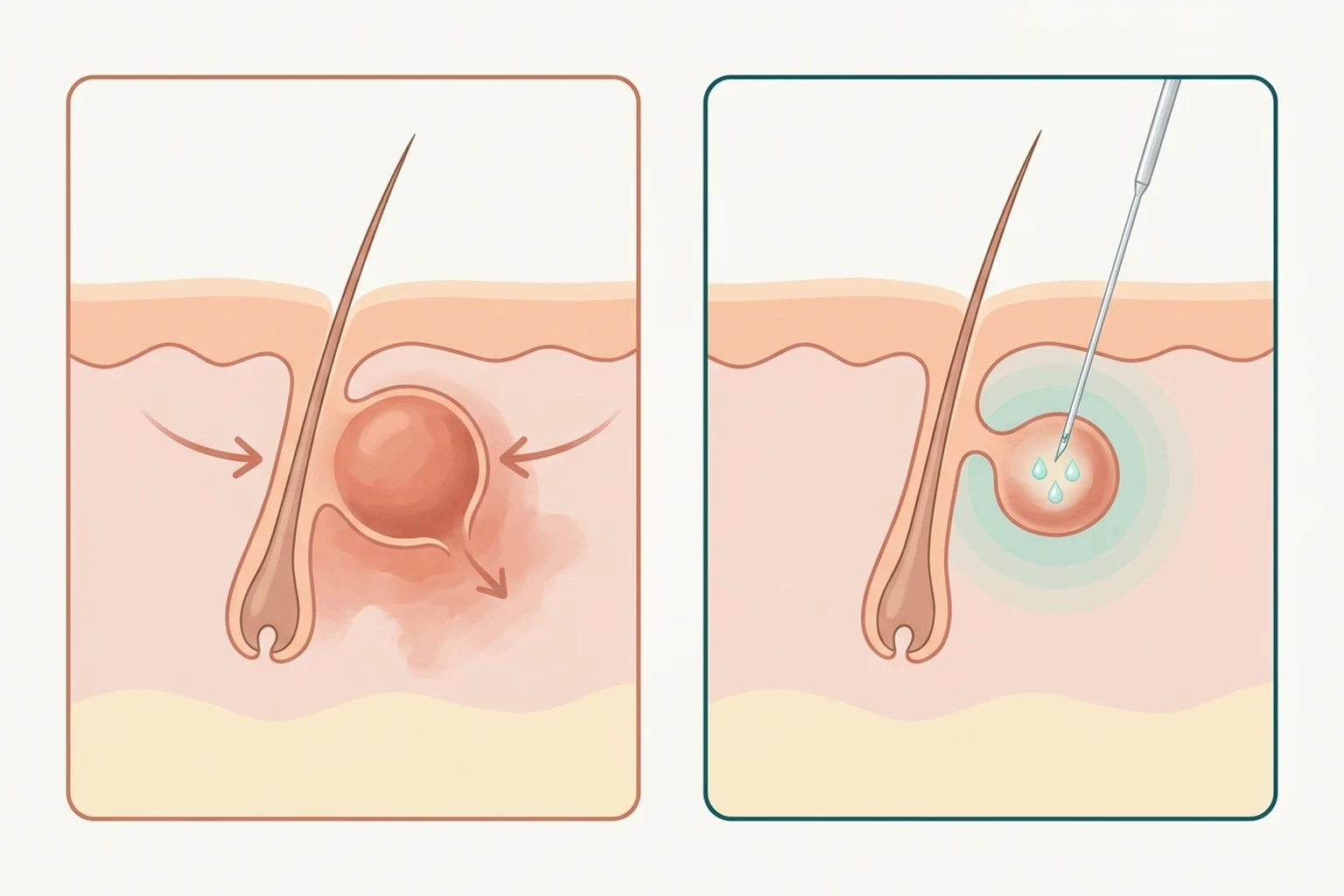
Should You Pop a Hidradenitis Suppurativa Boil? Steroid Shots, Urgent Care Lancing, and Safe Flare Relief
Nov 25, 2026 · 10 min read
Hidradenitis Suppurativa
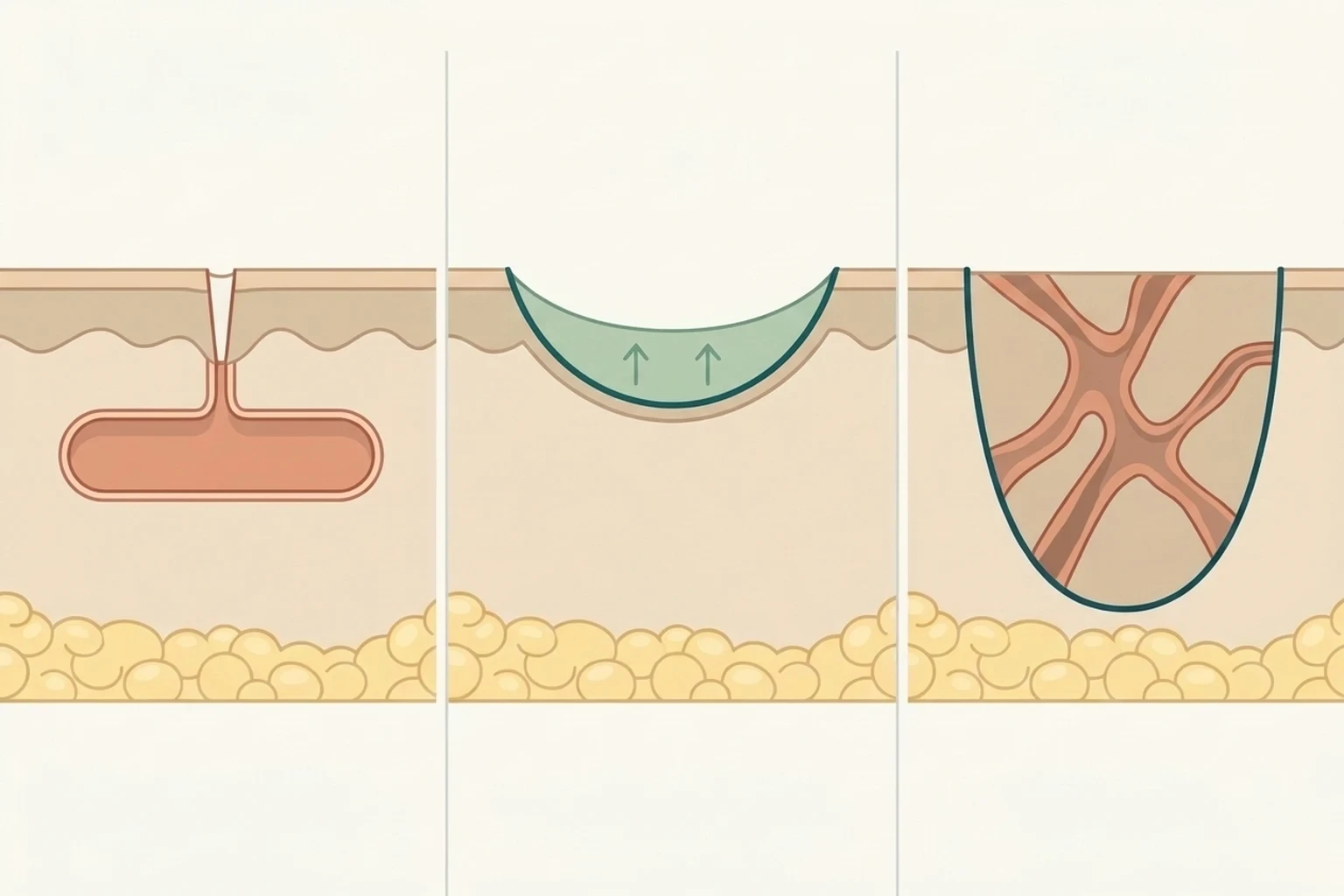
Hidradenitis Suppurativa Deroofing Versus Wide Excision Surgery: Recovery, Recurrence, and Weight-Denial Myths
Nov 25, 2026 · 10 min read
Hidradenitis Suppurativa
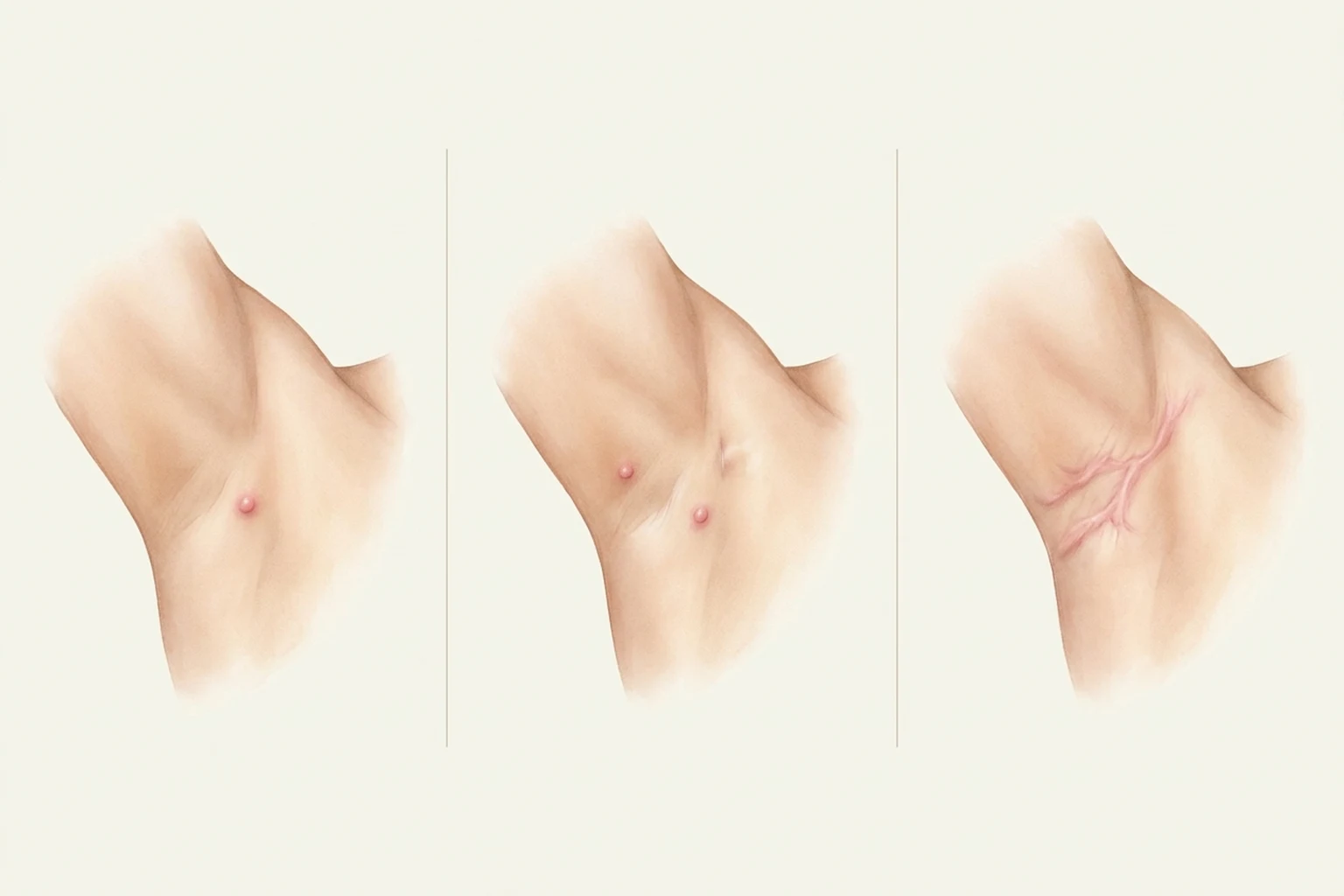
Hidradenitis Suppurativa: The Complete 2026 Dermatologist Guide (Stages, Causes, and New Guidelines)
Nov 25, 2026 · 14 min read