
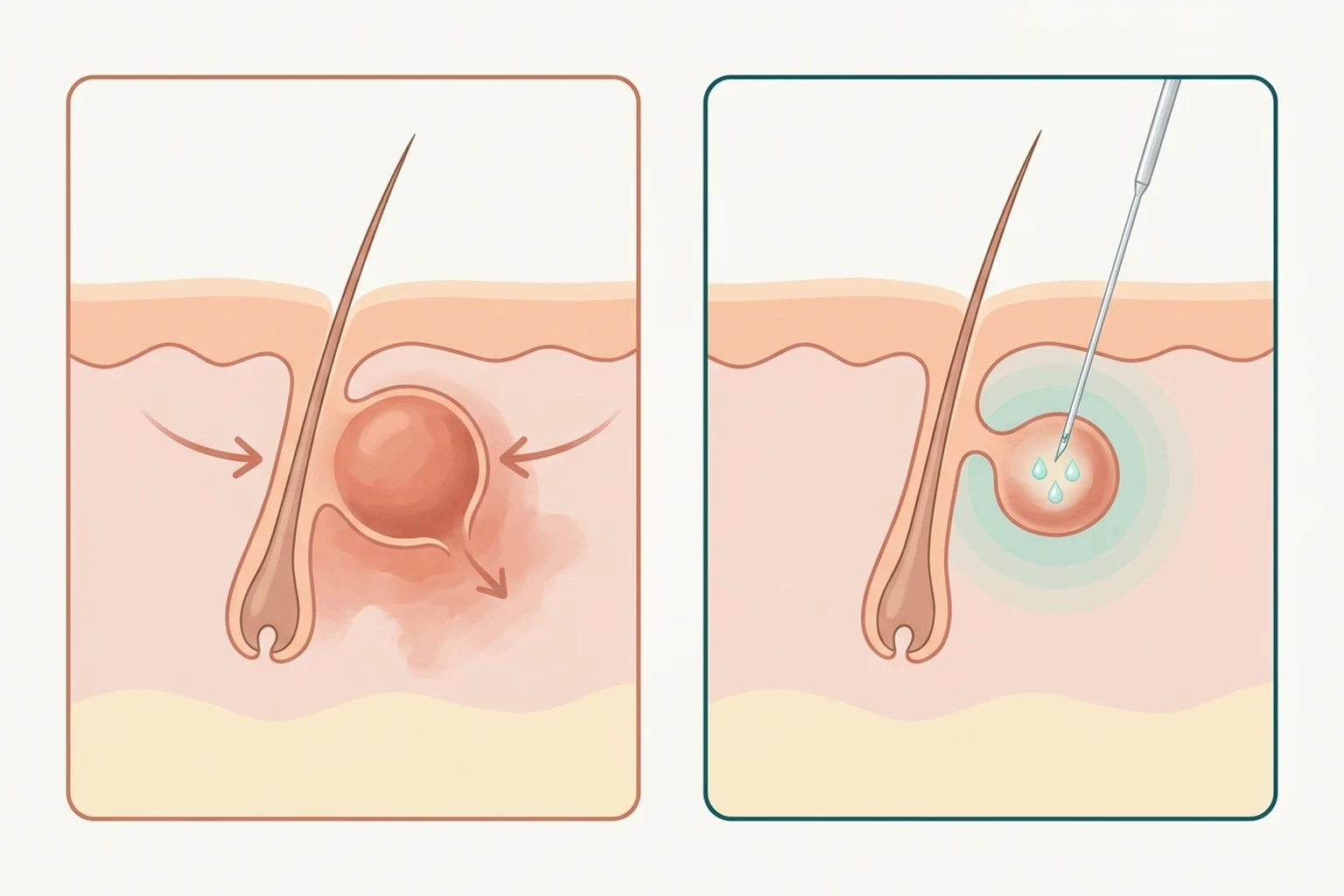
Artificial intelligence-generated image. Not an actual patient or treatment result.
Should You Pop a Hidradenitis Suppurativa Boil? Steroid Shots, Urgent Care Lancing, and Safe Flare Relief

Chief Medical Officer
No, you should never pop, squeeze, or lance a hidradenitis suppurativa (HS) nodule at home: pushing on a deep inflamed lump forces follicular contents sideways into healthy dermis, making pain, scarring, and future tunnels worse (Alikhan 2019 Part I). When a golf-ball lump throbs in your armpit or groin at midnight, wanting instant pressure release is completely human. Knowing why popping backfires, when a quick dermatology steroid shot beats a scalpel, and when urgent care is genuinely necessary puts you back in control.
In this article
Why should you never squeeze or pop a hidradenitis suppurativa lump at home?
An ordinary whitehead sits millimeters under the top skin layer and opens easily onto the surface. An HS nodule forms much deeper around an occluded hair follicle inside the dermis and subcutaneous tissue. Often there is no true surface opening, and much of the swelling is solid inflammatory cellular buildup rather than a simple pocket of liquid pus.
When you pinch or stab a deep HS lump with fingers or a sewing needle:
- Internal rupture spreads inflammation sideways: pressure blows out the weakest side of the follicular wall underneath the skin rather than upward, triggering a bigger, hotter inflammatory reaction 24 hours later.
- Trapped skin cells seed permanent tunnels: displaced epithelial cells can line new sideways channels under the skin, turning a single Stage 1 nodule into a chronic draining Stage 2 sinus tract.
- Home lancing introduces surface bacteria: cutting skin folds without sterile technique invites secondary cellulitis (spreading bacterial skin infection) on top of sterile HS inflammation.
How fast does a dermatologist steroid shot calm a painful flare?
For an acutely inflamed, firm, discrete HS nodule (especially one that feels rock-hard rather than soft and fluid-filled), dermatologists reach for an intralesional corticosteroid injection (dilute triamcinolone acetonide, commonly known by the brand name Kenalog) rather than a scalpel (Shams 2025; Naik 2026).
| Acute Flare Procedure | Best Lesion Type | What It Does | Main Limitation |
|---|---|---|---|
| Intralesional steroid shot (triamcinolone injection in dermatology clinic) | Firm, acutely painful, discrete nodules or early flares | Shuts down local inflammation rapidly with a tiny needle and leaves no open surgical wound (Shams 2025), often easing pain within 1 to 3 days in clinical practice | Temporary local skin thinning or pigment lightening can happen if high concentrations are injected repeatedly in the exact same spot; not a permanent cure for deep tunnels |
| Incision and drainage (I&D) (urgent care or emergency room lancing) | Tense, soft, liquid-filled (fluctuant) abscesses causing unbearable pressure pain | Releases trapped fluid immediately for short-term pain relief | Leaves the deep tunnel lining behind: 100% local recurrence at a median of 3 months in surgical follow-up (Ritz 1998); painful numbing and packing |
| Short oral steroid taper (prescribed by clinician) | Severe multi-site flare storms across several folds at once | Conditionally recommended in October 2026 as a brief rescue bridge while starting or adjusting long-term therapy (Naik 2026) | Rebound flares can happen if tapered too abruptly; unsafe for repeated long-term use |
| In-office deroofing (planned dermatology procedure) | The same stubborn lump or tunnel flaring repeatedly in one fixed spot | Removes the roof of the tract permanently under local anesthesia so the floor heals flat from below (Shams 2025) | Scheduled clinic procedure with an open wound that heals over weeks, not an emergency-room fix |
If you have an established dermatologist, call their office and say clearly: "I have a painful acute HS flare and need an urgent slot for a steroid injection." Many dermatology clinics hold same-week nurse or physician slots specifically for quick 5-minute flare injections that keep patients out of urgent care.
Why do emergency room and urgent care drainages keep coming back?
Many HS patients know the miserable cycle of urgent-care incision and drainage (I&D): excruciating lidocaine shots into acidic inflamed tissue, a quick stab incision, painful gauze packing, a prescription for cephalexin or trimethoprim-sulfamethoxazole, and the exact same lump refilling a few weeks later.
In the multinational Global Survey Of Impact and Healthcare Needs (VOICE) of HS patients, 18.3% reported 5 or more emergency room (ER) visits and 12.5% reported 5 or more hospitalizations for HS symptoms (Garg 2020). Patient-reported outcome research co-authored by University of North Carolina (UNC) dermatology specialists has examined why I&D experiences are so distressing, highlighting inadequate local anesthesia and incision pain, painful wound packing, and the need for compassionate clinician communication (Revankar 2023).
Simple lancing fails long term for one structural reason: draining fluid through a tiny slit leaves the epithelialized sinus wall completely intact underneath (Ritz 1998). That is why dermatologists reserve I&D strictly for tense, fluctuant (liquid-filled) abscesses causing intolerable pressure when immediate decompression is required, and then transition patients to long-term anti-inflammatory care or planned clinic deroofing to stop the cycle.
What safe steps calm a rock-hard hidradenitis suppurativa nodule overnight?
While waiting for your dermatologist or a virtual evaluation, focus on calming pressure and protecting skin rather than forcing drainage:
- Apply warm, clean, damp compresses: Soak a clean soft washcloth in comfortably warm (never scalding) plain water and rest it gently on the nodule for 10 to 15 minutes two or three times daily. In an online survey of 438 adults with HS, 82.4% used warm compresses, making them the single most common home comfort measure (Fernandez 2022).
- Use appropriate over-the-counter pain relief if safe for you: In the same survey, 74.7% used oral nonsteroidal anti-inflammatory medications (such as ibuprofen or naproxen) and 44.7% used acetaminophen (Fernandez 2022). Confirm safety with your doctor if you have stomach ulcers, kidney disease, blood thinners, or pregnancy.
- If a nodule opens naturally on its own, let it drain gently: Never squeeze the sides to "empty" it. Rinse calmly with lukewarm water in the shower, pat around it, protect surrounding intact skin, and cover with a soft non-stick pad or silicone foam dressing. See our HS wound care and bandage guide.
- Remove all clothing friction: Wear loose, soft cotton layers so seams and elastic do not press on the swelling overnight.
- Apply your prescribed flare topical if you already have one: If your clinician prescribed compounded resorcinol 15% cream for emerging intact nodules, dab it cleanly onto intact bumps as directed (skipping wide open ulcerations).
When is an acute hidradenitis suppurativa flare a true medical emergency?
Do not wait at home or rely on an online message if your flare crosses into signs of spreading bacterial infection or systemic illness. Seek same-day in-person urgent care or emergency evaluation for:
- Fever, chills, shaking, nausea, or lightheadedness.
- Rapidly expanding redness, warmth, or firm swelling spreading outward well beyond the original nodule (classic signs of cellulitis).
- Red streaks traveling along the skin away from the flare.
- Severe escalating pain preventing walking, sitting, or sleeping despite safe home care, or pain near the eye or deep perianal tissue with inability to pass stool or urine comfortably.
Not sure whether a new painful fold bump is HS, a staph boil, or an ingrown hair? Read our side-by-side comparison of boils, ingrown hairs, and hidradenitis suppurativa.
Important Information
This article is educational and is not emergency or personal medical advice. Never attempt to cut, lance, or drain a skin abscess at home. Intralesional corticosteroid injections, incision and drainage, and oral steroid tapers require evaluation by a licensed clinician. KindleeRx is not affiliated with Bristol Myers Squibb or any drug manufacturer named in this article. If you experience fever, chills, rapidly spreading redness, red streaks, severe pain, or dizziness, seek urgent in-person medical care immediately.
Sources
- Naik HB, Yeung H, Frazer-Green L, et al. Joint American Academy of Dermatology-Hidradenitis Suppurativa Foundation guidelines of care for the management of hidradenitis suppurativa. Journal of the American Academy of Dermatology 2026.
- Shams RB, Milanovic S, Sayed CJ. Procedural Interventions for Hidradenitis Suppurativa. Dermatologic Clinics 2025.
- Ritz JP, Runkel N, Haier J, Buhr HJ. Extent of surgery and recurrence rate of hidradenitis suppurativa. International Journal of Colorectal Disease 1998.
- Garg A, Neuren E, Cha D, Kirby JS, Ingram JR, et al. Evaluating patients' unmet needs in hidradenitis suppurativa: Results from the Global Survey Of Impact and Healthcare Needs (VOICE) Project. Journal of the American Academy of Dermatology 2020.
- Revankar RR, Blum F, Yeung H, Patel HA, Holahan H, et al. Factors influencing patient experience during incision and drainage procedures in hidradenitis suppurativa: an analysis of patient-reported outcomes. British Journal of Dermatology 2023.
- Fernandez JM, Thompson AM, Borgstrom M, Orenstein LAV, Hsiao JL, Shi VY. Pain management modalities for hidradenitis suppurativa: a patient survey. Journal of Dermatological Treatment 2022.
- Alikhan A, Sayed C, Alavi A, et al. North American clinical management guidelines for hidradenitis suppurativa: Part I. Journal of the American Academy of Dermatology 2019.
Related Articles
Hidradenitis Suppurativa
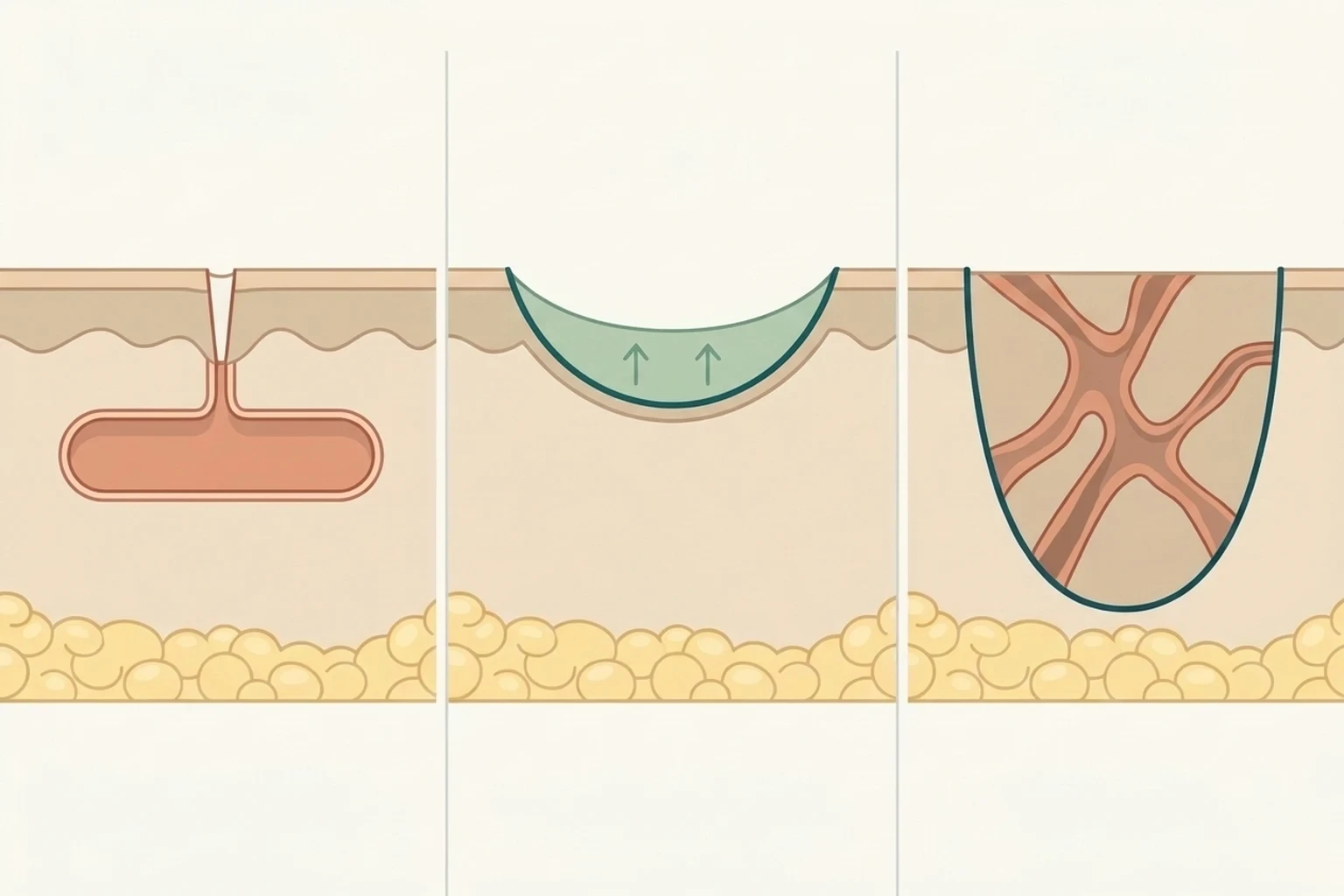
Hidradenitis Suppurativa Deroofing Versus Wide Excision Surgery: Recovery, Recurrence, and Weight-Denial Myths
Nov 25, 2026 · 10 min read
Hidradenitis Suppurativa
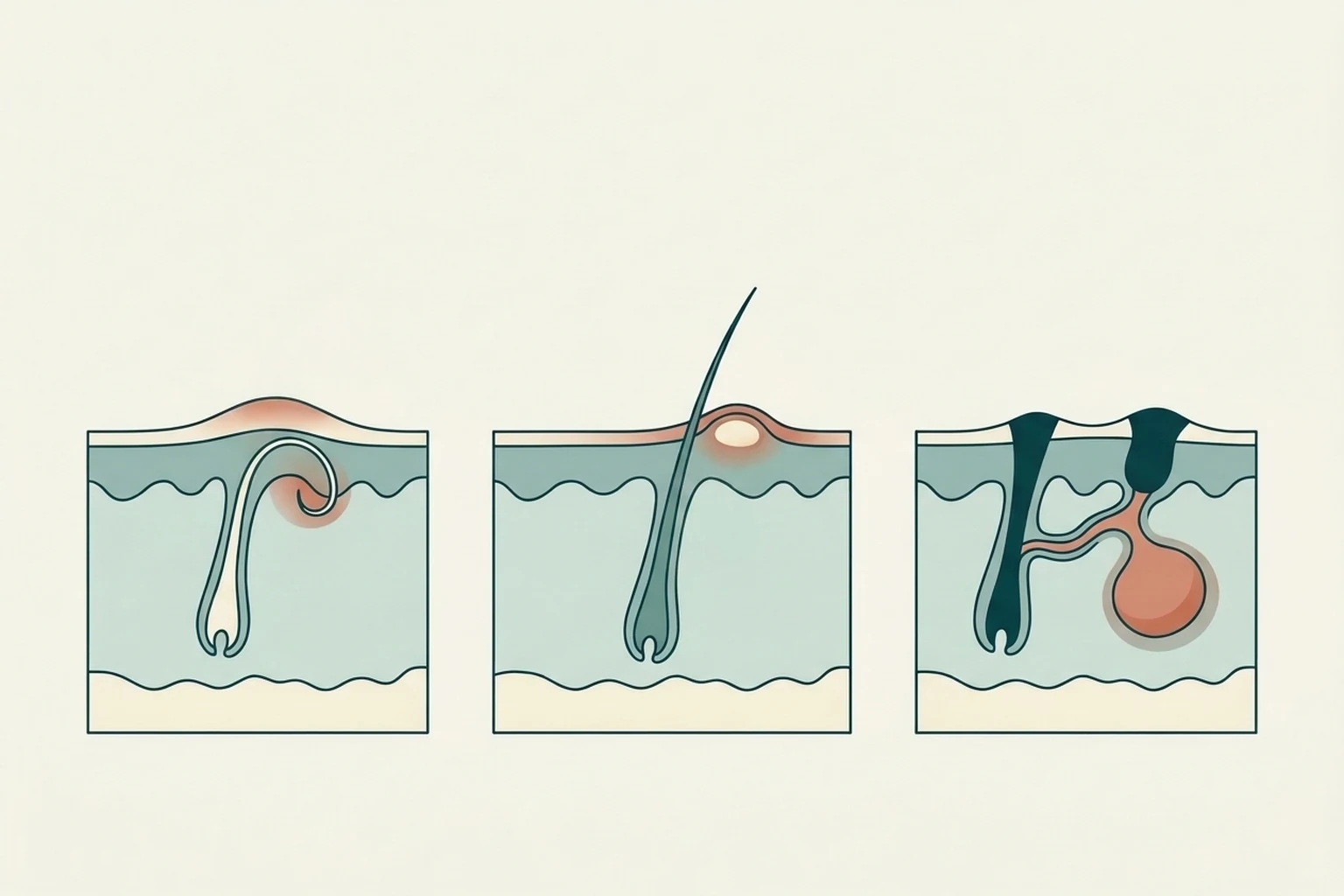
Boil, Ingrown Hair, or Hidradenitis Suppurativa? 7 Clues Dermatologists Use to Tell the Difference
Nov 25, 2026 · 12 min read
Hidradenitis Suppurativa
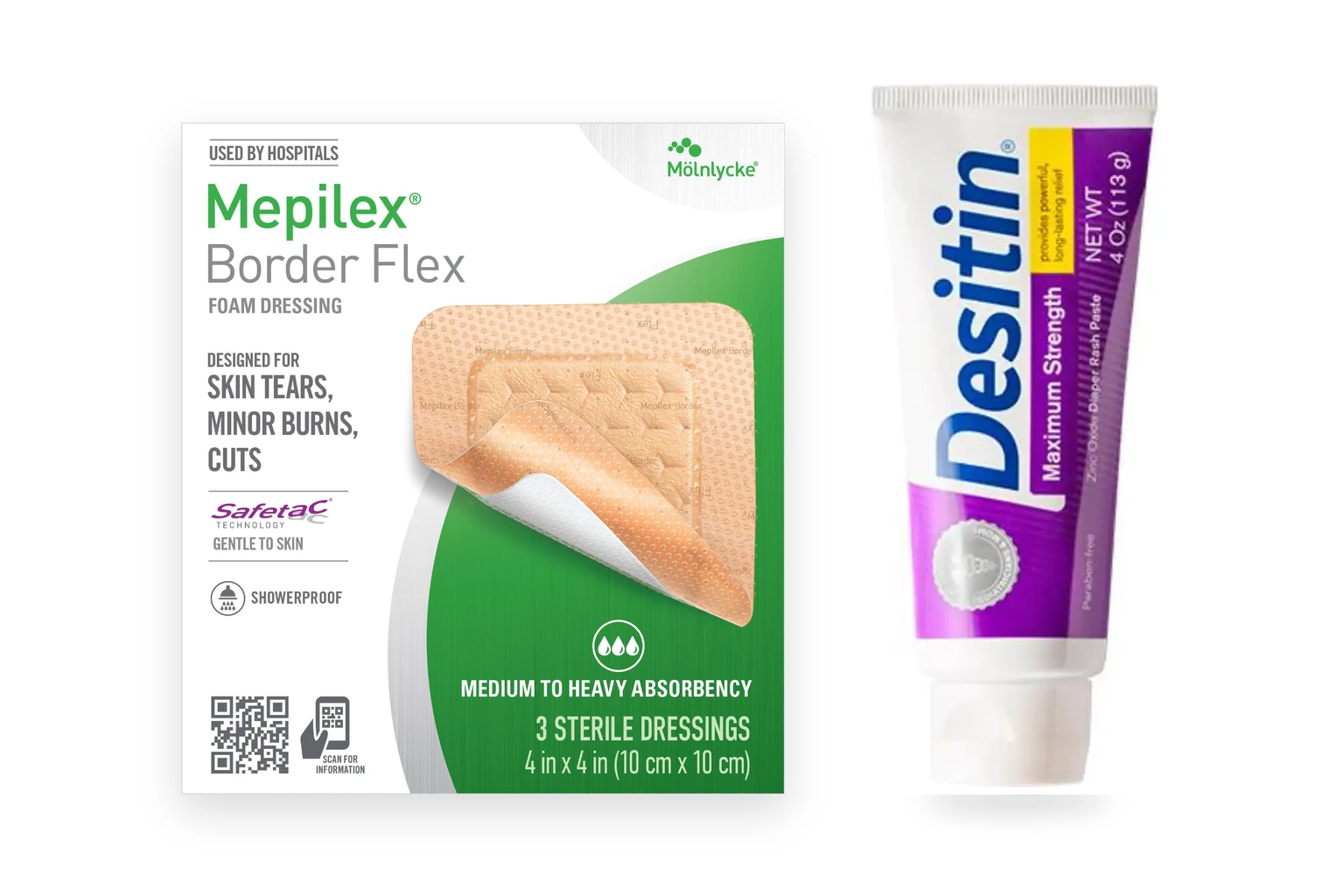
Hidradenitis Suppurativa Wound Care: Silicone Bandages, Hydrocolloids, Desitin 40% Zinc Oxide, Odor, and Everyday Comfort
Nov 25, 2026 · 10 min read