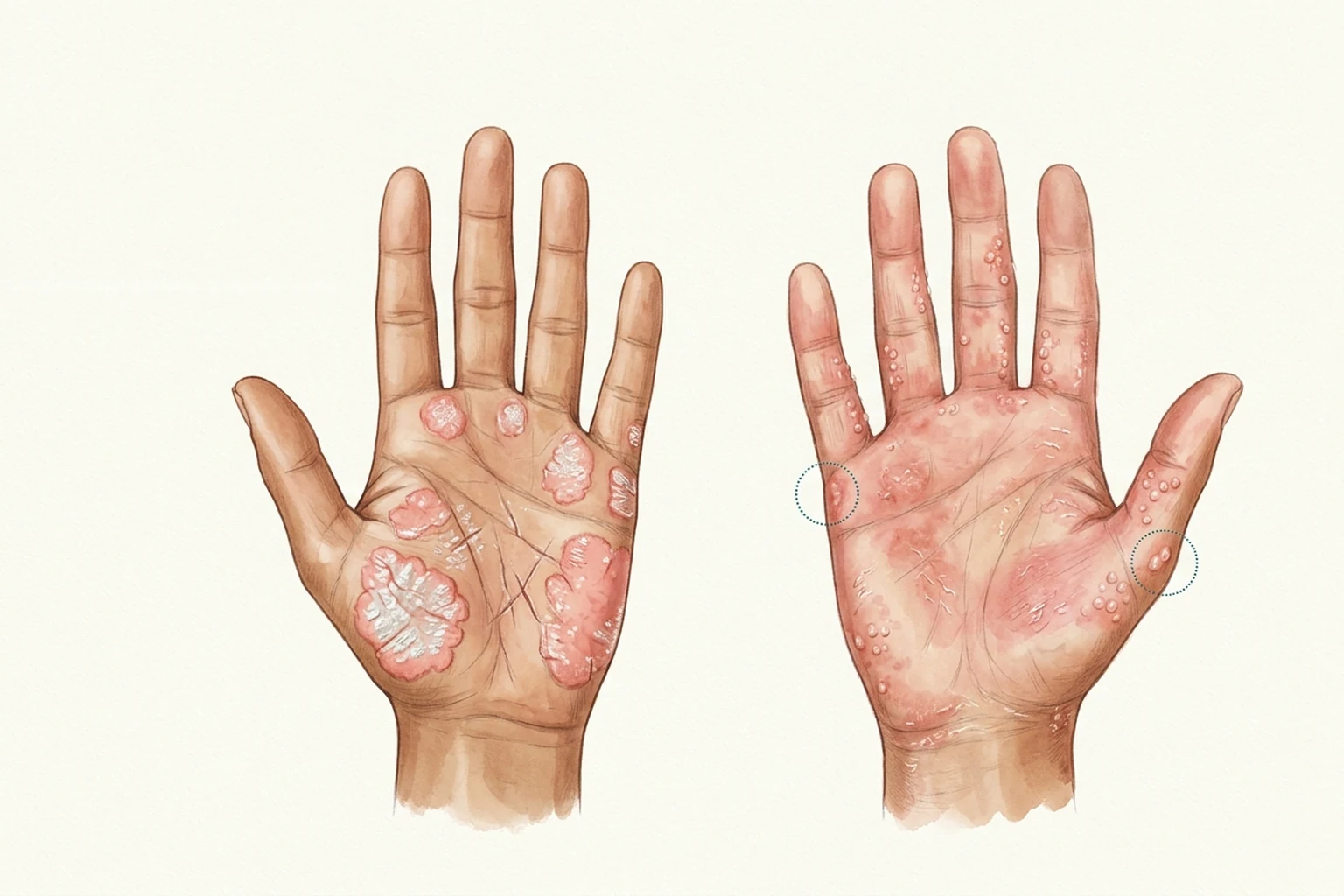
AI-generated illustration. Not an actual patient or treatment result.
Palmoplantar Psoriasis vs Hand Eczema: Why Stubborn Palm and Sole Rashes Get Misdiagnosed

Chief Medical Officer
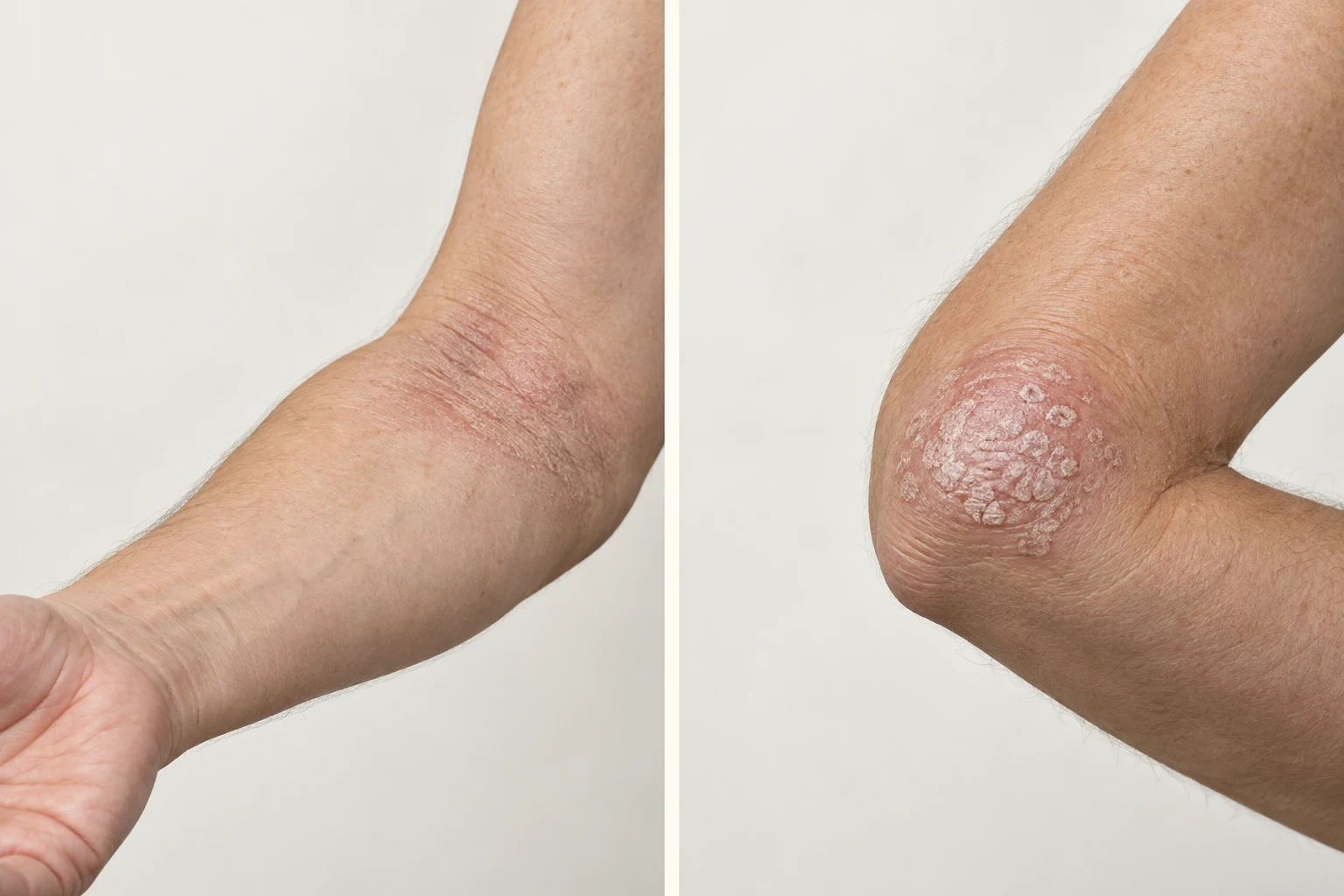
Palmoplantar psoriasis and chronic hyperkeratotic hand eczema produce almost identical thick yellow-white plaques and painful bleeding cracks on the palms and soles, and roughly 1 in 5 palmoplantar psoriasis patients has zero plaques anywhere else on the body (Farley 2009). Mislabeling one as the other, or missing a stealth fungal infection underneath, explains why so many patients cycle through four or five creams before getting relief.
In this article
Why are palmoplantar psoriasis and chronic hand eczema so easy to confuse?
Palm and sole skin carries an extra-thick protective outer layer (stratum corneum) built to withstand friction and body weight. That thick skin responds to chronic inflammation in only a few visual ways, causing psoriasis, chronic hand dermatitis, allergic contact dermatitis, and fungal skin infection to converge into cracked, scaly, hyperkeratotic plaques (Chaduvula 2023).
Real-world clinic numbers show how tight that overlap gets:
- In a 150-patient review by Farley and Menter, 52% (78 patients) had hyperkeratotic plaques, 16% (24) had sterile pustules, 12% (18) had both, and 20% (30) showed an indeterminate pattern (Farley 2009).
- In a 60-patient tertiary clinic study of hyperkeratotic palm and sole disease, 24 patients (40%) had palmoplantar psoriasis and 19 (31%) had chronic hand-foot eczema, and 4 of those 19 eczema patients looked clinically and dermoscopically identical to psoriasis until histology settled the diagnosis (Chaduvula 2023).
What bedside clues help separate palmoplantar psoriasis, hand eczema, and fungus?
Dermatologists never examine the palms in isolation. Looking at borders, symmetry, nails, distant body skin, and blister patterns narrows the diagnosis quickly:
| Clinical clue | Palmoplantar psoriasis | Chronic hand eczema | Fungal infection (tinea) |
|---|---|---|---|
| Plaque borders | Sharply demarcated edges, often stopping cleanly at the wrist crease or sides of the sole | Ill-defined, blending edges that creep onto finger webs and backs of hands | Fine powdery white scale tucked inside palm creases, sometimes with a faint raised border |
| Symmetry | Usually bilateral and symmetric on both palms or both soles | Often symmetric, or worse on the dominant working hand exposed to water and soaps | Classic "two feet, one hand" asymmetry (both soles scaly, only one palm scaly) |
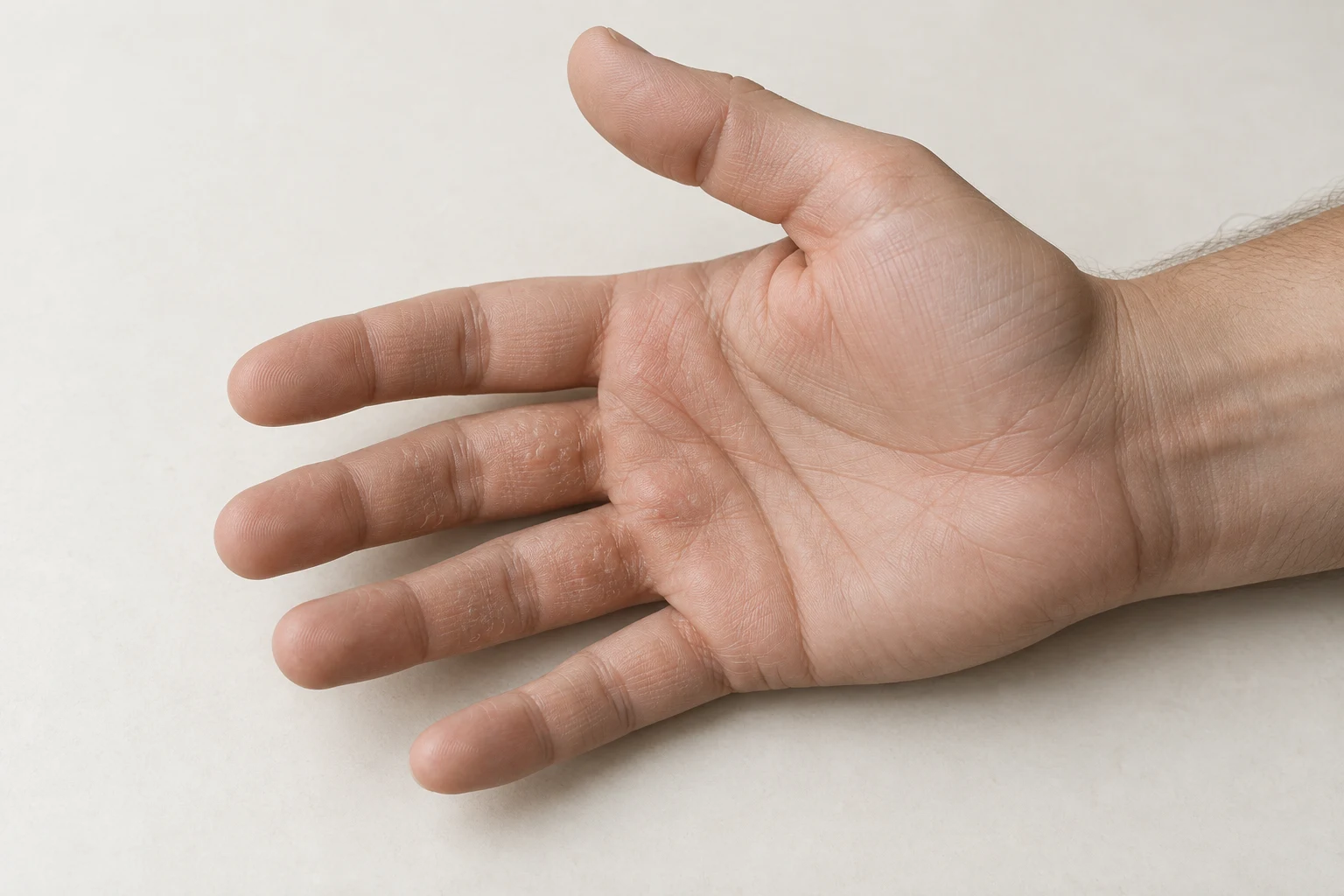
| Primary symptom | Deep painful cracking and splitting (itch is often secondary) | Intense itching, burning, and tiny deep tapioca-like fluid blisters along finger sides | Mild-to-moderate dry flaking that spreads steadily if treated with hydrocortisone |
| Clues elsewhere | Thimble nail pitting, oil-drop nail spots, scalp scale, elbow plaques, or gluteal cleft redness | Childhood eczema, asthma, seasonal allergies, or clear work wet-exposure / chemical triggers | Thick yellowed toenails (onychomycosis) or peeling between the toes |
For broader body-wide comparisons, see our guides to eczema versus psoriasis and hand and foot eczema.
Can a skin biopsy still show overlapping features on palms and soles?
Yes, and patients are often surprised when a palm biopsy report reads "psoriasiform spongiotic dermatitis" instead of a one-word verdict. In a 52-patient clinicopathological study of palmoplantar psoriasis, pathologists confirmed clinical-histologic agreement in 88.5% of cases, yet 65.4% of palmoplantar psoriasis biopsies still contained spongiosis (microscopic fluid pockets traditionally associated with eczema) alongside hyperkeratosis (100%) and parakeratosis (100%) (Das 2024).
That microscopic overlap is why European Society of Contact Dermatitis (ESCD) guidelines recommend combining clinical exam, a KOH fungal test (to rule out tinea), and patch testing whenever chronic hand dermatitis persists beyond 3 months or resists strong topicals (Thyssen 2022). Some patients genuinely carry a mixed "psoriasis-eczema overlap" state that benefits from joint management.
Why do standard creams fail on thick palm and sole skin?
A mild cream that clears forearm skin in 5 days barely penetrates the thick outer layer of a heel or palm. Three everyday mistakes keep palm and sole flares trapped for months:
- Using thin lotions instead of ointments: Ointments seal cracks and deliver active medicine deeper than water-based lotions.
- Skipping a scale softener (keratolytic): Layering prescription anti-inflammatory ointment on top of thick rigid dead scale blocks absorption. Adding urea or salicylic acid softens hard scale so active medicine actually reaches live inflamed skin underneath.
- Constant unprotected handwashing: Hot water, antibacterial hand soaps, dish detergents, and friction continuously reopen fissures in both hand eczema and palmoplantar psoriasis (through the Koebner trauma response). Switching to lukewarm fragrance-free washes and wearing cotton-lined gloves for wet chores protects healing tissue (Thyssen 2022).
How do dermatologists treat stubborn palm and sole psoriasis or eczema?
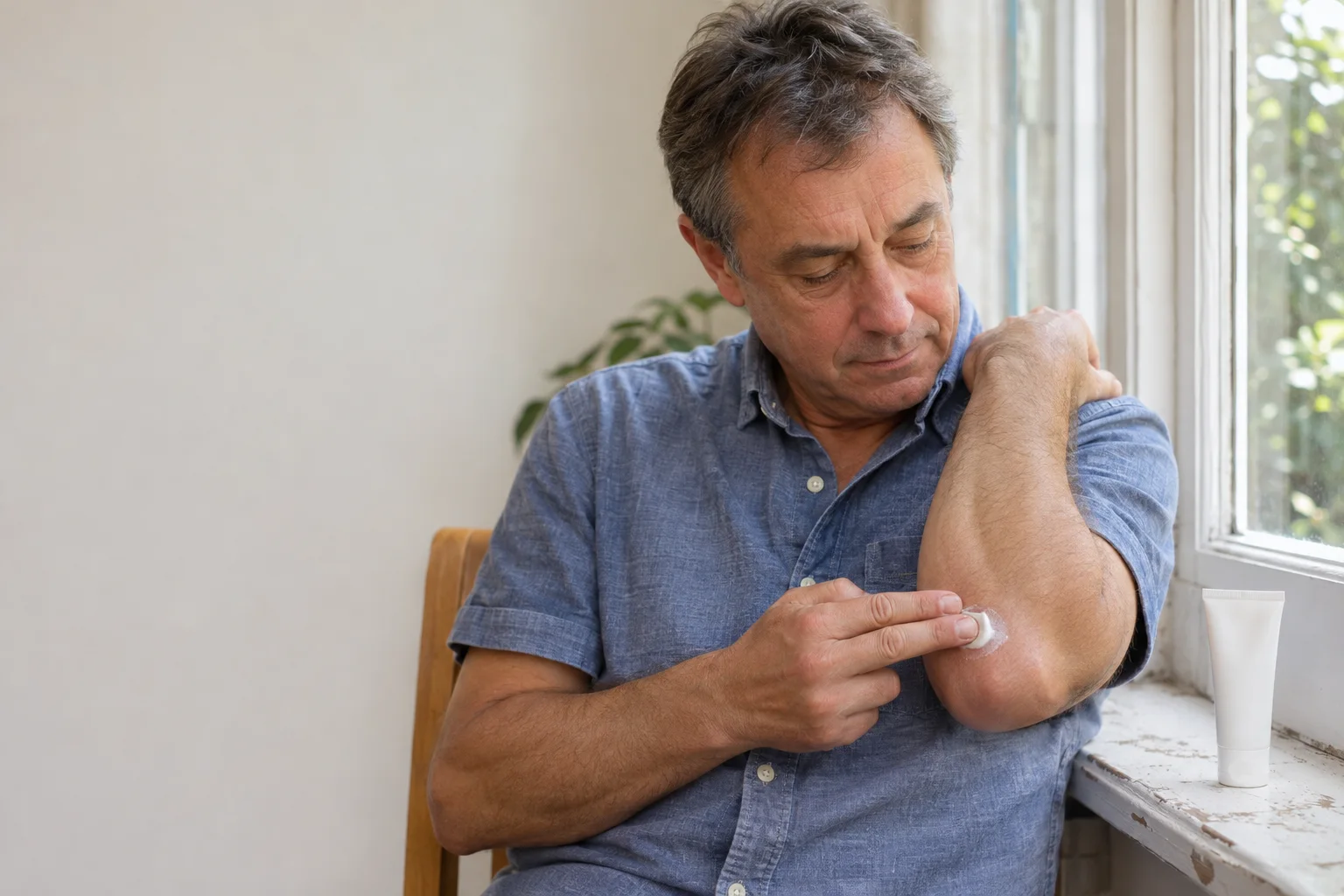
First-line treatment typically pairs a high-potency topical ointment (often applied under damp or dry white cotton gloves or socks overnight for short supervised bursts) with a keratolytic softener (such as urea or salicylic acid) and thick fragrance-free petrolatum throughout the day. Non-steroid prescription topicals and vitamin D analogs help maintain control once deep fissures seal. Stubborn pustular or disabling palmoplantar disease that fails intensive topicals often steps up in an in-person dermatology clinic to targeted hand-foot phototherapy, oral acitretin, methotrexate, or systemic biologics and Janus kinase (JAK) inhibitors.
For eligible adults with mild-to-moderate palm or sole plaques or chronic hand eczema who want a structured prescription topical regimen without clinic wait times, licensed clinicians (physician assistants and nurse practitioners working under a board-certified dermatologist's protocols) review your intake, allergen exposure history, and clear photos through the KindleeRx Psoriasis Regimen or KindleeRx Eczema Regimen and reply in under 5 hours on average. When clinically appropriate, a licensed clinician selects two prescriptions per 90-day plan (steroid-free options are available): the Psoriasis Regimen costs $149 on the first automatic-refill order, then $149 every 90 days before coupons (including the $20 consultation fee, free shipping, and 90 days of clinician messaging), or $181.25 one-time before coupons, and the Eczema Regimen costs $149 on the first automatic-refill order, then $149 every 90 days before coupons (including the $20 consultation fee, free shipping, and 90 days of clinician messaging), or $181.25 one-time before coupons. Available in 44 states plus Washington, D.C. (excluding Arkansas, Kansas, Maryland, Mississippi, Nebraska, and West Virginia), with a full refund including the consultation fee if treatment is not prescribed. Severe disabling fissures, pustular flares, or suspected allergic contact dermatitis needing patch testing or skin biopsy should be evaluated in person by a board-certified dermatologist. Also compare everyday topical choices in our guide to the best prescription creams for psoriasis.
Important Information
KindleeRx offers compounded topical prescription medications prepared by licensed United States compounding pharmacies alongside standard generic prescriptions when clinically appropriate. Compounded medications are not approved by the Food and Drug Administration (FDA) and are not reviewed by the FDA for safety, effectiveness, or quality (FDA compounding guidance). KindleeRx does not perform in-office skin biopsies, KOH scrapings, or patch testing. Eligibility is determined by a licensed clinician after reviewing your medical history and photos. Not all patients qualify. Individual results vary. This article is educational and is not medical advice.
Sources
- Farley E, Masrour S, McKey J, Menter A. Palmoplantar Psoriasis: A Phenotypical and Clinical Review With Introduction of a New Quality-of-Life Assessment Tool. Journal of the American Academy of Dermatology 2009.
- Das G, Mathur M, Shrestha A, Jaiswal S, Maharjan S. Palmoplantar Psoriasis: A Clinicopathological Correlation in a Tertiary Care Hospital. Skin Research and Technology 2024.
- Chaduvula J, Chintada D, Vijayashree J, Chalamalasetty SS, et al. A Clinico-Epidemiological Study of Hyperkeratotic Palmoplantar Lesions and Its Correlation With Dermoscopy and Histopathology. Cureus 2023.
- Thyssen JP, Schuttelaar MLA, Alfonso JH, Andersen KE, et al. Guidelines for Diagnosis, Prevention, and Treatment of Hand Eczema. Contact Dermatitis 2022.
- Food and Drug Administration. Understanding the Risks of Compounded Drugs.