
Psoriasis is an inflammatory skin disease driven by an overactive immune system. The plaques, scale, itch, and joint pain that come with it can take a real toll on quality of life. What many patients are not told often enough is how closely the disease is linked to body weight, metabolic health, and the systemic inflammation that comes with both. And how meaningfully weight reduction can change disease severity, and even how well your psoriasis medications work.
PsoriasisMay 17, 2026 · 13 min read
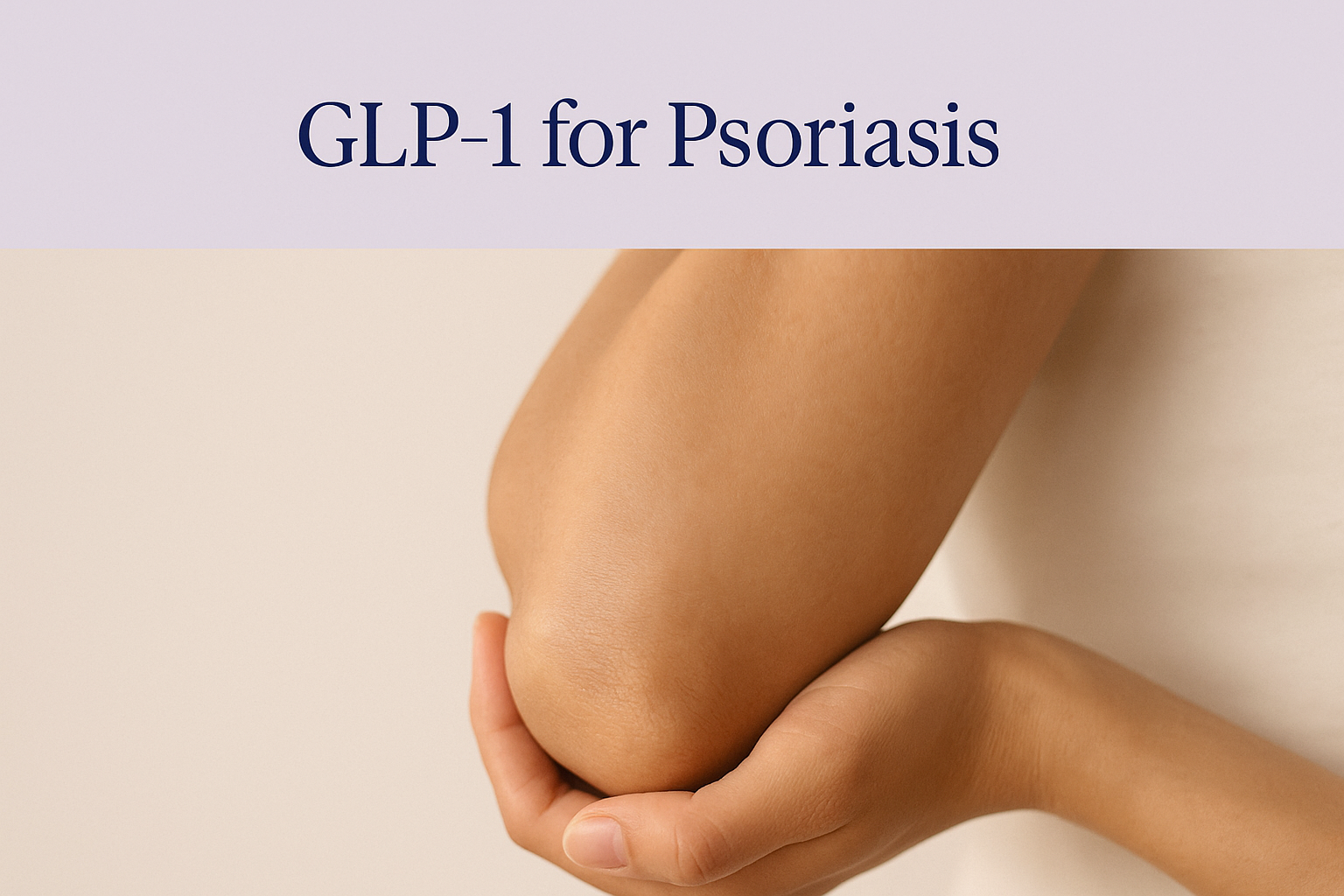
GLP-1 for Psoriasis: How Weight Loss Can Improve Skin Clearance

Dr. Brandon Kirsch, MD, FAAD
Chief Medical Officer
This article walks through what the evidence shows about the relationship between obesity and psoriasis, why weight loss improves skin clearance for many patients, and how GLP-1 medications like semaglutide and tirzepatide fit into a modern psoriasis care plan. If your dermatologist has never connected your weight to your skin, the weight conversation most psoriasis patients never have is the place to start.
A Quick Refresher on Psoriasis
Psoriasis is a chronic, immune-mediated disease that most often shows up as raised, red, scaly plaques on the elbows, knees, scalp, and lower back. The disease lives on a spectrum from mild (a few small patches) to severe (extensive body coverage and joint involvement). Up to 30 percent of patients also develop psoriatic arthritis at some point.
The biological driver is the IL-23 to IL-17 axis. IL-23 produced by dendritic cells stimulates IL-23R-positive T cells, which then produce IL-17A, IL-17F, and IL-22. IL-17A amplifies the inflammation in keratinocytes, fibroblasts, and neutrophils. IL-22 promotes the epidermal hyperplasia and acanthosis that make plaques raised and well-demarcated. Modern biologics that target IL-17, IL-23, or TNF-alpha have transformed care for moderate-to-severe disease. But even with the best biologics, body weight can change how well treatment works.
If you are not sure whether your skin condition is psoriasis or something else, our eczema vs. psoriasis guide breaks down the differences.
The Obesity-Psoriasis Connection
The relationship between body weight and psoriasis is one of the most consistent findings in modern dermatology research.
Obesity worsens psoriasis severity. Multiple large studies have shown that higher body mass index is associated with:
- Higher PASI (Psoriasis Area and Severity Index) scores
- More extensive body surface involvement
- Higher risk of progressing from mild to severe disease
- Higher risk of developing psoriatic arthritis
- Poorer response to systemic therapy and biologics
- Higher rates of metabolic syndrome and cardiovascular disease
Why? Three things are happening at once.
Adipose tissue is inflammatory. Fat is not inert. Adipose tissue produces pro-inflammatory cytokines including IL-6 and TNF-alpha. Those are the same cytokines that feed psoriasis at a biological level. The more adipose tissue you carry, the more inflammatory signal in circulation, and the more fuel for the disease. Our piece on how visceral fat drives the systemic inflammation that reaches your skin walks through that mechanism.
Higher weight reduces biologic drug exposure. Most psoriasis biologics are dosed at a fixed amount, not adjusted for body weight (ustekinumab is the partial exception, with a weight-tiered dose). A patient at 270 pounds on a fixed-dose biologic gets the same dose as a patient at 170 pounds, which means lower drug exposure per kilogram in the heavier patient. That translates into a real and measurable difference in response. Studies of adalimumab and the IL-17 inhibitors show reduced response rates at higher body weights.
Metabolic comorbidity. Psoriasis patients have higher rates of insulin resistance, type 2 diabetes, fatty liver, and cardiovascular disease than the general population. These conditions are themselves inflammatory and worsen psoriasis severity. They also raise the stakes of leaving disease undertreated.
What Weight Loss Does for Psoriasis
This is where the news is genuinely good. Weight loss is one of the few interventions that has consistently shown disease-modifying effects in psoriasis, independent of medication.
In randomized trials and large cohort studies of psoriasis patients who lose 5 to 10 percent or more of body weight, the findings have been remarkably consistent:
- Measurable PASI improvement, often in the range of 30 to 50 percent reduction
- Reduced plaque extent
- Improved scalp involvement
- Improved response to biologics, or better response if biologics are started after weight loss
- Possible improvement in psoriatic arthritis disease activity
- Lower CRP and other inflammatory markers
The pattern is dose-responsive. Patients who lose more weight tend to see more PASI improvement. And the benefit holds across all categories of disease severity, from mild to severe.
The catch is the same one most patients with inflammatory disease face: meaningful, sustained weight loss is genuinely hard, especially when the disease itself contributes to fatigue, joint pain, and treatment fatigue. This is where modern weight management medications change the picture.
Where GLP-1 Medications Fit
GLP-1 receptor agonists like semaglutide (Wegovy, Ozempic) and tirzepatide (Zepbound, Mounjaro) have transformed medical weight management. For psoriasis patients specifically, three mechanisms matter.
Sustainable weight loss. GLP-1 medications produce average weight reductions of about 15 percent for semaglutide (STEP-1) and 20 to 22 percent for tirzepatide (SURMOUNT-1) when combined with lifestyle changes. That is well above the 5 to 10 percent threshold where measurable PASI improvement has been documented.
Improved biologic exposure. As patients lose weight, the per-kilogram exposure of fixed-dose biologics improves. For patients who have plateaued on a biologic, weight loss can be the difference between partial response and meaningful clearance. I am seeing more reports of psoriasis patients improving on their existing biologic after losing significant weight on GLP-1 therapy.
Direct anti-inflammatory effects. GLP-1 receptors are expressed on immune cells including dendritic cells and T lymphocytes, the same cells central to psoriasis pathogenesis. Research has shown that GLP-1 receptor activation reduces pro-inflammatory cytokine release, lowers CRP, and dampens inflammatory pathways that overlap with the IL-23 to IL-17 axis. There are even case reports of psoriasis clearing on GLP-1 therapy independent of weight loss, which is striking and suggests a direct mechanism worth taking seriously.
To be clear about what GLP-1 therapy is and is not:
It is not FDA-approved primary treatment for psoriasis. Topical steroids, vitamin D analogs, methotrexate, apremilast, biologics like adalimumab, ustekinumab, secukinumab, ixekizumab, risankizumab, and others remain the appropriate primary therapies for psoriasis.
It is a clinically reasonable adjunct for psoriasis patients who also meet weight management criteria. For patients on biologics where weight may be limiting drug exposure, the case is especially strong.
For a deeper look at how these medications work, see our explainer on how GLP-1 medications work and what to expect in the first three months of therapy.
What a Psoriasis-Aware GLP-1 Program Should Do
If you are considering GLP-1 therapy as part of your psoriasis care, a few things matter more than the medication itself.
A clinician who understands your full picture. Your prescribing clinician should know your psoriasis severity, your current treatments (topicals, systemics, biologics), your other medical history, and your goals. Psoriasis-specific therapies should continue alongside the weight management intervention, not be replaced by it.
Coordination with your dermatologist. GLP-1 therapy is a weight management intervention, not a psoriasis treatment. If you are on a biologic or another systemic agent, that should continue under your dermatologist's care while GLP-1 therapy supports the weight management goal. If your psoriasis improves on your current biologic as you lose weight, your dermatologist may eventually consider dose-spacing or other adjustments.
Realistic expectations. Weight loss is gradual. Most patients see the largest reductions over the first 6 to 12 months. Skin improvement tends to follow weight reduction, not lead it. The early weeks of GLP-1 therapy are about adjusting to the medication.
Ongoing clinical access. Side effects, dose changes, and questions are part of the process. Direct messaging access with your clinician matters.
KindleeRx offers a psoriasis treatment program built on that same dermatology-led, clinician-access model.
Practical Considerations Before You Start
If you are thinking about GLP-1 therapy as part of your psoriasis plan, here are the questions worth thinking through.
Are you already on a biologic? Most psoriasis biologics (adalimumab, ustekinumab, secukinumab, ixekizumab, risankizumab, guselkumab, tildrakizumab, bimekizumab, and others) have favorable interaction profiles with GLP-1 therapy. Coordination with your dermatologist matters, but the combination is not unusual and is increasingly common.
Are you on methotrexate or cyclosporine? Both are fine alongside GLP-1 therapy, but your clinician should know. Methotrexate in particular requires regular monitoring and that should continue under your dermatologist's care.
Do you have psoriatic arthritis? Many psoriasis patients do. The combination of weight loss and reduced systemic inflammation has been shown to improve PsA disease activity in addition to skin disease.
Do you have type 2 diabetes or prediabetes? Many psoriasis patients do. GLP-1 therapy can be especially well suited for this group since the medication addresses insulin resistance, weight, and inflammation at once.
Has your biologic stopped working as well as it used to? Weight gain over time can reduce biologic response. GLP-1 therapy and the weight reduction it supports may help recover that response without switching biologics.
What the Evidence Does Not Yet Show
It is worth being honest about the limits of what we know. Most of the literature linking weight loss to psoriasis improvement predates the modern GLP-1 era and used bariatric surgery or intensive lifestyle intervention as the weight loss method. The biological case for why GLP-1 therapy should help psoriasis is strong, and clinical experience is accumulating quickly, but large randomized trials of GLP-1 medications specifically for psoriasis outcomes are still emerging.
That is not a reason to wait. Weight reduction is one of the few interventions with consistent disease-modifying effects in psoriasis, and GLP-1 medications are the most effective pharmacologic tool currently available to achieve it. The combination is clinically reasonable. It is just not, and may never be, FDA-approved as a psoriasis therapy specifically.
Bottom Line
If you live with psoriasis and your body weight is a contributor to your disease, GLP-1 therapy is worth a conversation with your clinician. The relationship between obesity, systemic inflammation, and psoriasis is well established. Meaningful weight loss improves PASI scores, biologic response, and quality of life for many patients. GLP-1 medications are the most effective pharmacologic tool currently available to help you get there, and they may be doing additional anti-inflammatory work beyond the weight loss itself.
A clinician should evaluate your full medical history, your current psoriasis care, and your goals to determine whether GLP-1 therapy is appropriate. Good care includes clinician oversight, ongoing monitoring, and clinical support so the treatment supports your skin, not just the scale.
Frequently Asked Questions
Is GLP-1 therapy FDA-approved for psoriasis? No. GLP-1 medications are FDA-approved for weight management, not as primary treatment for psoriasis. They are used in psoriasis patients as an adjunct to address the weight and metabolic contributors to disease severity.
How much weight loss do I need to see psoriasis improvement? The medical literature suggests that 5 to 10 percent of body weight is consistently associated with measurable PASI improvement. Larger reductions tend to produce larger improvements. Results vary, and skin changes tend to follow weight reduction over the first 6 to 12 months.
Will GLP-1 therapy replace my biologic? No. GLP-1 therapy supports weight management. Your biologic, topical treatments, and any other psoriasis-specific therapies should continue under your dermatologist's care. In some cases, weight loss may improve how well your existing biologic works.
Can I take a GLP-1 medication while on adalimumab, ustekinumab, secukinumab, or other biologics? For most patients, yes. GLP-1 therapy generally has a favorable interaction profile with psoriasis biologics, but the decision is individualized.
Does GLP-1 therapy help psoriatic arthritis too? There is growing evidence that weight loss improves psoriatic arthritis disease activity as well as skin disease. The combination of reduced mechanical load on weight-bearing joints, reduced systemic inflammation, and improved drug exposure can all contribute.
How fast will I see a difference in my skin? Skin improvement tends to follow weight reduction, which is gradual. Most patients see the largest weight changes over the first 6 to 12 months, with skin improvements following that timeline. The early weeks of GLP-1 therapy are about adjusting to the medication.
Related Reading
- Eczema vs. Psoriasis. How to tell these two inflammatory diseases apart, with a focus on appearance, triggers, and treatment options.
- How GLP-1 Medications Work. A clinician's breakdown of how semaglutide and tirzepatide actually work in the body.
- The First 3 Months on a GLP-1. What to expect, side effects, and pace of change.
- The Gila Monster Behind Modern Weight Loss. The unlikely scientific story behind GLP-1 medications.
Sources
- Naldi L, et al. Diet and physical exercise in psoriasis: a randomized controlled trial. Br J Dermatol. 2014;170(3):634-642.
- Jensen P, et al. Effect of weight loss on the severity of psoriasis: a randomized clinical study. JAMA Dermatol. 2013;149(7):795-801.
- Mahil SK, et al. Does weight loss reduce the severity and incidence of psoriasis or psoriatic arthritis? A critically appraised topic. Br J Dermatol. 2019;181(5):946-953.
- Klingberg E, et al. Weight loss improves disease activity in patients with psoriatic arthritis and obesity: an interventional study. Arthritis Res Ther. 2019;21(1):17.
- Puig L. Obesity and psoriasis: body weight and body mass index influence the response to biological treatment. J Eur Acad Dermatol Venereol. 2011;25(9):1007-1011.
- Wilding JPH, et al. Once-weekly semaglutide in adults with overweight or obesity. N Engl J Med. 2021;384(11):989-1002.
- Jastreboff AM, et al. Tirzepatide once weekly for the treatment of obesity. N Engl J Med. 2022;387(3):205-216.
- Drucker DJ. Mechanisms of action and therapeutic application of glucagon-like peptide-1. Cell Metab. 2018;27(4):740-756.
- Faurschou A, et al. Improvement in psoriasis after treatment with glucagon-like peptide-1 receptor agonists. Diabetes Obes Metab. 2015;17(1):103-105.
Related Articles
→
Psoriasis
When Weight Is Part of the Psoriasis Story: The Conversation That Often Gets Missed
May 18, 2026 · 11 min read
→
GLP-1 Skin + Weight
Visceral Fat, IL-6, and Why Your Skin Cares What's Around Your Waist
May 18, 2026 · 9 min read

→
Eczema
Eczema vs. Psoriasis: The 5-Minute Guide to Getting the Right Diagnosis
Feb 15, 2026 · 12 min read