AI-generated illustration. Not an actual patient or treatment result.
Thick, Curved Toenails With a Negative Fungus Test: Pincer Nails, Onychogryphosis, and Shoe Trauma

Chief Medical Officer
If you finished 3 months of antifungal pills or painted lacquers for a full year and your thick, curved big toenail barely budged, a negative fungus test is often the turning point you needed (Halteh 2016). Structural nail deformities look remarkably similar to stubborn toenail fungus on the surface, yet they require mechanical and podiatric solutions instead of another round of antifungal medication.
In this article
Why do up to half of all abnormal nails turn out not to be fungus?
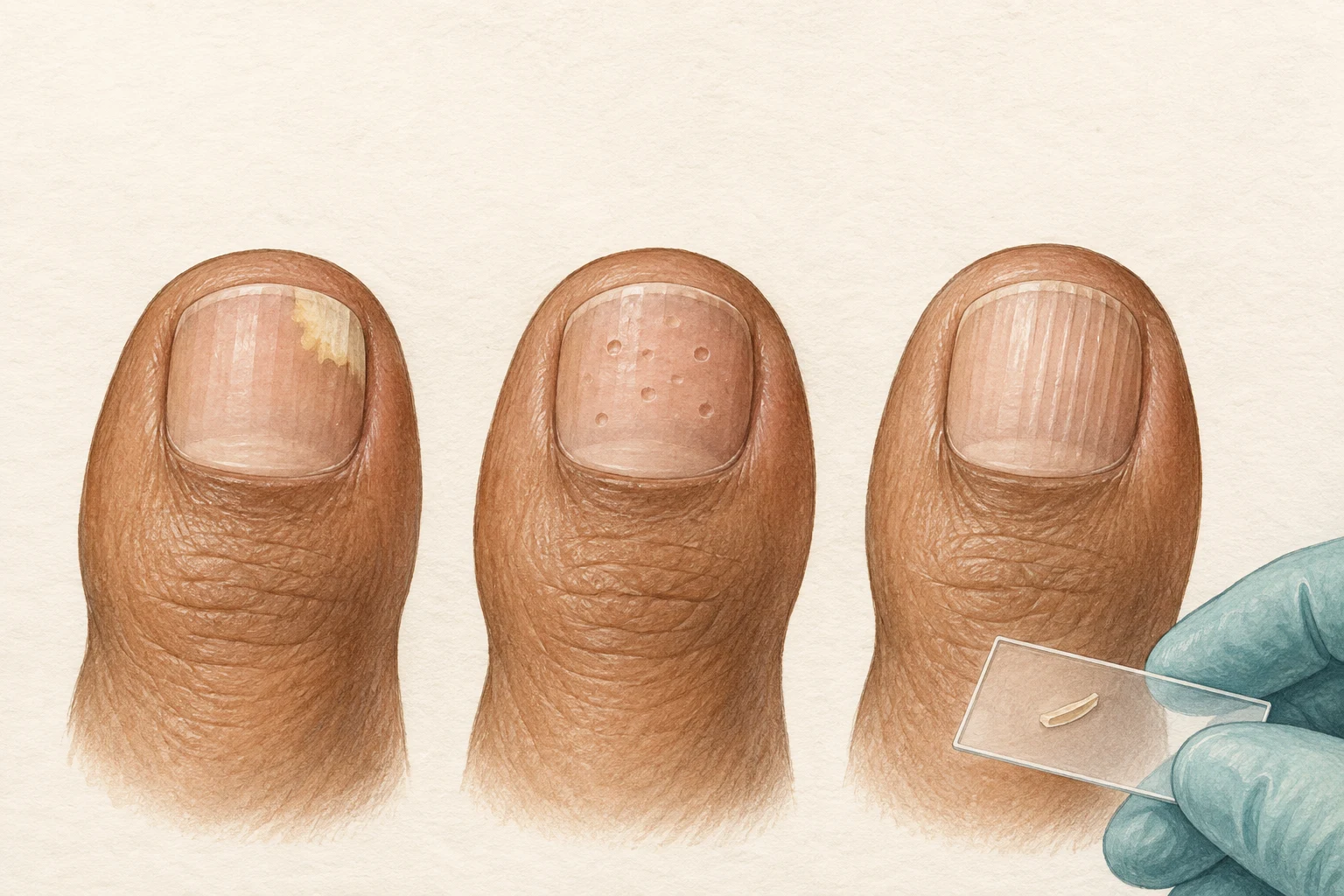
Nail fungus (onychomycosis) accounts for up to 50% of all nail disorders (Halteh 2016). The nail growth center (matrix) responds to repeated physical shock the exact same way skin forms a callus on the heel: it lays down extra, compacted keratin layers that look thick, yellowish-brown, and opaque.
Repeated microtrauma from running downhill, steel-toe boots, tight dress shoes, bunions (hallux valgus), or an old crushed-toe injury produces microtraumatic nail dystrophy that mimics fungus down to the color. Read more in our guide on what a negative toenail fungus test means.
What is pincer nail deformity, and what triggers its tight pinch?
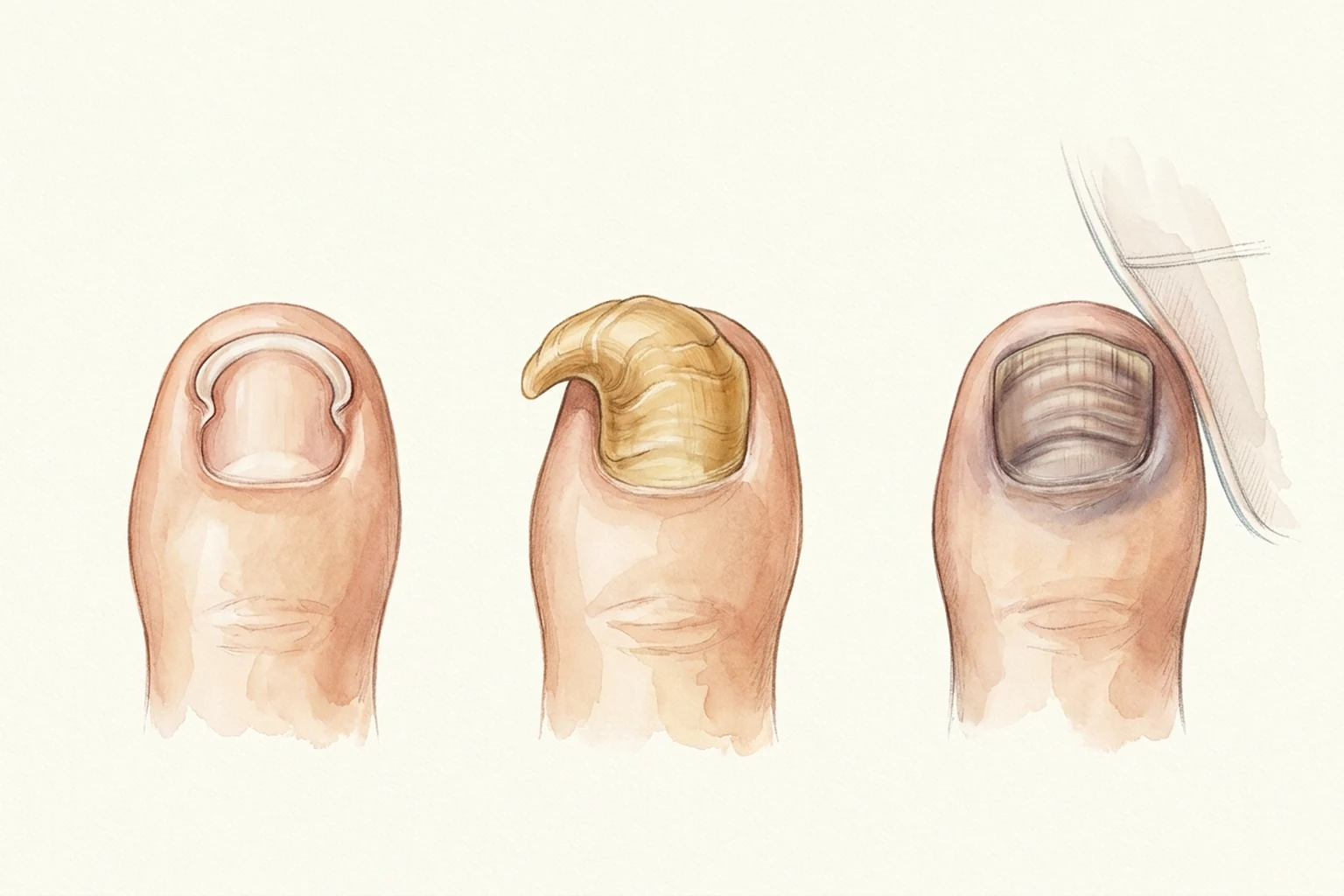
Pincer nail deformity (also called trumpet or omega nail) happens when the nail plate over-curves tightly from side to side as it grows toward the tip, squeezing the soft nail bed in the middle like pliers. The pinching often causes throbbing pain in closed shoes.
| Structural nail condition | Signature appearance | Common triggers | Evidence-based care |
|---|---|---|---|
| Pincer nail deformity | Tight side-to-side C-shaped or omega pinching toward the tip; painful in tight shoes | Inherited shape or acquired triggers including psoriasis, beta-blockers, tumors, onychomycosis, lupus, or malignancy (Majeski 2005; Tully 2012), plus tight footwear | Wide shoes, professional bracing/trimming, or surgical nail-bed flattening and partial matricectomy (Jung 2026; Lane 2004) |
| Onychogryphosis ("ram's-horn nail") | Dense oyster-like or horn-shaped thickening curving sideways with crosswise grooves | Long-term footwear pressure, bunions, trauma, poor circulation, or difficulty trimming (Chang 2015) | Repeated professional nail grinding/debridement; permanent surgical matricectomy for painful recurrent cases (Jung 2026; Gürbüz 2017) |
| Repetitive shoe microtrauma | Thick, dull yellow or lifted great toenail matching shoe-contact spots | Narrow toe boxes, running, hiking, or long second toes hitting the shoe cap | Wider, deeper shoes, silicone toe caps, straight trimming, and urea creams |
When pincer nails appear suddenly in adulthood on a single toe, dermatologists review medications including beta-blockers and check for psoriasis, nail tumors, or systemic lupus (Majeski 2005; Tully 2012), and may order toe imaging in clinic if a deep bony growth is suspected.
What is onychogryphosis ('ram's-horn nail'), and why do antifungals fail?
Onychogryphosis produces a severely thickened, opaque, cross-ridged nail that curves like a ram's horn or oyster shell, most commonly on the big toe (Chang 2015). One side of the nail matrix grows faster than the injured opposite side, forcing the thickened horn to spiral sideways into neighboring toes or shoe tops.
No oral pill or topical cream can remodel a permanently altered nail matrix (Gürbüz 2017). Pulling the nail off also fails repeatedly, since the same damaged matrix grows another horn back within months.
How do dermatologists and podiatrists treat structural toenail thickening?
Management focuses on comfort, shoe clearance, and protecting surrounding skin:
- Upgrade footwear geometry: Switch to shoes with a wide, tall toe box that leaves a thumb's width in front of your longest toe.
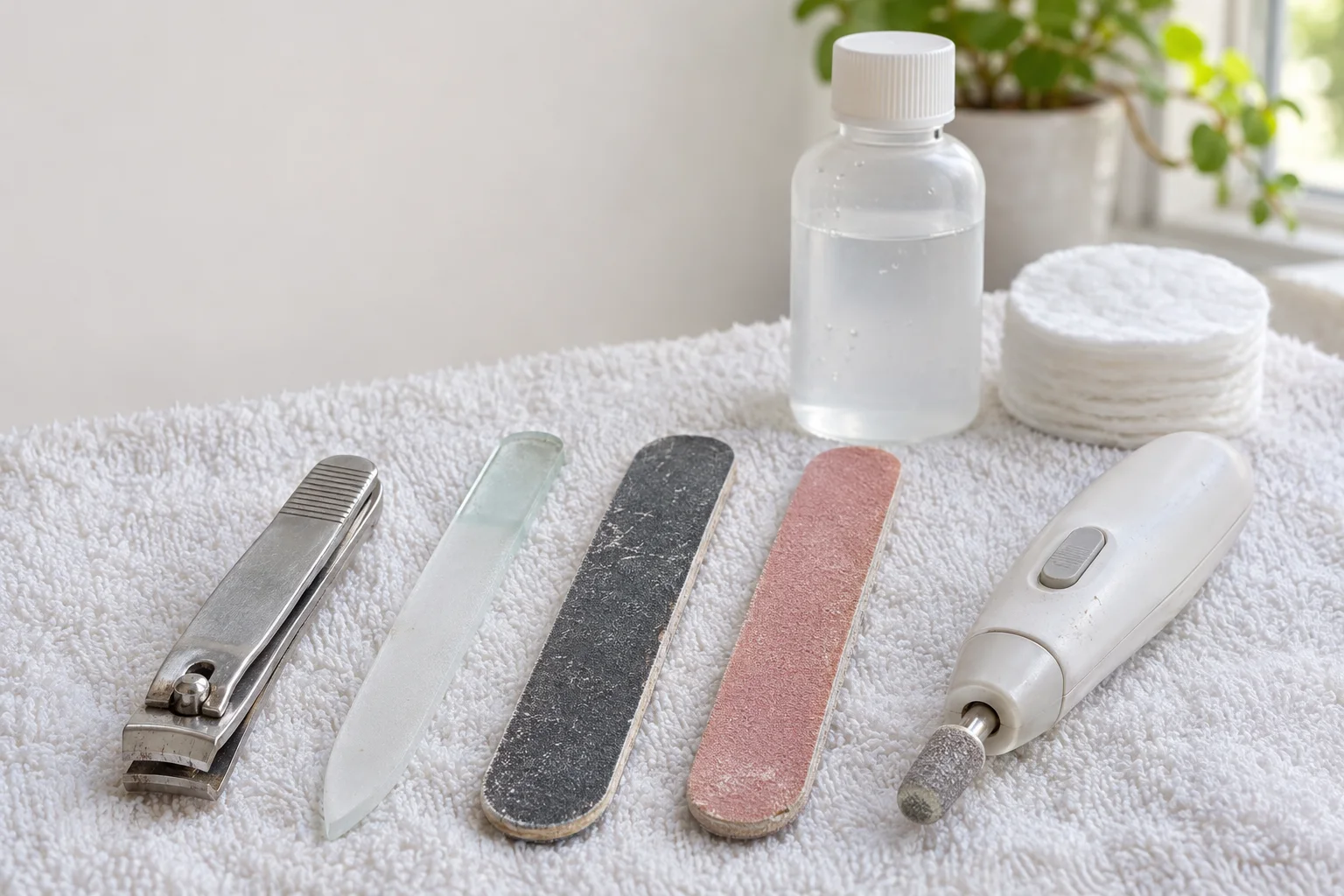
- Schedule periodic professional nail grinding (debridement): A 2026 Annals of Dermatology nail-surgery review highlights repeated controlled nail grinding as an effective conservative approach to keep onychogryphosis thin, smooth, and comfortable (Jung 2026). High-strength urea creams (40%) can also soften thick keratin between visits.
- Consider targeted nail surgery for stubborn pain: For painful pincer nails, surgical correction of the protruding nail bed helps prevent recurrence (Jung 2026), and case reports also describe avulsion with carbon-dioxide laser partial matricectomy (Lane 2004). For severe recurrent onychogryphosis that failed prior nail removals, a series of 14 patients (15 big toes) undergoing permanent surgical matricectomy with flap reconstruction reported good-to-very-good satisfaction across all 14 patients (Gürbüz 2017). Review our guide on filing or removing a thick toenail.
When can fungus hide inside a traumatized nail, and when does telehealth fit?
Mechanical trauma and fungus can overlap: cracked, lifted nails caused by tight shoes invite dermatophyte fungi to move in secondarily. Clearing secondary fungus stops progressive crumbling, yet the underlying mechanical curvature or matrix damage will still need wider shoes or podiatric shaping even after fungus clears. See is it toenail fungus or something else for visual cues.
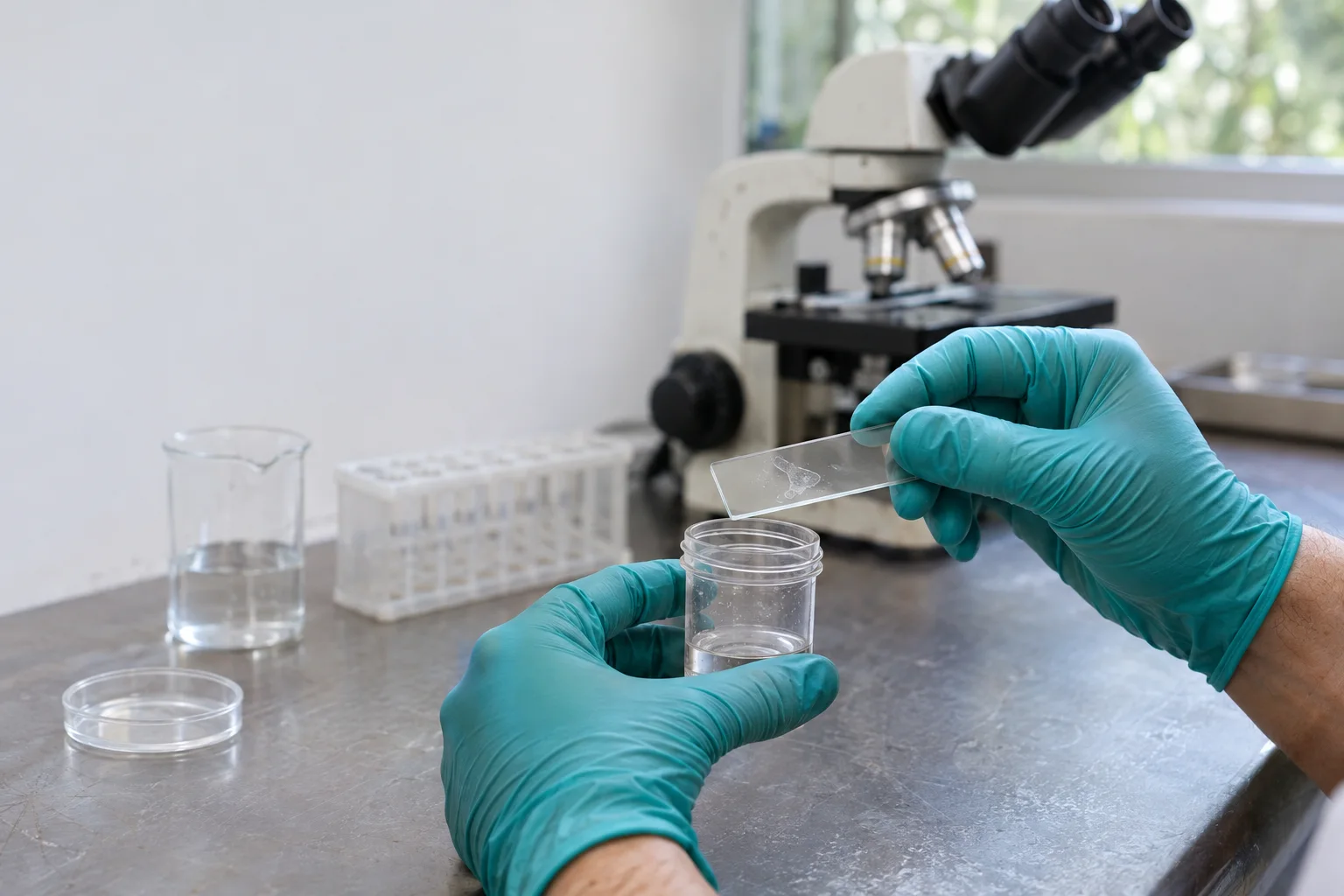
KindleeRx's Nail Regimen treats adult fungal nail infections (onychomycosis), not structural pincer nails, ram's-horn onychogryphosis, bone spurs, or nail surgery. If your fungus lab test came back negative (confirmed by fungal culture or periodic acid-Schiff stain) and your main problem is painful curvature or horn-like thickening, consult an in-person podiatrist or dermatologist.
When confirmed or clinically classic adult toenail fungus is present alongside safe foot health, licensed clinicians (physician assistants and nurse practitioners working under a board-certified dermatologist's protocols) review your intake, medications, and photos through the KindleeRx Nail Regimen and reply in under 5 hours on average. When clinically appropriate, the 90-day program pairs 21 terbinafine 250 mg pills (off-label pulse schedule) with a 30 mL compounded topical nail solution (itraconazole 1%, terbinafine 3%, urea 20%, tea tree oil 6.6%, and dimethyl sulfoxide [DMSO]) for $99 on the first automatic-refill order, then $99 every 90 days before coupons (including the $20 consultation fee, free shipping, and 90 days of clinician messaging), or $118.75 one-time before coupons. Before prescribing oral terbinafine, your clinician may ask for copies of your earlier liver blood test results, or ask your primary care provider to order a test. Available in 44 states plus Washington, D.C. (excluding Arkansas, Kansas, Maryland, Mississippi, Nebraska, and West Virginia), with a full refund including the consultation fee if treatment is not prescribed.
Important Information
KindleeRx's topical nail solution (itraconazole 1%, terbinafine 3%, urea 20%, tea tree oil 6.6%, and DMSO) is a compounded prescription medication prepared by a licensed United States compounding pharmacy under a prescriber's order. Compounded medications are not approved by the Food and Drug Administration (FDA) and are not reviewed by the FDA for safety, effectiveness, or quality (FDA compounding guidance). Oral terbinafine pulse dosing (21 pills over 3 months) is an off-label schedule. KindleeRx does not treat structural pincer nails, onychogryphosis, ingrown toenails, or perform nail surgery or X-rays. Eligibility is determined by a licensed clinician after reviewing your medical history and photos. Not all patients qualify. Individual results vary. This article is educational and is not medical advice.
Sources
- Halteh P, Scher RK, Lipner SR. Over-the-Counter and Natural Remedies for Onychomycosis: Do They Really Work? Cutis 2016.
- Jung JW, Oh J, Oh BH. Refining Nail Surgery: Clinical Pearls and Best Practices. Annals of Dermatology 2026.
- Majeski C, Ritchie B, Giuffre M, Lauzon G. Pincer Nail Deformity Associated With Systemic Lupus Erythematosus. Journal of Cutaneous Medicine and Surgery 2005.
- Tully AS, Trayes KP, Studdiford JS. Evaluation of Nail Abnormalities. American Family Physician 2012.
- Chang P, Meaux T. Onychogryphosis: A Report of Ten Cases. Skinmed 2015.
- Gürbüz K, Ozan F, Kayali C, Altay T. Total Matricectomy and V-Y Advancement Flap Technique in the Treatment of Onychogryphosis. Dermatologic Surgery 2017.
- Lane JE, Peterson CM, Ratz JL. Avulsion and Partial Matricectomy With the Carbon Dioxide Laser for Pincer Nail Deformity. Dermatologic Surgery 2004.
- Food and Drug Administration. Understanding the Risks of Compounded Drugs.