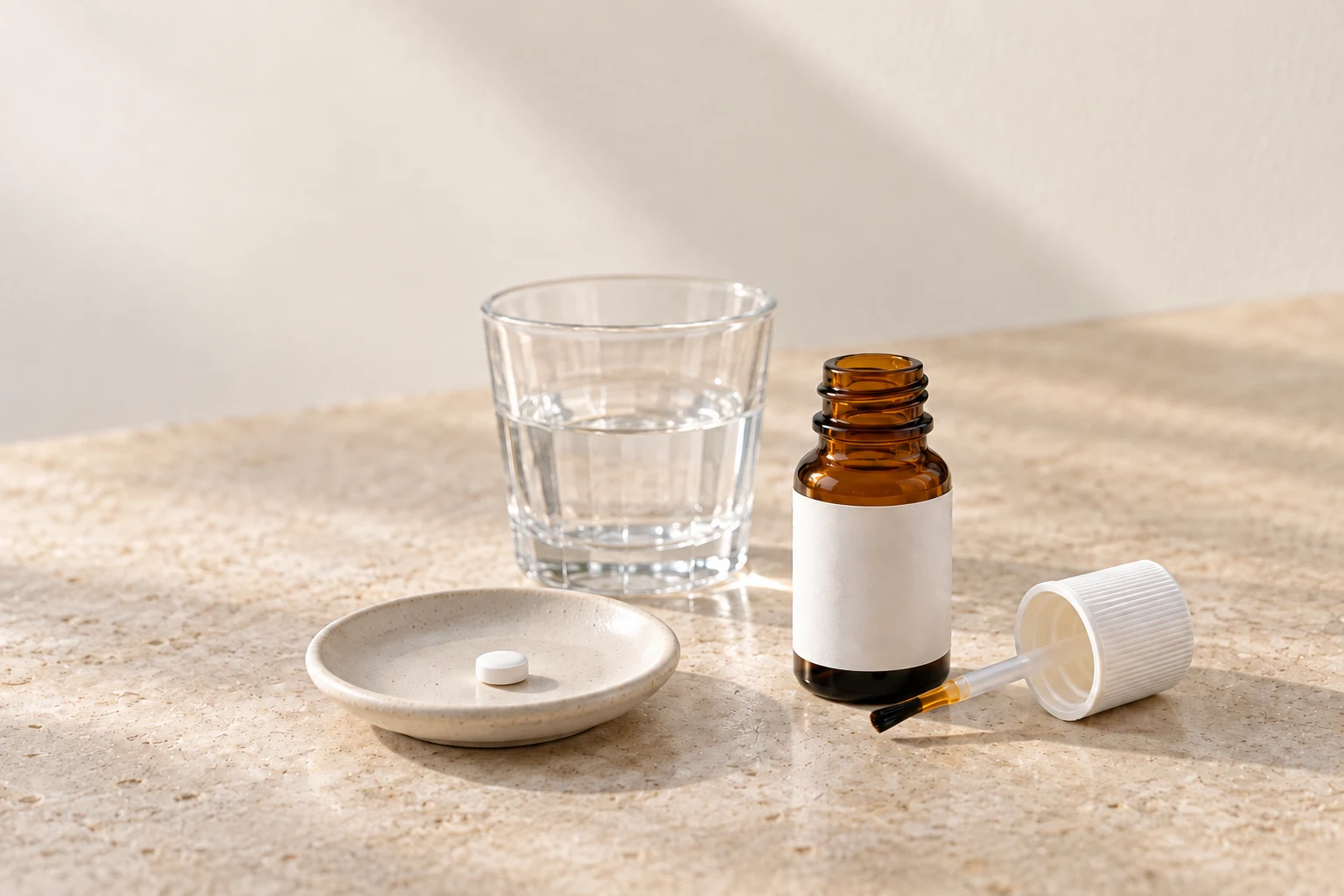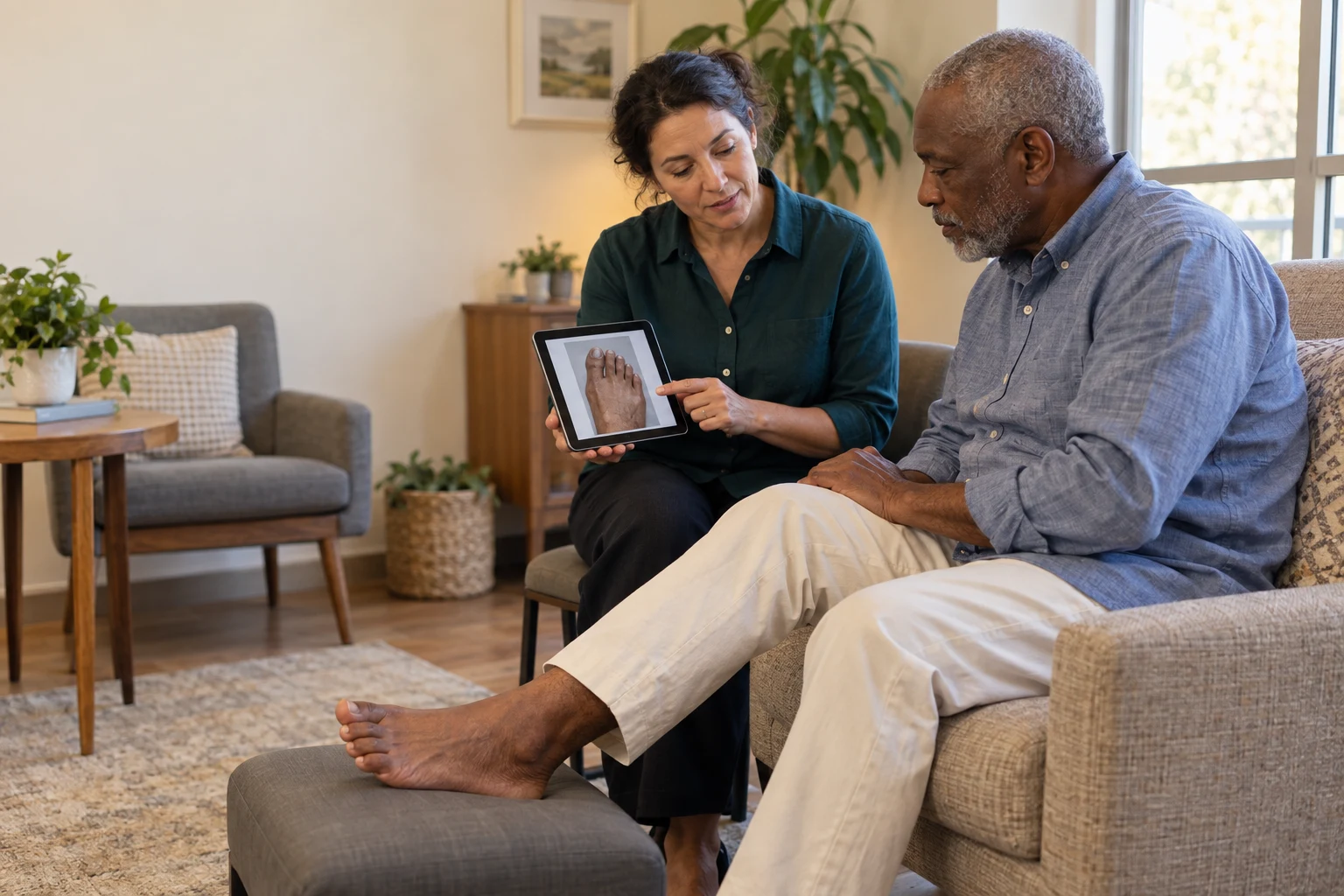
AI-generated illustration. Not an actual patient or treatment result.
Should You File, Trim or Remove a Fungal Toenail?

Chief Medical Officer
Yes, file and trim a fungal toenail, and pair it with an antifungal, since thinning plus terbinafine beat terbinafine alone in a large trial. In the IRON-CLAD trial, people who had their nails aggressively thinned while taking terbinafine reached 59.8% clinical cure at week 48, compared with 51.4% on terbinafine alone (Jennings 2006). Removing the whole nail is a later step with weaker evidence. I keep fungal nails short and thin, pair that with an antifungal, and save removal for nails that hurt or keep failing treatment.
In this article
Does filing or thinning the nail help treatment work?
Yes, thinning helps the nail look and feel better, with a smaller effect on the fungus itself. In IRON-CLAD, 504 adults took terbinafine 250 mg daily for 12 weeks, and half also had debridement at baseline and weeks 6, 12 and 24. Clinical cure (87.5% or more of the nail clear) rose from 51.4% to 59.8%; lab cure was higher too, though not significantly (Jennings 2006; Tavakkol 2006). The AAD says a thinner nail can make treatment more effective and makes trimming, walking and wearing shoes easier (AAD). Urea 40% softens thick nails. In a 2025 meta-analysis of 259 people on antifungals with or without urea, the urea improved clinical cure without a significant gain in lab cure (Kurniasari 2025).
How do you trim and file a fungal toenail safely at home?
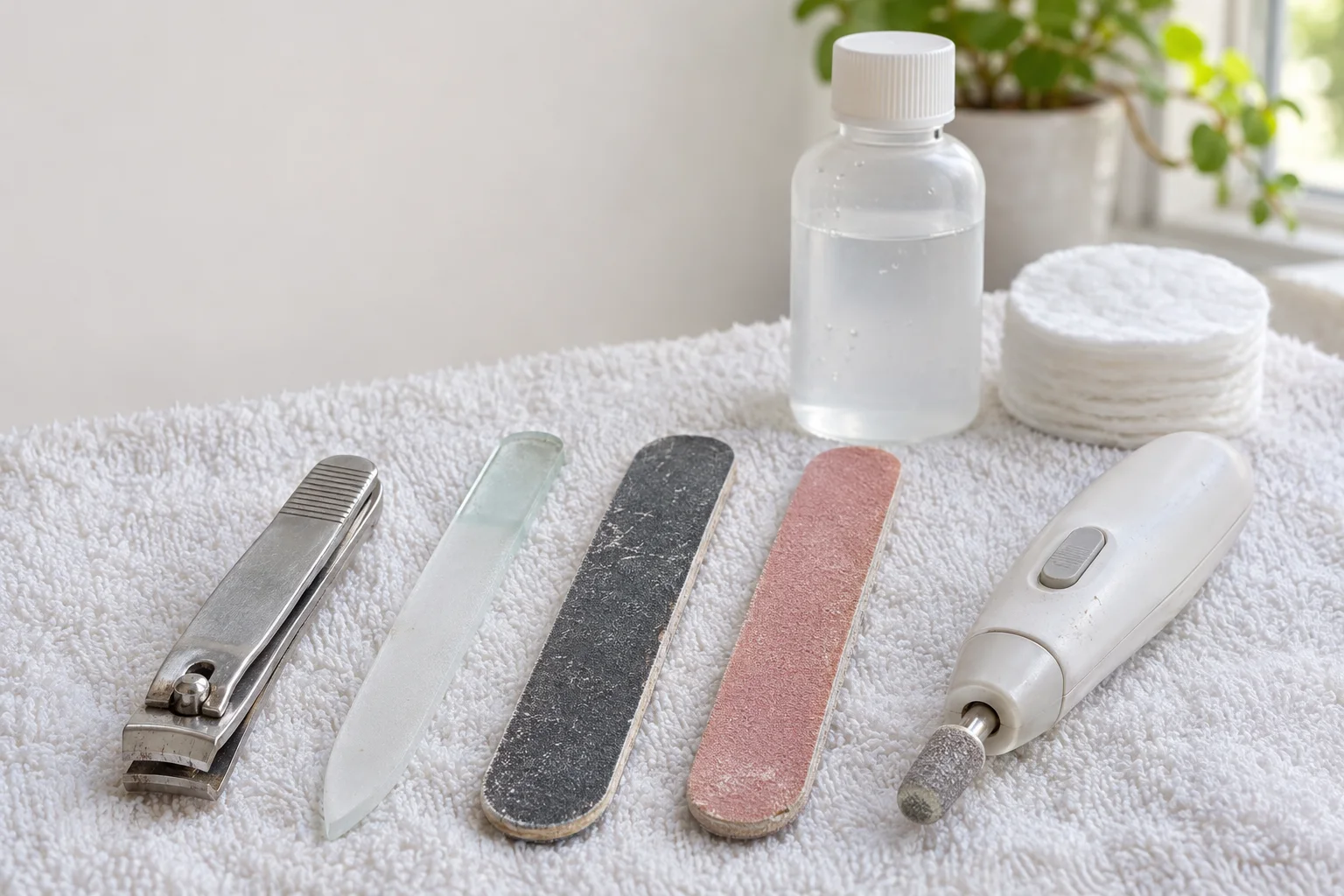
Trim straight across after a bath or shower, keep the nail shorter than the end of the toe, and file only the loose, crumbly surface. The AAD gives those trimming steps and says to leave cuticles alone (AAD trimming guide; AAD prevention tips). The ciclopirox 8% label tells patients to file away loose nail material with an emery board and trim every 7 days (ciclopirox prescribing information).
My routine for patients:
- Soften the nail in the shower first.
- Clip straight across in small bites.
- File the top surface and loose edges, a few strokes at a time.
- Wash the clippers, then soak them 5 minutes in 1 tablespoon of bleach per cup of water (AAD).
- Never share clippers or towels (AAD).
The AAD also warns against scraping white discoloration off the nail at home (AAD).
Should you cut off the infected part of the nail?
Cut off the part that has lifted away from the skin; leave the attached part for treatment. The NHS advises cutting a loose nail back to where it is still attached so it cannot bend or catch (NHS). The ciclopirox label builds its whole program around removing the unattached, infected nail as often as monthly, done by a professional trained in nail disorders. Even so, complete cure in its two 48-week trials was only 5.5% and 8.5%, against 0.9% and 0% on the inactive solution (ciclopirox prescribing information). Trimming supports treatment. It does not replace an antifungal.
When is a fungal toenail removed?
A fungal toenail is removed when it is painful, badly infected, or other treatments have failed. The AAD says removal may be recommended after treatment fails and can relieve pain (AAD); the NHS describes it as a small procedure under local anesthetic (NHS). Chemical removal uses urea under a bandage for 7 to 10 days, then the softened nail is lifted off. With 40% urea plus bifonazole, nails detached in an average of 11 to 18.7 days depending on the schedule (Shemer 2020).
Results are mixed. Removal plus a topical cured 56% of the 27 who finished a randomized trial, and its authors concluded it cannot be generally recommended (Grover 2007). For a dermatophytoma, a dense fungal mass under the nail, terbinafine plus removal of the mass cured 50% to 100% in a 2024 review (Lipner 2024).
Does permanent toenail removal cure the fungus?
I have no fungal cure rate to give you for permanent removal, called matrixectomy, which destroys the nail root. The best randomized evidence comes from ingrown toenails: in 117 people, adding phenol to partial nail removal with matrix excision cut recurrence from 41% to 14% (Eekhof 2012). That says nothing about fungal cure. The fungus also burrows into the skin under the nail (AAD), and the AAD notes it can return a year or more after clearing (AAD). I reserve permanent removal for a nail that is painful and has failed real treatment, and I would still treat the skin around it.
What should you do next?
Keep the nail trimmed and thin, and add an antifungal that reaches the nail. For how pills and topicals compare, read oral vs topical toenail fungus treatment. To lower the odds of a repeat infection, read how to stop toenail fungus coming back. The complete guide to toenail fungus covers diagnosis and every option.
KindleeRx offers a 90-day prescription nail program: oral terbinafine 250 mg once daily for one week each month (21 tablets over 3 months, a pulse schedule that differs from the label's 12 weeks of daily dosing) plus a 30 mL compounded topical solution with itraconazole 1%, terbinafine 3%, urea 20% and tea tree oil 6.6%, prescribed together when appropriate. Compounded medications are not FDA-approved. Licensed clinicians (physician assistants and nurse practitioners working under a board-certified dermatologist's protocols) review each case and reply in under 5 hours on average. Not everyone qualifies; if nothing is prescribed, the refund is full, including the consultation fee. Individual results vary.
Sources
- Jennings MB et al. (IRON-CLAD trial). J Am Podiatr Med Assoc 2006.
- Tavakkol A et al. Am J Geriatr Pharmacother 2006.
- Kurniasari FT et al. Mycoses 2025.
- Shemer A et al. Skin Appendage Disord 2020.
- Grover C et al. Br J Dermatol 2007.
- Lipner SR et al. J Am Podiatr Med Assoc 2024.
- Eekhof JA et al. Cochrane Database Syst Rev 2012.
- Padagis. Ciclopirox topical solution 8% prescribing information. DailyMed.
- American Academy of Dermatology. Nail fungus: Diagnosis and treatment. 2025.
- American Academy of Dermatology. 11 tips to prevent nail fungus. 2026.
- American Academy of Dermatology. Nail fungus: Signs and symptoms.
- American Academy of Dermatology. How to trim your nails.
- NHS. Fungal nail infection. 2024.
- NHS. Nail problems. 2024.