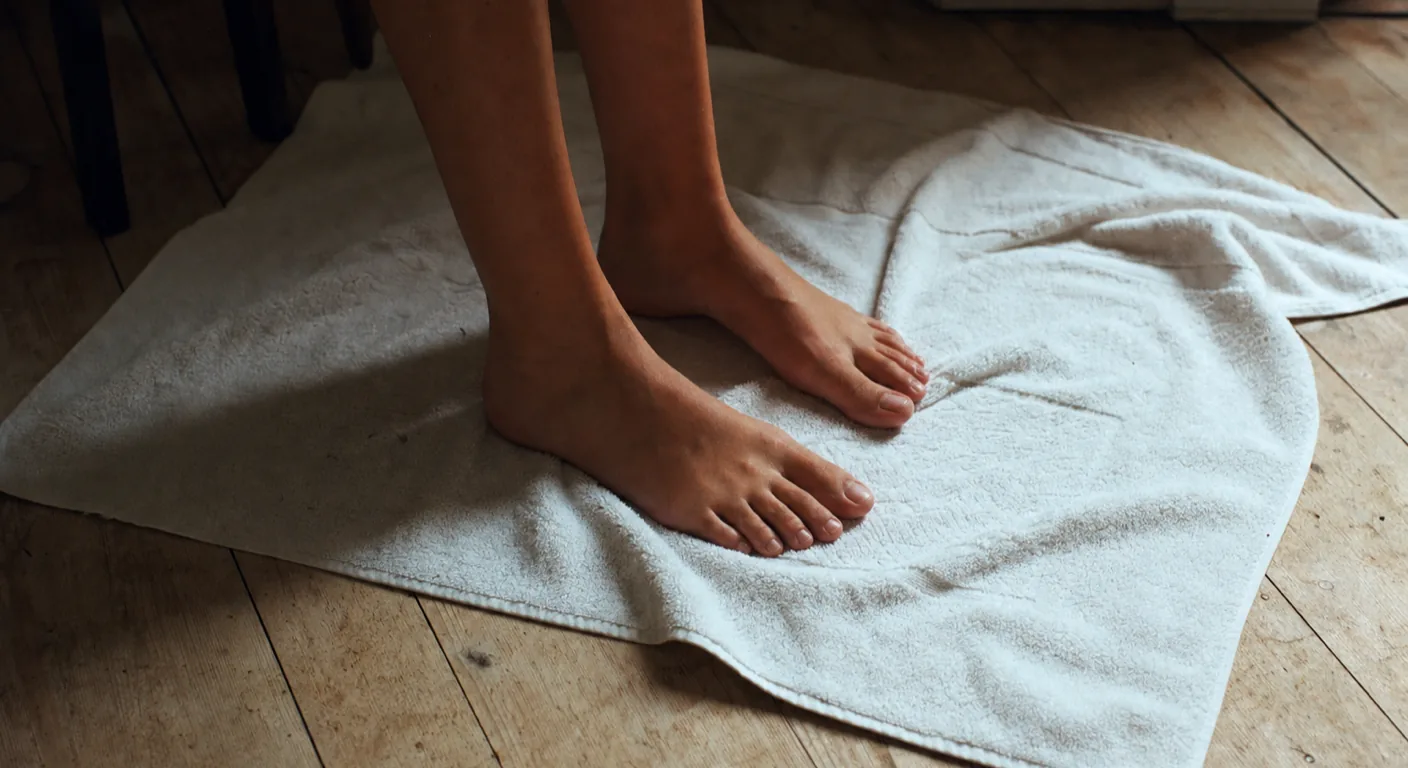
When patients ask me about oral vs topical for toenail fungus, I give them the short version first: the best prescription nail fungus treatment for most stubborn infections isn't one or the other, it's both. Oral terbinafine combined with a topical antifungal reached 88.2% mycological cure in a randomized trial, compared with 64.7% for the same pill used alone (Shemer 2005). The pill reaches the fungus through your bloodstream; the topical works down through the nail surface. Results vary from person to person, but hitting the infection from both directions is what moves the numbers.
Nail CareJuly 19, 2026 · 8 min read
Oral vs Topical for Toenail Fungus, and Why the Combination Wins

Dr. Brandon Kirsch, MD, FAAD
Chief Medical Officer
Oral vs topical: what's actually happening under the nail?
Onychomycosis is the most common nail disease I treat, and about 85% of cases come from dermatophytes, most often Trichophyton rubrum (Barac 2024). Those organisms live inside and underneath the nail plate, in a pocket your immune system and most creams can't easily reach. It's common — up to 75% of adults over 75 have it (AAD) — and roughly 90% of cases are the distal subungual type, meaning the fungus enters at the far edge and burrows back toward the base (AAD). That anatomy drives the entire oral-vs-topical decision.
A topical has to diffuse down through a dense keratin barrier to reach fungus sitting under the nail. An oral pill takes the opposite route: it's absorbed into your blood, deposits into the nail from the growth center below, and stays there as the nail grows out. Neither is "better" in the abstract. They attack the same infection from opposite sides, and which one you need depends on how deep and how widespread the infection is.
Can a topical alone clear toenail fungus?
Sometimes, but the odds are against it as a solo act, and the reason is physical rather than chemical. Topical antifungals have limited penetrance through the nail plate (Gupta 2013) — the drug can't reach a high enough concentration under a thick nail to finish the job. That's the main reason drugstore products clear the infection less than 10% of the time (AAD), and why I meet so many patients who painted on a solution for a year with nothing to show for it.
Topical monotherapy still earns its place in specific situations. Very early or superficial infections — a thin white patch on the nail surface, or disease limited to the far edge — can respond, because the fungus sits closer to the surface. Prescription topicals such as ciclopirox or efinaconazole are also the right call when an oral antifungal is off the table: significant liver disease, a long list of interacting medications, or a patient who prefers to avoid a systemic drug. In those cases a topical is a reasonable, honest option — as long as you understand that clearance is slower and less complete, and that results vary.
Does toenail fungus need a pill?
For most established toenail infections, yes, and oral terbinafine is first-line. The evidence for choosing it over the alternatives is strong. In the LION study, an Icelandic cohort followed for five years, 46% of terbinafine-treated patients remained disease-free at the five-year mark, versus just 13% of those treated with itraconazole (Olafsson 2003). Relapse and reinfection were common in both arms, but terbinafine held its ground far better. The standard course for toenails is terbinafine 250 mg daily for 12 weeks (per the drug label and dermatology practice).
Here's the honest limitation, and the reason this page exists. A pill alone doesn't finish the job as often as patients hope. Pulse terbinafine cleared the fungus on testing in about 49% of patients and produced a completely clear nail in only about 32% (Gupta 2001). Even at its best, oral monotherapy leaves a real relapse-and-reinfection gap — the fungus is knocked back, but the nail isn't reliably clear, and it can return. Closing that gap is exactly what combination therapy is built to do.
So what's the best prescription nail fungus treatment?
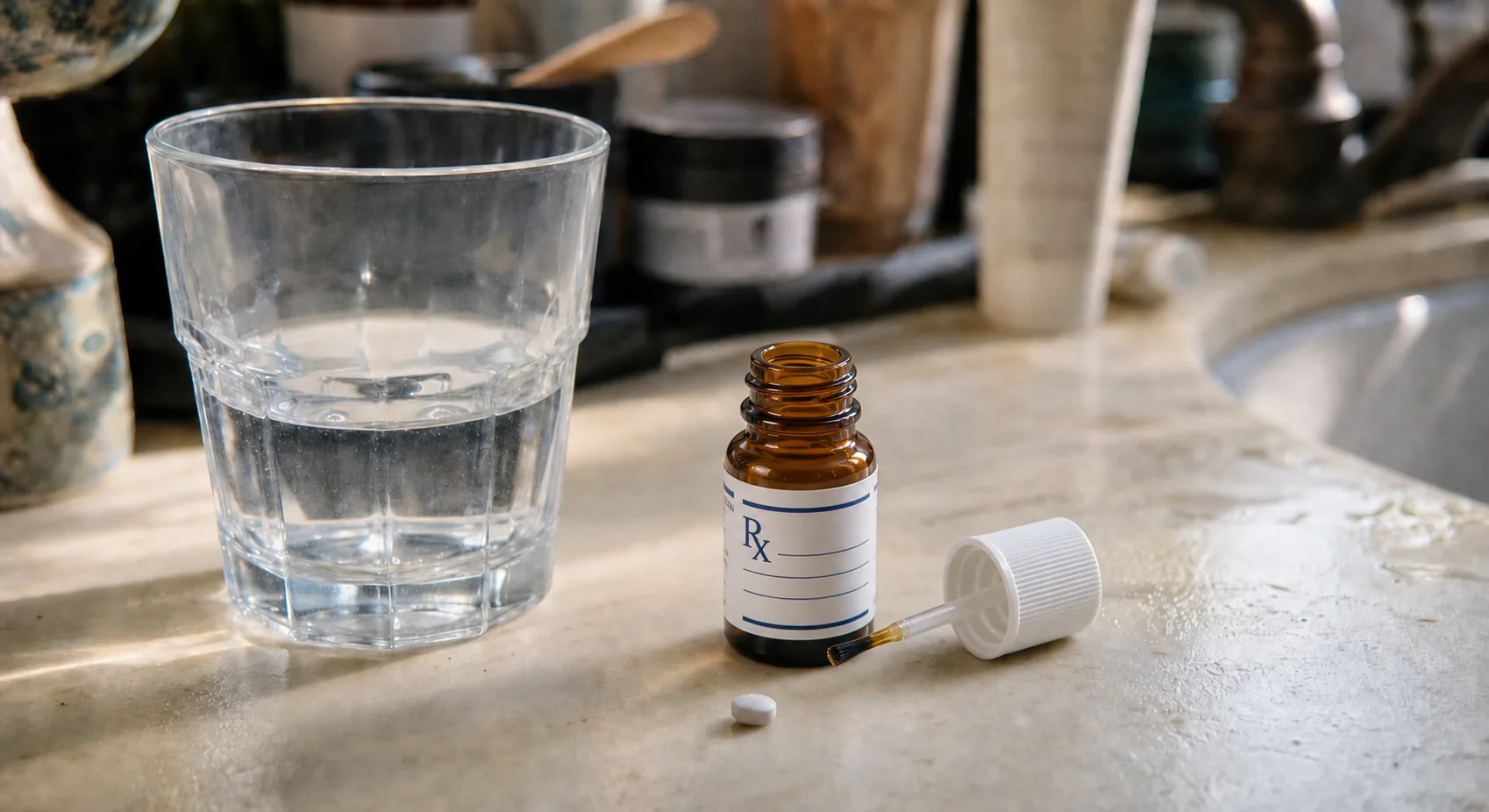
For most people, the best prescription nail fungus treatment is the combination: an oral antifungal plus a topical, working the infection from both sides at once. In a randomized trial, oral terbinafine paired with a ciclopirox nail lacquer reached 88.2% mycological cure, versus 64.7% for oral terbinafine alone (Shemer 2005). The pill clears fungus from the nail bed through the bloodstream while the topical attacks what's living on and in the nail surface. No regimen clears every patient, and individual results vary, but adding a topical to the pill is one of the few moves with randomized evidence behind a genuine jump in clearance.
This is the approach I reach for with the thick, discolored, long-standing toenails — the ones a topical alone won't touch and a pill alone won't finish. The specific pill, the specific topical, and the length of treatment all get tailored to the person, which is why this belongs in a clinician's hands rather than a shopping cart.
Is the oral pill safe, and what about resistance?
Oral antifungals are prescription-only for good reason, and a responsible program treats them that way. Terbinafine is generally well tolerated, but it can interact with other medications and, rarely, affect the liver. In practice that means a baseline liver function test and a review of everything else you take before you start, and sometimes a repeat lab during treatment. Serious liver injury is uncommon; the point of the workup is to catch the rare problem early, not to talk you out of an effective drug.
Two other things stay on my radar. A pill is never automatic — a clinician decides whether an oral antifungal is appropriate for you, and for some patients it isn't. And resistance is now a genuine concern: terbinafine-resistant Trichophyton indotineae is emerging worldwide (Barac 2024), which is one more reason to confirm the diagnosis with testing and treat it properly instead of guessing with whatever's on the shelf.
How long until the nail actually looks normal?
Longer than the fungus stays alive, which trips up almost everyone. Toenails grow only about 1 to 1.5 mm per month, and a great toenail takes roughly 12 to 18 months to fully grow out (AAD). So even after treatment has killed the fungus, the damaged section keeps looking abnormal until it grows off the end. We judge success by new clear growth from the base, not by the old damaged nail, and we assess for clearance at around the 12-month mark. For a broader overview of symptoms, diagnosis, and treatment, see our complete guide to toenail fungus.
Recurrence is the other half of the story. Because relapse and reinfection are common after monotherapy (Olafsson 2003), finishing the pills is only step one — you also have to treat any athlete's foot, disinfect your footwear, and keep your feet dry. I walk through that playbook in how to stop toenail fungus from coming back.
The bottom line on oral vs topical
"Best prescription nail fungus treatment" isn't a single product — it's the combination of an oral antifungal and a topical, individualized by a clinician to your nail, your health history, and your other medications. Topical alone fits early, superficial, or oral-contraindicated cases. Oral alone helps but leaves a gap. Used together, they post the strongest clearance numbers we have (Shemer 2005). For the wider picture — types, diagnosis, and every treatment option — start with the complete guide to toenail fungus.
The practical problem is that only about 25% of onychomycosis cases are ever seen by a dermatologist (J Fungi, Basel), which leaves a lot of people cycling through drugstore products that rarely work. If you want the combination done properly, KindleeRx offers a dermatologist-designed prescription program in which licensed clinicians — physician associates and nurse practitioners working under a board-certified dermatologist's protocols — review your case and decide what's appropriate. A prescription isn't automatic, and not everyone qualifies. But if you've been fighting a stubborn toenail with half-measures, the combination is the approach worth asking about.