
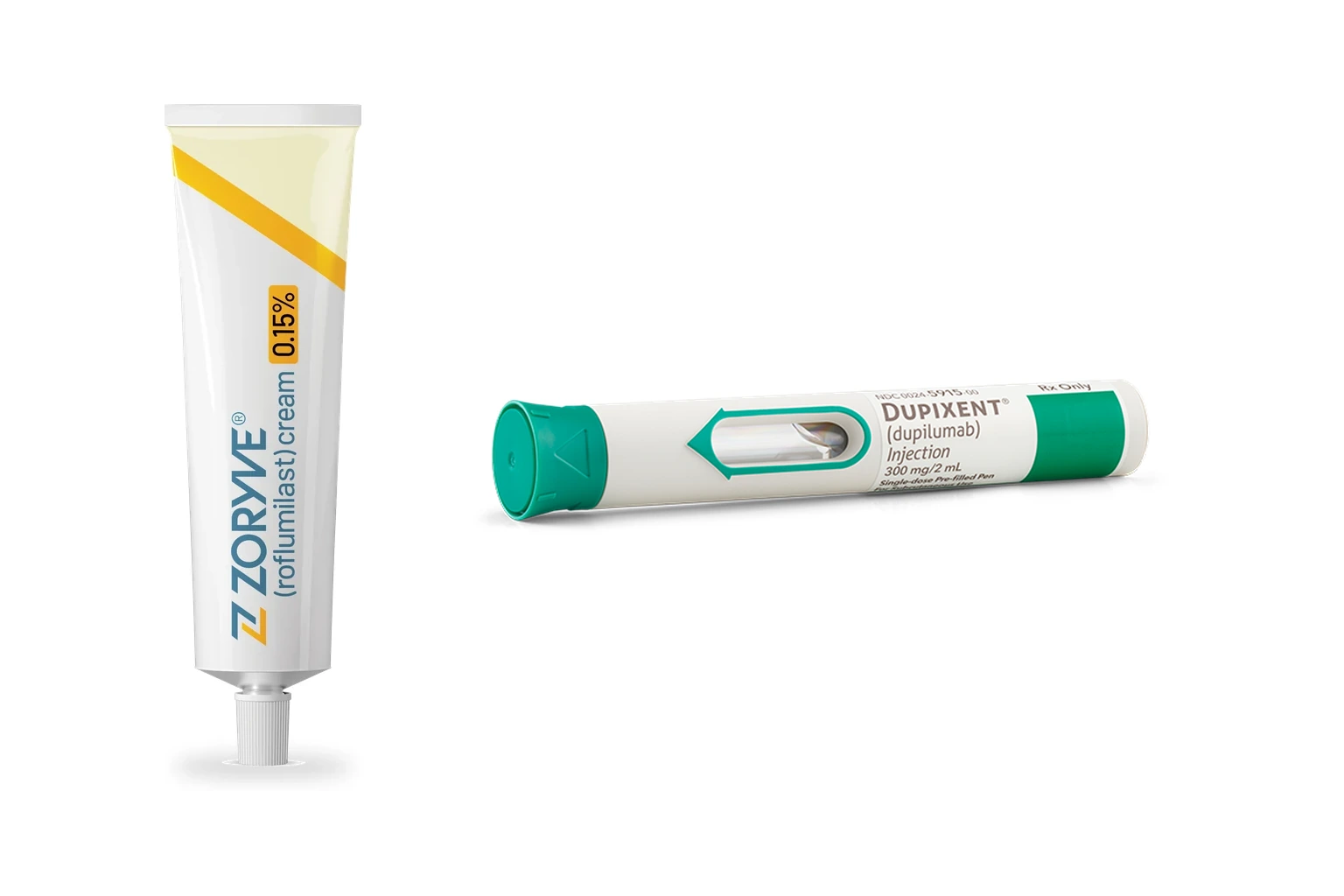
Images: Arcutis Biotherapeutics (Zoryve) and Sanofi and Regeneron Pharmaceuticals (Dupixent). Shown to identify the products. KindleeRx is not affiliated with these companies.
Zoryve vs Dupixent for Eczema: Cream vs Biologic Injection Compared

Chief Medical Officer
Zoryve and Dupixent are both steroid-free, FDA-approved eczema treatments with no boxed warning, but dermatologists rarely treat them as either-or rivals: Zoryve is a once-daily topical cream for mild-to-moderate eczema, while Dupixent is a systemic injectable biologic for moderate-to-severe eczema that prescription creams have failed to control. Choosing between them starts with how much skin is involved, how badly sleep and daily life are disrupted, and what prescription topicals you have already tried.
In this article
How do Zoryve and Dupixent differ for eczema?
The two drugs target completely different layers of eczema inflammation and fit different points on the treatment ladder set out by the American Academy of Dermatology (AAD) (Sidbury 2023; Davis 2024).
| Feature | Zoryve cream (roflumilast) | Dupixent (dupilumab) |
|---|---|---|
| Drug class & mechanism | Topical phosphodiesterase-4 (PDE4) inhibitor | Systemic monoclonal antibody blocking interleukin-4 (IL-4) and interleukin-13 (IL-13) signaling |
| FDA eczema indication | Mild-to-moderate atopic dermatitis: 0.15% cream for ages 6+; 0.05% cream for ages 2 to 5 (Zoryve label) | Moderate-to-severe atopic dermatitis (ages 6 months+) not adequately controlled with topical prescriptions or when topicals aren't advisable (Dupixent label) |
| How it is taken | Cream applied once daily to affected skin (no body surface area [BSA] cap; not for eyes) | Subcutaneous injection (pre-filled pen or syringe): adults start at 600 mg, then 300 mg every 2 weeks (pediatric dosing by age and weight) |
| FDA boxed warning | None | None |
| Routine blood monitoring on label | None (contraindicated in moderate-to-severe liver impairment, Child-Pugh B or C) | None (avoid live vaccines; report eye or joint symptoms promptly) |
| Other FDA-approved indications | Plaque psoriasis (0.3% cream) and seborrheic dermatitis or plaque psoriasis of the scalp and body (0.3% foam) | Asthma, chronic rhinosinusitis with nasal polyps, eosinophilic esophagitis, prurigo nodularis, chronic obstructive pulmonary disease, chronic spontaneous urticaria, bullous pemphigoid, allergic fungal rhinosinusitis |
| Typical retail cash price (checked November 2026) | ~$950 to $1,263 per 60 g tube (GoodRx) | $4,193.03 WAC; ~$2,820 to $4,800+ cash per 4-week carton (GoodRx) |
One practical clinical tie-breaker is other allergic conditions. Dupixent calms systemic type 2 inflammation, so an in-person dermatologist often leans toward Dupixent earlier when a patient has moderate-to-severe eczema alongside poorly controlled asthma, chronic nasal polyps, or eosinophilic esophagitis.
How well do Zoryve and Dupixent work in clinical trials?
Both drugs clearly outperformed inactive placebo or vehicle in phase 3 clinical trials, but the trials enrolled very different patients and measured primary outcomes at different time points (week 4 vs week 16), so percentages cannot be compared head to head.
- Zoryve 0.15% cream (INTEGUMENT-1 and INTEGUMENT-2, mild-to-moderate eczema): Across 1,337 patients ages 6 and older (mean baseline BSA 14%; 42% with facial involvement), once-daily Zoryve 0.15% achieved clear or almost clear skin plus at least a 2-grade improvement on the Validated Investigator Global Assessment for Atopic Dermatitis (vIGA-AD) at week 4 in 32.0% vs 15.2% (INTEGUMENT-1) and 28.9% vs 12.0% (INTEGUMENT-2). At least 75% improvement on the Eczema Area and Severity Index (EASI, written EASI-75) at week 4 reached 43.2% vs 22.0% and 42.0% vs 19.7%, while a 4-point or larger itch drop (ages 12+) reached 33.6% vs 20.7% and 30.2% vs 12.4% (Simpson 2024; Zoryve label). In children ages 2 to 5 using Zoryve 0.05% cream (INTEGUMENT-PED, 652 children), week-4 clear/almost clear success was 25.4% vs 10.7%.
- Dupixent 300 mg every 2 weeks (SOLO 1, SOLO 2, and CHRONOS, moderate-to-severe eczema): Across 2,119 adults whose eczema wasn't controlled by topicals (baseline >=10% BSA, mean EASI 33, 48% severe), Dupixent alone reached clear or almost clear skin plus a 2-point improvement on the Investigator's Global Assessment (IGA 0/1) at week 16 in 38% vs 10% (SOLO 1) and 36% vs 9% (SOLO 2), EASI-75 in 51% vs 15% and 44% vs 12%, and a 4-point or larger peak itch drop in 41% vs 12% and 36% vs 10% (Simpson 2016; Dupixent label). Paired with topical corticosteroids in the 1-year CHRONOS trial, week-16 IGA 0/1 reached 39% vs 12%, EASI-75 jumped to 69% vs 23%, and 4-point itch drop reached 59% vs 20%; at week 52, overall IGA 0/1 response held at 36% vs 13% (Blauvelt 2017).
In the 2023 AAD topical guideline, topical PDE4 inhibitors earned a strong recommendation for mild-to-moderate adult eczema (Sidbury 2023). In the 2024 AAD systemic guideline, dupilumab earned a strong recommendation for adults whose moderate-to-severe eczema fails topical therapy (Davis 2024).
What are the side effects and safety warnings for each?
Both treatments are widely favored for long-term safety compared with oral immunosuppressants and oral Janus kinase (JAK) inhibitors, with distinct side-effect patterns to watch for:
- Zoryve 0.15% cream: Across 885 treated patients in INTEGUMENT-1 and INTEGUMENT-2, adverse reactions >=1% and above vehicle were headache (2.9% vs 0.9%), nausea (1.9% vs 0.4%), application-site pain (1.5% vs 0.7%), diarrhea (1.5% vs 0.4%), and vomiting (1.5% vs 0.4%). Only 1.6% stopped Zoryve for side effects versus 1.1% on vehicle (Zoryve label). Zoryve is contraindicated in moderate-to-severe liver impairment (Child-Pugh B or C), and systemic cytochrome P450 3A4 (CYP3A4) inhibitors or dual CYP3A4 and cytochrome P450 1A2 (CYP1A2) inhibitors can raise systemic roflumilast levels.
- Dupixent injection: Across adult eczema monotherapy trials through week 16 (529 patients on Dupixent every 2 weeks vs 517 on placebo), the top reactions were injection-site reactions (10% vs 5%), conjunctivitis (10% vs 2%), oral herpes (4% vs 2%), and other herpes simplex infections (2% vs 1%); paired with topical steroids (CHRONOS), conjunctivitis occurred in 9% vs 5%, blepharitis in 5% vs 1%, and keratitis in 4% vs 0% (Dupixent label). The label also warns about rare allergic reactions (including anaphylaxis), joint pain (arthralgia), rare new-onset psoriasis, parasitic (helminth) infections, gradual tapering of prior steroids, and avoiding live vaccines.
Can you use Zoryve and Dupixent together?
Yes, in clinical practice dermatologists sometimes pair a non-steroid topical cream with Dupixent for stubborn localized patches, especially on the face, neck, or hands. Dupixent's FDA label explicitly states it can be used with or without topical corticosteroids (and concomitant topical non-steroids are commonly used in clinic), though no dedicated randomized trial has tested Zoryve cream plus Dupixent head to head.
Insurance plans frequently balk at approving two high-cost branded eczema drugs at the same time, so patients on Dupixent who need a steroid-free topical for residual facial or eyelid flares often use generic tacrolimus or discuss self-pay topical options with their dermatologist.
How do Zoryve and Dupixent costs compare, and where does KindleeRx fit?
Both branded drugs carry steep retail list prices and usually require insurance prior authorization proving you tried earlier topical treatments first:
- Dupixent cost and assistance: Dupixent's published wholesale acquisition cost (WAC) is $4,193.03 per 4-week carton (two pens or syringes), with retail cash prices commonly $2,820 to $4,800+ (GoodRx). Eligible commercially insured patients may pay as little as zero copay per fill with the DUPIXENT MyWay Copay Card (subject to annual maximums; excludes Medicare, Medicaid, Department of Veterans Affairs, and TRICARE). Medicare Part D out-of-pocket drug costs are capped at $2,100 in 2026, and eligible uninsured patients can apply for free medication through the DUPIXENT MyWay Patient Assistance Program (DUPIXENT MyWay).
- Zoryve cost: Brand-name Zoryve 0.15% cream (60 g) commonly runs $950 to $1,263 cash without insurance (GoodRx), with no FDA-approved generic available.
- Where KindleeRx fits (and where it does not): KindleeRx does not prescribe Dupixent, other injectable biologics, or FDA-approved brand-name Zoryve. If your eczema is moderate-to-severe, covers large areas of your body, wakes you up nightly, or hasn't responded to prescription creams, see an in-person dermatologist to evaluate Dupixent or other systemic therapies.
- If your eczema is mild to moderate and you want an affordable self-pay steroid-free topical option online, KindleeRx offers compounded Calming Cream (roflumilast 0.2% with calamine 5%, 80 g) at $70 for the first autoship order, then $70 every 90 days before coupons ($80 one-time before coupons), or the two-prescription Eczema Regimen ($149 first 90-day autoship, then $149 every 90 days before coupons; $181.25 one-time before coupons). Both include the consultation fee, free shipping, and 90 days of unlimited messaging with licensed clinicians (physician assistants and nurse practitioners working under a board-certified dermatologist's protocols, replying in under 5 hours on average) across 44 states plus Washington, D.C. (excluding Arkansas, Kansas, Maryland, Mississippi, Nebraska, and West Virginia). Compare other non-steroid creams in our Zoryve vs Opzelura vs Vtama vs Eucrisa guide.
Important Information
KindleeRx's Calming Cream (roflumilast 0.2% and calamine 5%) is a compounded prescription medication prepared by a licensed United States compounding pharmacy under a licensed prescriber's order. It is not Zoryve, it is not a generic of Zoryve (no FDA-approved generic of Zoryve exists), and it is not an FDA-approved drug product. Compounded medications are not reviewed by the FDA for safety, effectiveness, or quality (FDA compounding guidance). KindleeRx is not affiliated with Arcutis Biotherapeutics (Zoryve), Sanofi, or Regeneron Pharmaceuticals (Dupixent). Published clinical trial results and safety profiles cited above for Zoryve and Dupixent belong to those FDA-approved branded products only, not KindleeRx's compounded formulations. Eligibility is determined by a licensed clinician after reviewing your health history and skin photos. Not all patients qualify; if treatment is not prescribed, you receive a full refund including the consultation fee. Individual results vary. This article is educational and is not medical advice.
Sources
- Arcutis Biotherapeutics. ZORYVE (roflumilast) Cream Prescribing Information, revised July 2026. DailyMed.
- Simpson EL, Eichenfield LF, Alonso-Llamazares J, et al. Roflumilast Cream, 0.15%, for Atopic Dermatitis in Adults and Children: INTEGUMENT-1 and INTEGUMENT-2 Randomized Clinical Trials. JAMA Dermatology 2024.
- Regeneron Pharmaceuticals and Sanofi. DUPIXENT (dupilumab) Injection Prescribing Information, revised April 2026. DailyMed.
- Simpson EL, Bieber T, Guttman-Yassky E, et al. Two Phase 3 Trials of Dupilumab Versus Placebo in Atopic Dermatitis (SOLO 1 and SOLO 2). New England Journal of Medicine 2016.
- Blauvelt A, de Bruin-Weller M, Gooderham M, et al. Long-Term Management of Moderate-to-Severe Atopic Dermatitis With Dupilumab and Concomitant Topical Corticosteroids (LIBERTY AD CHRONOS). The Lancet 2017.
- Sidbury R, et al. Guidelines of Care for the Management of Atopic Dermatitis in Adults With Topical Therapies. Journal of the American Academy of Dermatology 2023.
- Davis DMR, Drucker AM, Alikhan A, et al. Guidelines of Care for the Management of Atopic Dermatitis in Adults With Phototherapy and Systemic Therapies. Journal of the American Academy of Dermatology 2024.
- Sanofi and Regeneron. DUPIXENT MyWay Copay Card, Insurance, and Patient Assistance Program (checked November 2026).
- GoodRx. Zoryve Retail Cash Pricing (checked November 2026).
- GoodRx. Dupixent Retail Cash Pricing (checked November 2026).
- Food and Drug Administration. Understanding the Risks of Compounded Drugs.
Related Articles
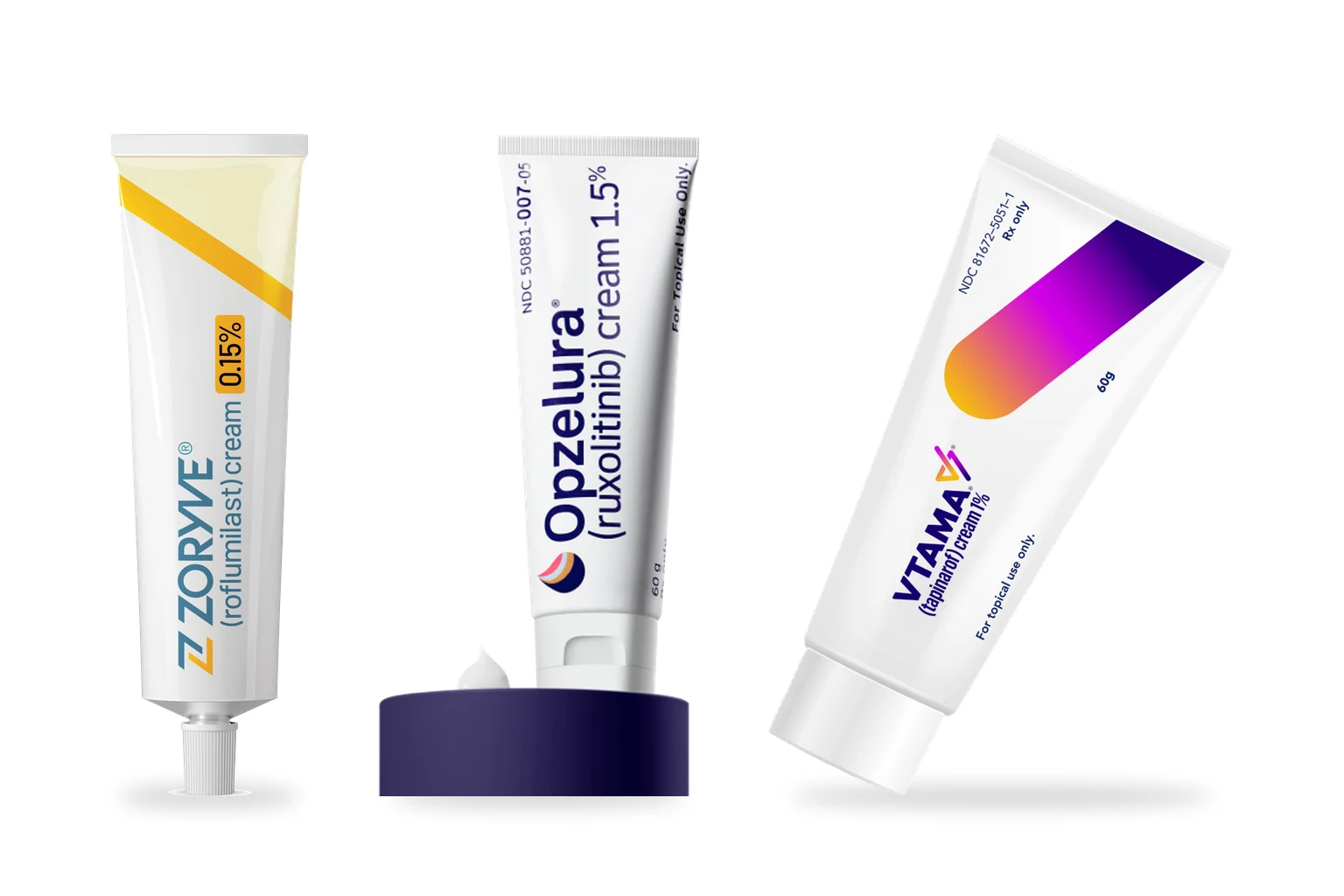
Eczema
Zoryve vs Opzelura vs Vtama vs Eucrisa: Non-Steroid Eczema Creams Compared
Nov 19, 2026 · 13 min read
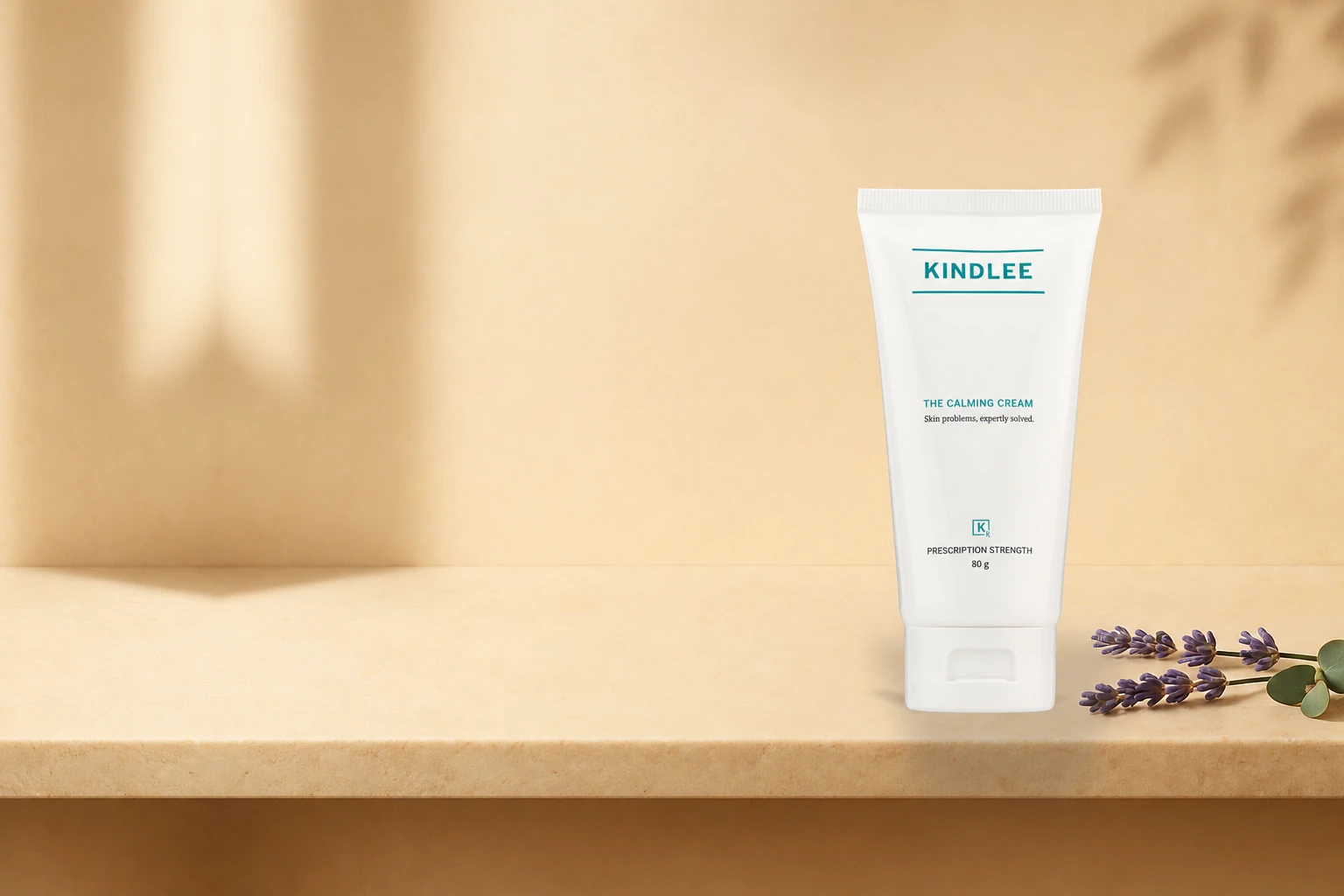
Eczema
I Got Tired of Watching Patients Walk Away From a $900 Cream. So I Built a $70 One.
Jun 13, 2026 · 8 min read

Eczema
Best Online Eczema Treatment: How Telehealth Options Compare
Nov 22, 2026 · 17 min read