
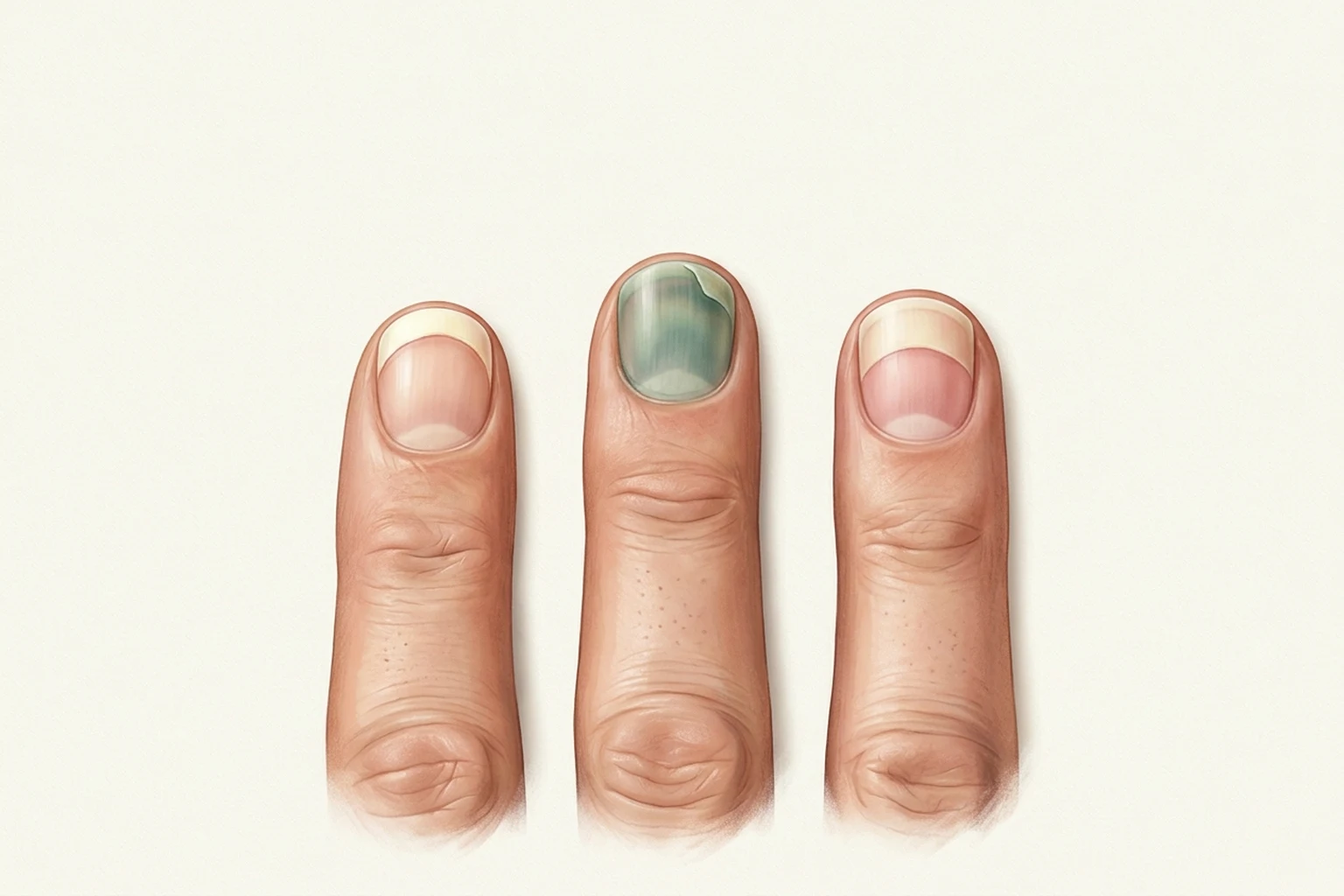
AI-generated illustration. Not an actual patient or treatment result.
Lifted Nails, Green Nail Syndrome, and Doxycycline Sun Lifting: When It Is Not Fungus

Chief Medical Officer
Not every lifted or discolored nail is fungal onychomycosis. A chalky white lifted edge (onycholysis), a sudden greenish-black smudge under an acrylic manicure, or several fingernails peeling back after a sunny vacation on doxycycline are classic non-fungal nail conditions that ignore antifungal creams (Baran 2024; Orylska-Ratynska 2022).
In this article
What is onycholysis, and why does a lifted nail look white or yellow?
Onycholysis means the hard nail plate has separated from the pink nail bed underneath. Once air fills that gap, the lifted section loses its pink color and looks stark white or pale yellow, tricking many patients into buying over-the-counter antifungal drops.
Common non-fungal causes of onycholysis include:
- Mechanical leverage and cleaning tools: Long nails acting as levers, harsh acrylic removals, tight running shoes on great toenails, and digging under the nail edge with metal files.
- Inflammatory skin diseases: Nail psoriasis and contact allergy to nail glues or gel acrylates.
- Internal clues: Unexplained lifting of multiple fingernails without trauma or psoriasis can signal hyperthyroidism and deserves a routine primary-care check (Fawcett 2004).
What causes green nail syndrome (chloronychia), and why do antifungals fail?
Once onycholysis creates a sheltered pocket that stays damp from dishwashing, swimming, sweating, or trapped moisture under artificial nails, the opportunistic bacterium Pseudomonas aeruginosa thrives inside the space (Baran 2024; Chiriac 2015). Pseudomonas secretes green-blue pigments that stain the nail plate pale green, olive, greenish-brown, or dark greenish-black, forming green nail syndrome (chloronychia).
| Nail pattern | Typical culprit | Visual clue | Why antifungals miss |
|---|---|---|---|
| Green nail syndrome (chloronychia) | Pseudomonas aeruginosa bacteria (rarely co-bacteria or Candida) (Baran 2024; Zhang 2026) | Green, olive, or green-black patch over lifted nail edge after wet work or gel nails | Antifungal drugs have zero activity against Gram-negative Pseudomonas |
| Photo-onycholysis | Tetracyclines such as doxycycline (Orylska-Ratynska 2022; Carroll 2003), fluoroquinolones, psoralens, or certain NSAIDs plus sunlight (Al-Kathiri 2016) | Sudden painful or tender lifting across multiple sun-exposed fingernails; covered toenails spared | Phototoxic injury to the nail bed, not an infection |
| Traumatic or manicure onycholysis | Over-filing, acrylic leverage, under-nail picking, or tight shoes | Clean smooth white detachment without thick chalky debris underneath | Mechanical separation heals only when kept short and dry |
Even though bacterial Pseudomonas causes the vast majority of green nails, uncommon co-infections (such as Burkholderia species) or rare fungal green nails (Candida parapsilosis) occasionally occur, so a clinician should culture any stubborn green nail that ignores initial care (Zhang 2026; Forouzan 2021).
How do medications like doxycycline and sun exposure cause photo-onycholysis?
The clear nail plate transmits ultraviolet light straight onto the nail bed beneath it, which lacks melanin pigment protection. When a patient takes a photosensitizing drug, especially doxycycline or other tetracyclines, along with fluoroquinolones, psoralens, or certain NSAIDs, bright outdoor sunlight or tanning beds can trigger a phototoxic burn right underneath the nail (Orylska-Ratynska 2022; Carroll 2003; Al-Kathiri 2016).
After sun exposure on a photosensitizing drug, brief tenderness or swelling can be followed by distal separation across sun-exposed fingernails while shoe-covered toenails are spared, recovering gradually over months (Al-Kathiri 2016; Carroll 2003). Stopping or shielding from ultraviolet light (and discussing alternative prescriptions with your prescribing doctor) lets healthy attached nails grow back over several months.
How do dermatologists treat green nails and lifted nails safely?
- Trim the lifted nail back cleanly: Keeping detached nail short removes the wet cave where Pseudomonas hides and stops accidental snagging (Baran 2024).
- Eliminate trapped moisture: Remove acrylics and gel overlays completely, dry hands carefully after washing, and wear cotton-lined waterproof gloves for wet chores (Baran 2024).
- Target Pseudomonas directly under clinician guidance: Dermatologists frequently pair trimming and moisture avoidance with brushing the exposed nail bed with dilute 2% sodium hypochlorite twice daily (Baran 2024) or prescription topical antibiotic drops such as ciprofloxacin (Dominique 2025); oral antibiotics such as ciprofloxacin or culture-guided therapy are reserved for persistent, severe, or high-risk cases (Chiriac 2015; Zhang 2026). Note that the green stain already embedded in the hard nail plate grows out gradually even after the bacteria are gone.
- Stop scraping under the nail: Never dig under lifted nails with toothpicks, clippers, or orange sticks; let new nail reattach undisturbed.
When should a lifted or discolored nail be evaluated in person versus online?
KindleeRx's Nail Regimen treats adult fungal nail infections (onychomycosis), not Pseudomonas green nail syndrome, drug-induced photo-onycholysis, or thyroid-related nail lifting. See an in-person clinician or dermatologist if your nail turned green, if several fingernails lifted after taking doxycycline in the sun, if you have diabetes or immune suppression, or if nail culture is needed to rule out bacterial co-infection.
If your toenails instead show classic fungal nail infection with thick, yellow, crumbly debris packed underneath the nail plate (compare is it toenail fungus or something else, nail fungus symptoms, and how to prevent nail fungus), licensed clinicians (physician assistants and nurse practitioners working under a board-certified dermatologist's protocols) evaluate your photos and history through the KindleeRx Nail Regimen and reply in under 5 hours on average. When clinically appropriate, the 90-day program pairs 21 terbinafine 250 mg pills (off-label pulse schedule) with a 30 mL compounded topical nail solution (itraconazole 1%, terbinafine 3%, urea 20%, tea tree oil 6.6%, and dimethyl sulfoxide [DMSO]) for $99 on the first automatic-refill order, then $99 every 90 days before coupons (including the $20 consultation fee, free shipping, and 90 days of clinician messaging), or $118.75 one-time before coupons. Before prescribing oral terbinafine, your clinician may ask for copies of your earlier liver blood test results, or ask your primary care provider to order a test. Available in 44 states plus Washington, D.C. (excluding Arkansas, Kansas, Maryland, Mississippi, Nebraska, and West Virginia), with a full refund including the consultation fee if treatment is not prescribed.
Important Information
KindleeRx's topical nail solution (itraconazole 1%, terbinafine 3%, urea 20%, tea tree oil 6.6%, and DMSO) is a compounded prescription medication prepared by a licensed United States compounding pharmacy under a prescriber's order. Compounded medications are not approved by the Food and Drug Administration (FDA) and are not reviewed by the FDA for safety, effectiveness, or quality (FDA compounding guidance). Oral terbinafine pulse dosing (21 pills over 3 months) is an off-label schedule. KindleeRx does not treat Pseudomonas green nail syndrome, drug-induced photo-onycholysis, or perform bacterial cultures. Eligibility is determined by a licensed clinician after reviewing your medical history and photos. Not all patients qualify. Individual results vary. This article is educational and is not medical advice.
Sources
- Baran R, Richert B. Green Nail: Etiology and Treatment of Chloronychia. Hand Surgery and Rehabilitation 2024.
- Chiriac A, Brzezinski P, Foia L, Marincu I. Chloronychia: Green Nail Syndrome Caused by Pseudomonas aeruginosa in Elderly Persons. Clinical Interventions in Aging 2015.
- Dominique WT, Obasi E, Sidhu S. Chloronychia: Green Nail Syndrome Caused by Pseudomonas aeruginosa in a Younger Patient. Cureus 2025.
- Zhang A, Kuang H, Chang F, Li H, et al. Pseudomonas aeruginosa and Burkholderia cepacia Complex Co-Infection in Green Nail Syndrome: A Case Report. Frontiers in Medicine 2026.
- Forouzan P, Cohen PR. Fungal Viridionychia: Onychomycosis-Induced Chloronychia Caused by Candida parapsilosis-Associated Green Nail Discoloration. Cureus 2021.
- Orylska-Ratynska M, Placek W, Owczarczyk-Saczonek A. Tetracyclines: An Important Therapeutic Tool for Dermatologists. International Journal of Environmental Research and Public Health 2022.
- Carroll LA, Laumann AE. Doxycycline-Induced Photo-Onycholysis. Journal of Drugs in Dermatology 2003.
- Al-Kathiri L, Al-Asmaili A. Diclofenac-Induced Photo-Onycholysis. Oman Medical Journal 2016.
- Fawcett RS, Linford S, Stulberg DL. Nail Abnormalities: Clues to Systemic Disease. American Family Physician 2004.
- Food and Drug Administration. Understanding the Risks of Compounded Drugs.
Related Articles
Nail Care
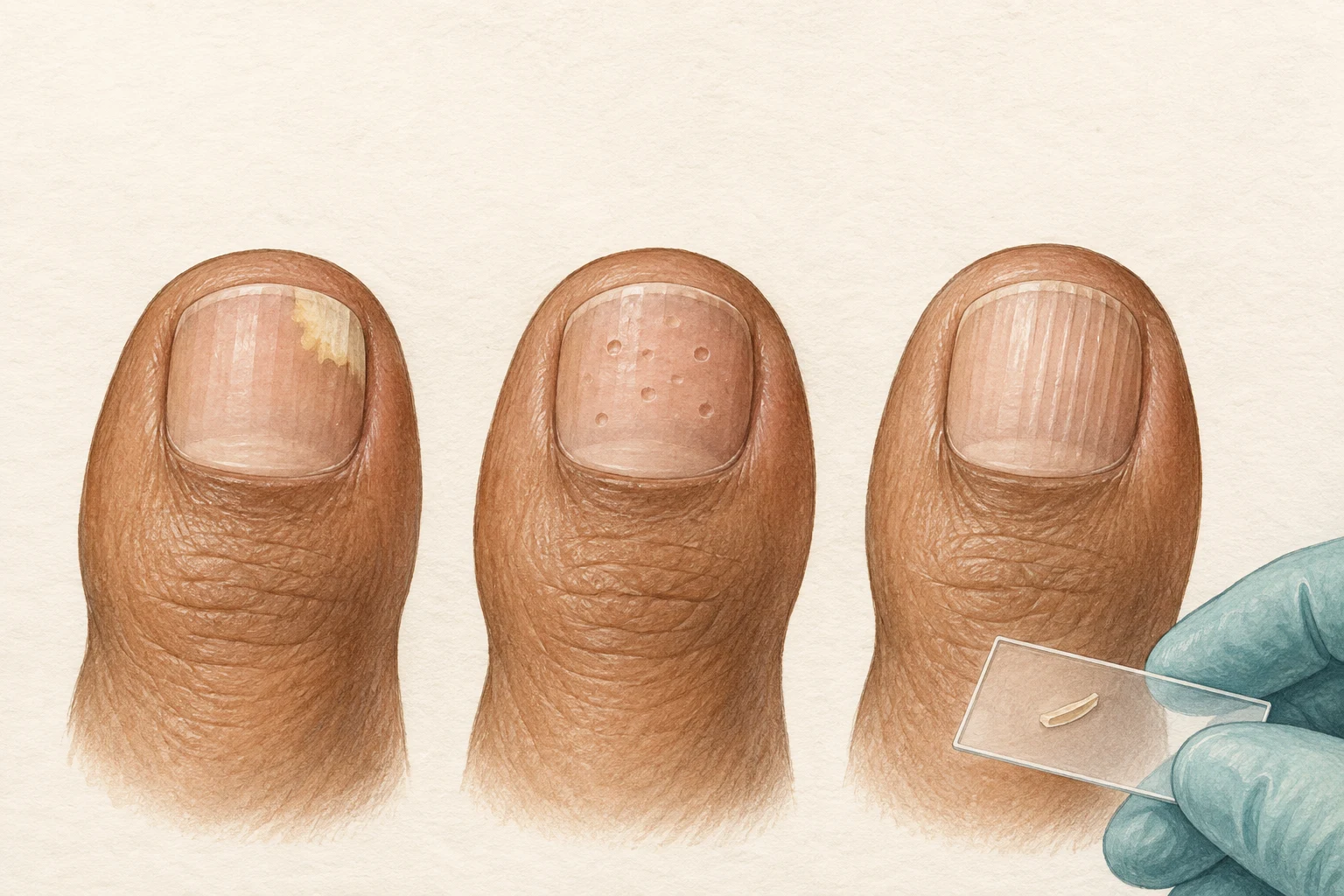
Is It Really Fungus? The 5 Conditions That Mimic Toenail Fungus
Jul 19, 2026 · 8 min read
Nail Care
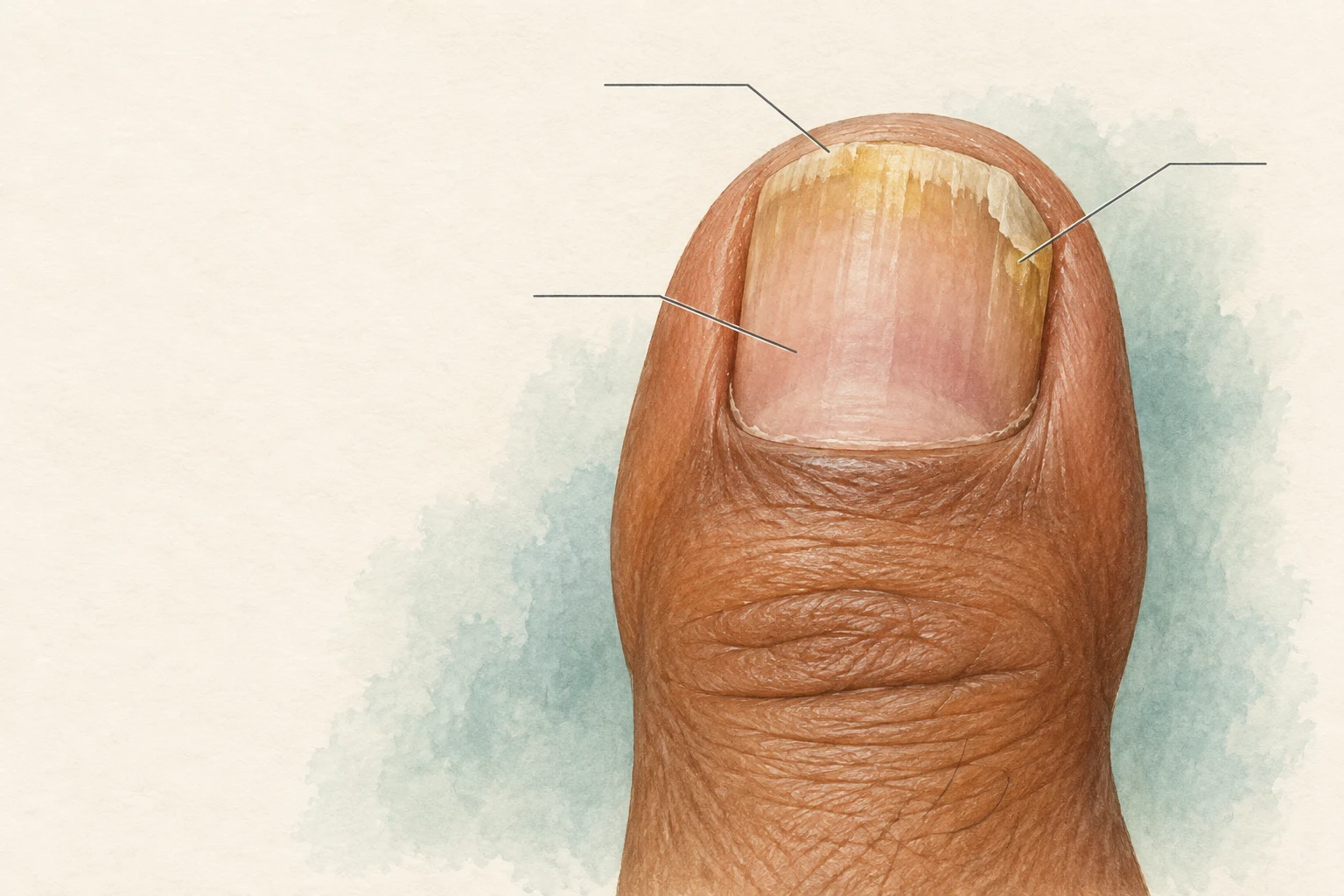
Nail Fungus Symptoms: How to Tell If You Have It (and What to Do Next)
Apr 9, 2026 · 8 min read
Nail Care
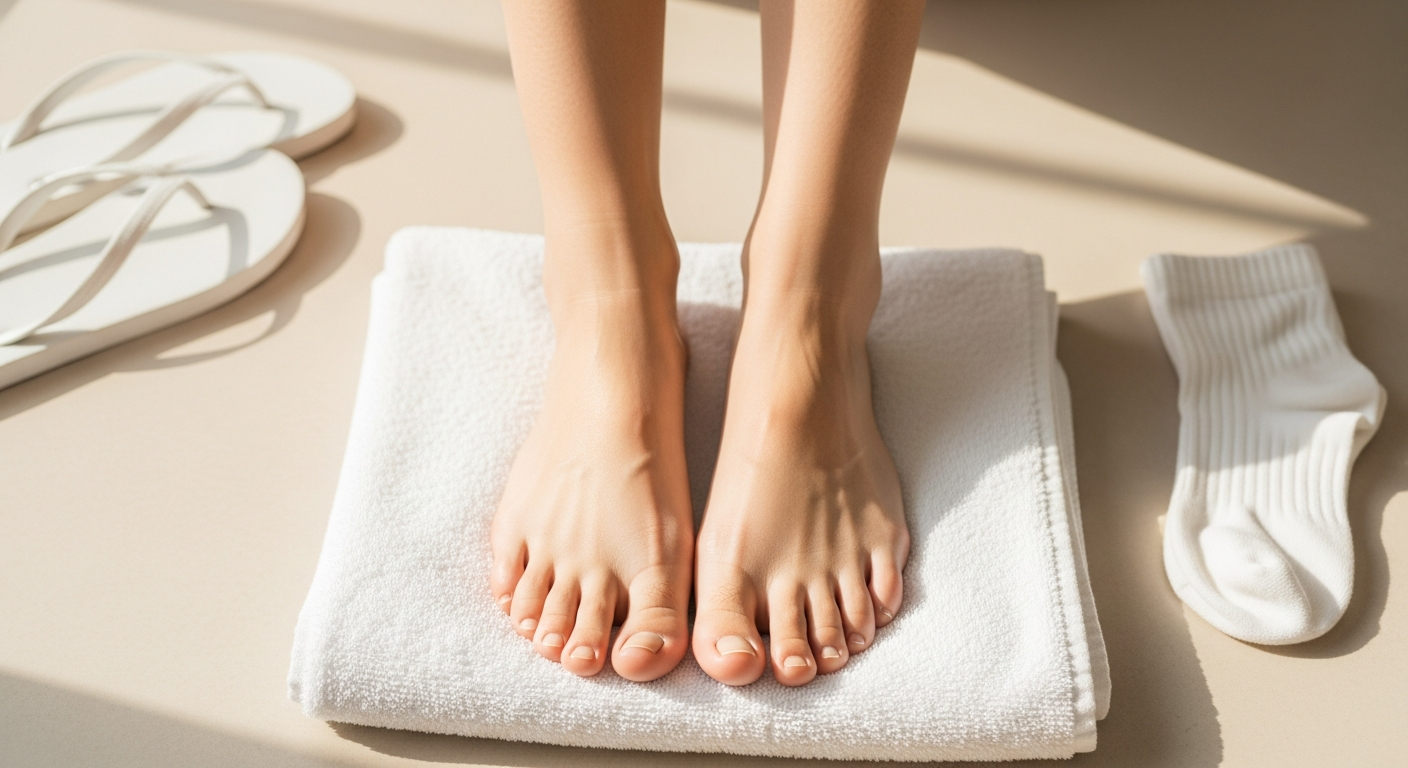
How to Prevent Nail Fungus: A Dermatologist's Guide to Keeping Your Nails Clear
Apr 9, 2026 · 8 min read