
I'll be straightforward with you: treating nail fungus is a months-long commitment. Even with the best prescription dual-therapy approach, it takes 3 to 6 months for fingernails and 6 to 12 months for toenails to fully grow out clear. That's not because the treatment isn't working. It's because nails grow slowly, and you're waiting for healthy nail to replace the damaged portion.
Nail CareApril 9, 2026 · 8 min read
How to Prevent Nail Fungus: A Dermatologist's Guide to Keeping Your Nails Clear

Dr. Brandon Kirsch, MD, FAAD
Chief Medical Officer
Prevention, on the other hand, is simple. And if you've already completed treatment, prevention becomes even more important because reinfection rates are real. Here are the strategies that actually work, based on the clinical evidence and what I tell my own patients every day.
Keep Your Feet Clean and Dry
This is the single most important thing you can do. Fungi need moisture to thrive. Remove their moisture, and you remove their ability to grow.
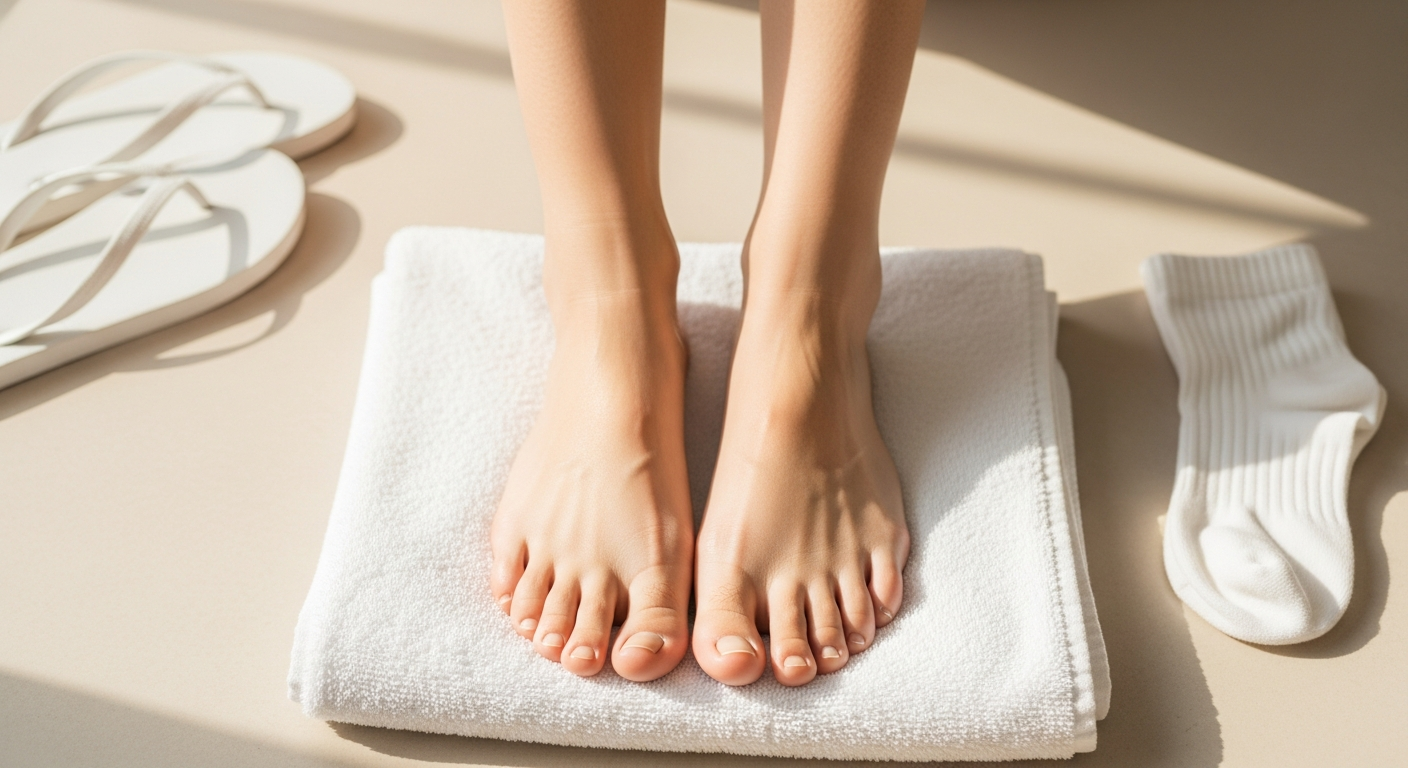
- Wear moisture-wicking socks made of synthetic blends or merino wool. Cotton holds moisture against the skin. If your feet tend to sweat, change your socks midday.
- Put on fresh socks every single day. This sounds obvious, but you'd be surprised how often patients admit to rewearing socks.
- Let your shoes dry completely between wears. Fungi can survive in a damp shoe for days. Alternate between at least two pairs so each has a full 24 hours to air out.
- Choose breathable footwear when possible. Canvas, mesh, and leather shoes allow airflow. Rubber-lined boots and plastic-based shoes trap moisture.
- Dry your feet thoroughly after showering, especially between the toes. That warm, damp space between toes is where athlete's foot starts, and athlete's foot is the number one pathway to toenail fungus.
Use Antifungal Powder or Spray Preventively
Dusting your feet and the insides of your shoes with an antifungal powder or spray before you put shoes on is an easy habit that creates a hostile environment for fungi. Products containing miconazole or tolnaftate work well for this purpose.
An important distinction: these preventive products can't treat an active nail infection. They work by keeping fungal organisms from establishing themselves in the first place. Think of it like sunscreen. It prevents the problem but doesn't reverse an existing burn.
Protect Your Feet in Communal Areas
Pool decks, gym locker rooms, shared showers, and spa floors are where many nail fungus infections originate. These warm, moist surfaces are ideal for fungal growth, and walking barefoot across them exposes your feet directly.
Wear shower shoes or flip-flops in any shared wet environment. Every time. This is one of the simplest and most effective prevention strategies there is.
Never Share Personal Grooming Items
Nail clippers, files, towels, and shoes can all carry fungal organisms from one person to another. This is especially important within households. If someone in your family has nail fungus or athlete's foot, make sure everyone has their own set of nail care tools and towels.
This applies to salon visits too. Before your next pedicure, look around to see if the staff is sanitizing tools and foot baths between clients. If you don't see it happening, ask. A reputable salon won't mind the question. If they seem bothered by it, consider finding a different salon.
Keep Your Nails Properly Trimmed
Shorter nails leave less room for fungi and debris to accumulate underneath. Here's the correct technique:
- Trim toenails straight across, not curved at the corners (this also prevents ingrown nails)
- Keep nails shorter than the tip of your toes
- Use sharp, clean clippers and avoid tearing or ripping nails
- Don't cut cuticles aggressively, as this removes a natural barrier against infection
Disinfect Your Nail Clippers After Every Use
This is a step most people skip, and it matters more than you'd think. Here's the proper method:
- Remove any nail clippings and debris from the tool
- Wash with warm water and soap
- Disinfect: If you have (or have had) a nail infection, soak your clippers in a solution of 1 cup water plus 1 tablespoon household bleach for 5 minutes. If you don't have an infection, wiping or soaking with 70% rubbing alcohol for 5 minutes is sufficient.
- Let the clippers air dry completely before storing them
Treat Athlete's Foot Immediately
I cannot stress this enough. Athlete's foot and nail fungus are caused by the same organisms. That cracked, scaly, peeling skin on your feet or itching between your toes? It's an active fungal infection sitting right next to your toenails, and it will eventually spread into the nail if left untreated.
Don't ignore it. Don't assume it will go away on its own. Treat it aggressively with an antifungal cream (terbinafine cream or clotrimazole are both effective over the counter) and continue treatment for the full recommended duration, usually 2 to 4 weeks, even if symptoms improve sooner. Stopping early is one of the most common reasons athlete's foot comes back.
Disinfect Your Shoes After Starting Treatment
If you've been treated for nail fungus, the shoes you wore during the infection can harbor fungal organisms. Without addressing this, you risk reinfecting yourself with your own footwear. Here's what to do:
- Discard or thoroughly disinfect any shoes you wore frequently before and during treatment
- Wash socks in hot water (at least 140 degrees F) to kill fungal spores
- Consider UV shoe sanitizers, which use ultraviolet light to kill microorganisms inside footwear. These are a worthwhile investment, especially if you're prone to recurrent infections.
Monitor Your Nails Regularly
Make it a habit to actually look at your nails. I know that sounds simple, but many patients go months without really examining their toenails, especially in winter when feet are hidden in socks and shoes.
Watch for: thickening, splitting, discoloration (yellow, white, or brown), or the nail lifting away from the nail bed. Catching these changes early gives you the best chance of successful treatment. If you notice any of these signs, seek treatment promptly rather than waiting to see if it resolves (it won't).
Make Sure Household Members Get Treated Too
Nail fungus and athlete's foot are genuinely contagious within households. It's very common for people living in the same home to pass these infections back and forth. If one family member is being treated for nail fungus, other household members should be examined too, especially if they share showers, walk barefoot on the same floors, or have noticed any changes in their own nails or feet.
Treating only one person while the rest of the household harbors the same fungal organisms is a recipe for reinfection.
A Note on Reinfection After Treatment
Even after successful treatment, nail fungus can come back. Reinfection rates are real, and this is one of the most frustrating aspects of the condition. The strategies I've outlined here aren't just for prevention before a first infection. They're maintenance habits for life, especially if you've already dealt with nail fungus once.
If you notice early signs of reinfection after completing treatment, don't wait. The sooner you resume treatment, the easier it is to clear. A prescription dual-therapy approach that combines a topical solution with oral antifungals gives you the highest chance of clearing the infection completely. And this time, pair the treatment with every prevention strategy on this list to give your nails the best shot at staying clear for good.
The Bottom Line
Nail fungus prevention comes down to a simple principle: keep fungi away from your nails and keep your nails in an environment where fungi can't thrive. Dry feet, clean tools, protective footwear in shared spaces, and prompt treatment of athlete's foot will go a long way. These aren't complicated habits, but they're remarkably effective when practiced consistently.
Your nails grow slowly, and so does nail fungus. The damage accumulates over months before you notice it. But the prevention strategies work just as quietly in your favor, protecting your nails one day at a time.
Related Articles
→
Nail Care
Nail Fungus Symptoms: How to Tell If You Have It (and What to Do Next)
Apr 9, 2026 · 8 min read

→
Nail Care
What Causes Nail Fungus? Risk Factors, How It Spreads, and Who Gets It
Apr 9, 2026 · 8 min read
→
Nail Care
Best online toenail fungus treatment: Which option fits you?
Sep 15, 2026 · 7 min read