
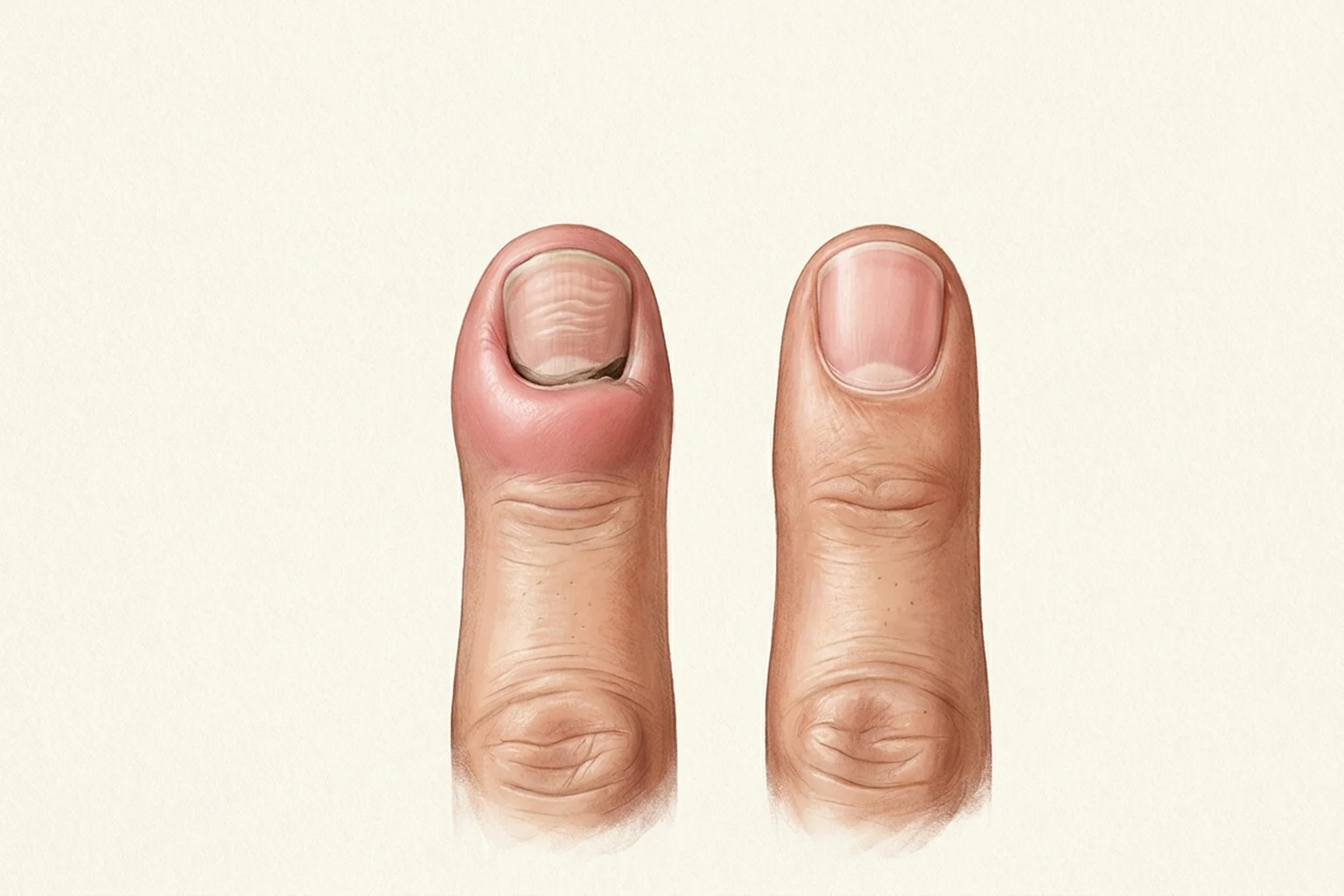
AI-generated illustration. Not an actual patient or treatment result.
Chronic Paronychia (Swollen Nail Folds): Why Antifungal Creams Fail and Topical Steroids Win

Chief Medical Officer
If the skin around the base of your fingernails has stayed puffy, tender, and red for months while antifungal creams and pills barely dent it, you are likely dealing with chronic paronychia, an inflammatory nail-fold dermatitis rather than true nail fungus (Tosti 2002). Once you stop treating a broken cuticle seal like ordinary fungal infection, the swelling finally begins to settle.
In this article
What is chronic paronychia, and why is it misdiagnosed as nail fungus?
A healthy cuticle acts like rubber caulking between the skin fold (proximal nail fold) and the hard nail plate, sealing water, soaps, food juices, and microbes out of the nail-growth pocket. When repeated wet work or aggressive manicures strip that seal away, irritants seep under the skin fold, triggering chronic redness, boggy swelling, mild tenderness, and rippled washboard grooves across the growing nail (Tosti 2002).
Warm, damp pockets underneath inflamed folds naturally collect Candida yeast and surface bacteria. When a swab grows Candida, clinicians and patients often assume yeast caused the problem and prescribe months of clotrimazole, ketoconazole, fluconazole, or terbinafine while the underlying irritant dermatitis keeps smoldering. See our broader guide on whether nail changes are fungus or something else.
Why did a topical steroid beat oral antifungal pills in the landmark clinical trial?
When topical antifungal creams fail, clinicians once escalated to oral antifungal pills, so researchers tested systemic antifungals directly against anti-inflammatory care. In a classic randomized, double-blind, double-dummy trial published in the Journal of the American Academy of Dermatology, Antonella Tosti and colleagues tested 45 adults with chronic paronychia for 3 weeks (with 6 weeks of follow-up) comparing a topical corticosteroid (methylprednisolone aceponate) directly against oral terbinafine and oral itraconazole (Tosti 2002).
| Randomized treatment arm | Nails improved or cured at Week 9 | Clinical takeaway |
|---|---|---|
| Topical corticosteroid (methylprednisolone aceponate) | 41 of 48 nails (85%) (Tosti 2002) | Directly calms fold dermatitis so the cuticle seal can regenerate |
| Oral terbinafine | 30 of 57 nails (53%) (Tosti 2002) | Far less effective than topical anti-inflammatory therapy |
| Oral itraconazole | 29 of 64 nails (45%) (Tosti 2002) | Lowest response among the three study arms |
Across all 45 enrolled patients, eradicating Candida was associated with clinical cure in only 2 of the 18 patients who carried Candida at baseline, supporting chronic paronychia as an environmental hand dermatitis rather than primary fungal infection (Tosti 2002).
What destroys the protective cuticle seal in the first place?
Chronic paronychia clusters heavily in specific daily habits and occupations:
- Frequent wet work: Bartenders, chefs, dishwashers, healthcare workers, hairstylists, housekeepers, and parents washing bottles soak hands repeatedly in water, detergents, citrus juices, and sanitizers.
- Cuticle cutting and pushing: Salon cuticle nipping, acrylic removals, and anxious nail-biting or picking physically strip away the skin gasket.
- Certain prescriptions: Oral retinoids and targeted cancer therapies such as epidermal growth factor receptor inhibitors (including gefitinib) can inflame nail folds even without heavy wet work (Saraswat 2020).
How do you heal chronic paronychia and regrow the cuticle?
Healing takes patience, as a damaged cuticle seal needs several weeks to months of uninterrupted protection to reattach cleanly:
- Keep hands bone-dry during chores: Wear cotton-lined vinyl or nitrile gloves for dishes, food prep, hair washing, and cleaning (rubber gloves alone trap sweat if worn without cotton liners).
- Stop all cuticle cutting and nail-picking: Never push back, clip, or scrape under the base of swollen nails.
- Seal the fold after every wash: Dab plain fragrance-free petrolatum directly over the cuticle margin right after patting hands dry.
- Ask a clinician for targeted anti-inflammatory treatment: Short supervised courses of a mid-to-high-potency topical corticosteroid ointment (or topical calcineurin inhibitor like tacrolimus for steroid-sparing maintenance) calm fold swelling so the seal closes; your clinician adds a topical antifungal or antiseptic drop only if green discoloration (Pseudomonas, Baran 2024) or heavy secondary yeast persists.
When should swollen nail folds be evaluated in person versus online?
KindleeRx's Nail Regimen treats confirmed or suspected adult fungal nail infections (onychomycosis), not acute bacterial infections or primary inflammatory paronychia. If your main issue is puffy red fingernails with a missing cuticle and clean nail plates, see an in-person clinician or dermatologist for anti-inflammatory care and possible patch testing.
If instead your toenails are thick, brittle, yellow, and crumbly under the free edge from true fungal toenail infection (review nail fungus symptoms and how to prevent nail fungus), licensed clinicians (physician assistants and nurse practitioners working under a board-certified dermatologist's protocols) review your intake, medication list, and photos through the KindleeRx Nail Regimen and reply in under 5 hours on average. When clinically appropriate, the 90-day program pairs 21 terbinafine 250 mg pills (off-label pulse schedule) with a 30 mL compounded topical nail solution (itraconazole 1%, terbinafine 3%, urea 20%, tea tree oil 6.6%, and dimethyl sulfoxide [DMSO]) for $99 on the first automatic-refill order, then $99 every 90 days before coupons (including the $20 consultation fee, free shipping, and 90 days of clinician messaging), or $118.75 one-time before coupons. Before prescribing oral terbinafine, your clinician may ask for copies of your earlier liver blood test results, or ask your primary care provider to order a test. Available in 44 states plus Washington, D.C. (excluding Arkansas, Kansas, Maryland, Mississippi, Nebraska, and West Virginia), with a full refund including the consultation fee if treatment is not prescribed.
Important Information
KindleeRx's topical nail solution (itraconazole 1%, terbinafine 3%, urea 20%, tea tree oil 6.6%, and DMSO) is a compounded prescription medication prepared by a licensed United States compounding pharmacy under a prescriber's order. Compounded medications are not approved by the Food and Drug Administration (FDA) and are not reviewed by the FDA for safety, effectiveness, or quality (FDA compounding guidance). Oral terbinafine pulse dosing (21 pills over 3 months) is an off-label schedule. KindleeRx does not treat acute bacterial paronychia or perform nail-fold drainage or biopsy. Eligibility is determined by a licensed clinician after reviewing your medical history and photos. Not all patients qualify. Individual results vary. This article is educational and is not medical advice.
Sources
- Tosti A, Piraccini BM, Ghetti E, Colombo MD. Topical Steroids Versus Systemic Antifungals in the Treatment of Chronic Paronychia: An Open, Randomized Double-Blind and Double Dummy Study. Journal of the American Academy of Dermatology 2002.
- Tully AS, Trayes KP, Studdiford JS. Evaluation of Nail Abnormalities. American Family Physician 2012.
- Saraswat N, Sood A, Verma R, Kumar D, Kumar S. Nail Changes Induced by Chemotherapeutic Agents. Indian Journal of Dermatology 2020.
- Baran R, Richert B. Green Nail: Etiology and Treatment of Chloronychia. Hand Surgery and Rehabilitation 2024.
- Food and Drug Administration. Understanding the Risks of Compounded Drugs.
Related Articles
Nail Care
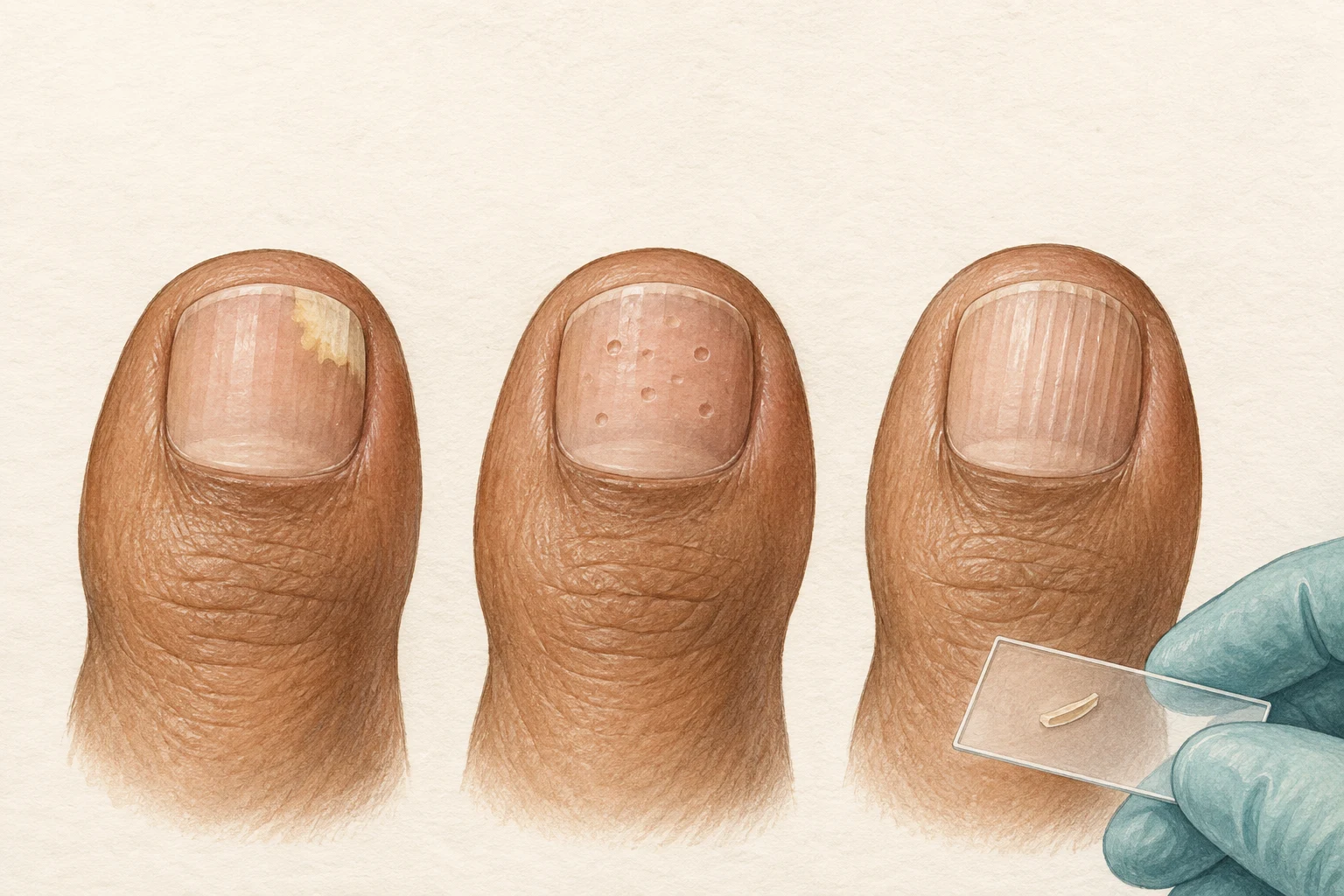
Is It Really Fungus? The 5 Conditions That Mimic Toenail Fungus
Jul 19, 2026 · 8 min read
Nail Care
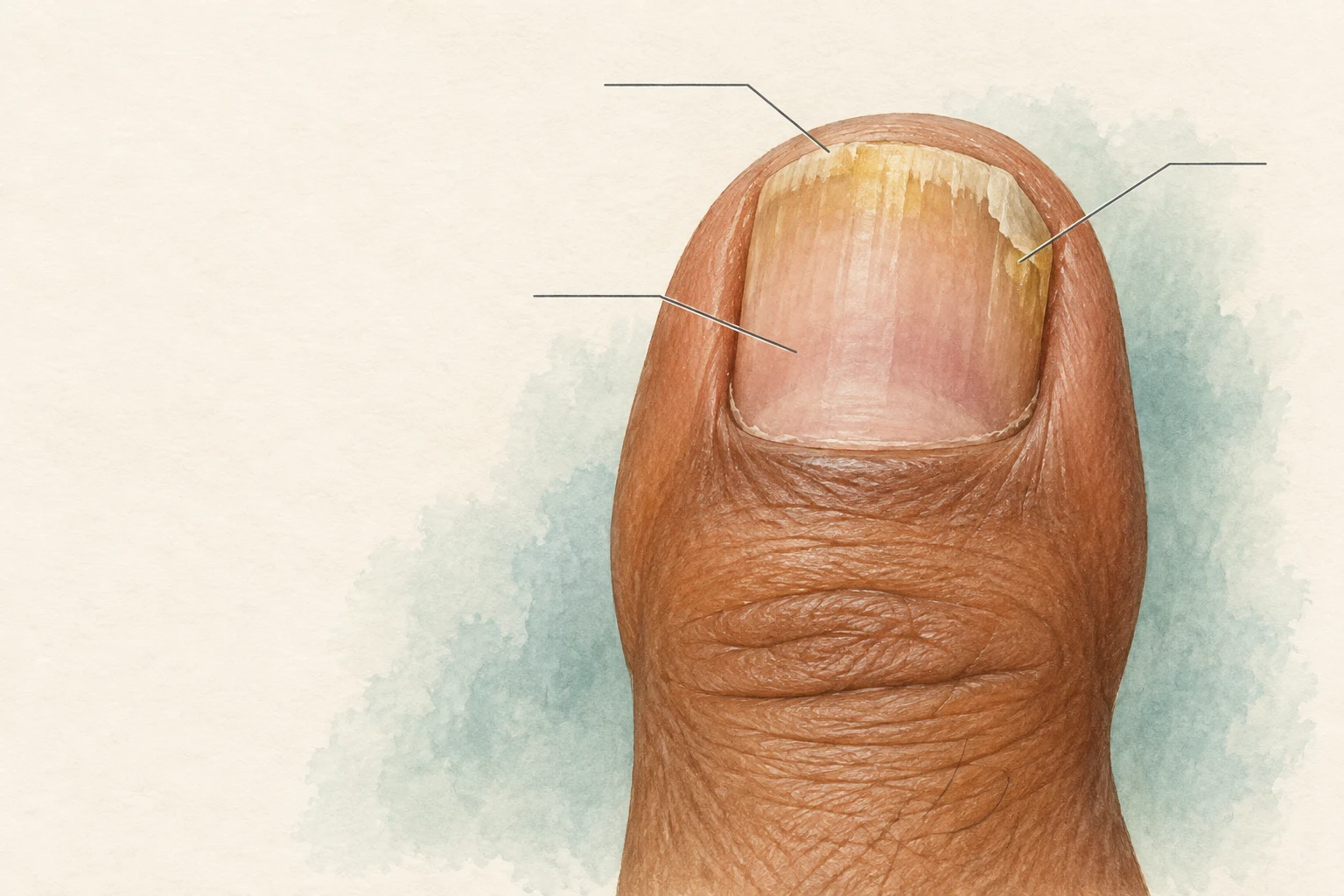
Nail Fungus Symptoms: How to Tell If You Have It (and What to Do Next)
Apr 9, 2026 · 8 min read

Nail Care
How to Prevent Nail Fungus: A Dermatologist's Guide to Keeping Your Nails Clear
Apr 9, 2026 · 8 min read