
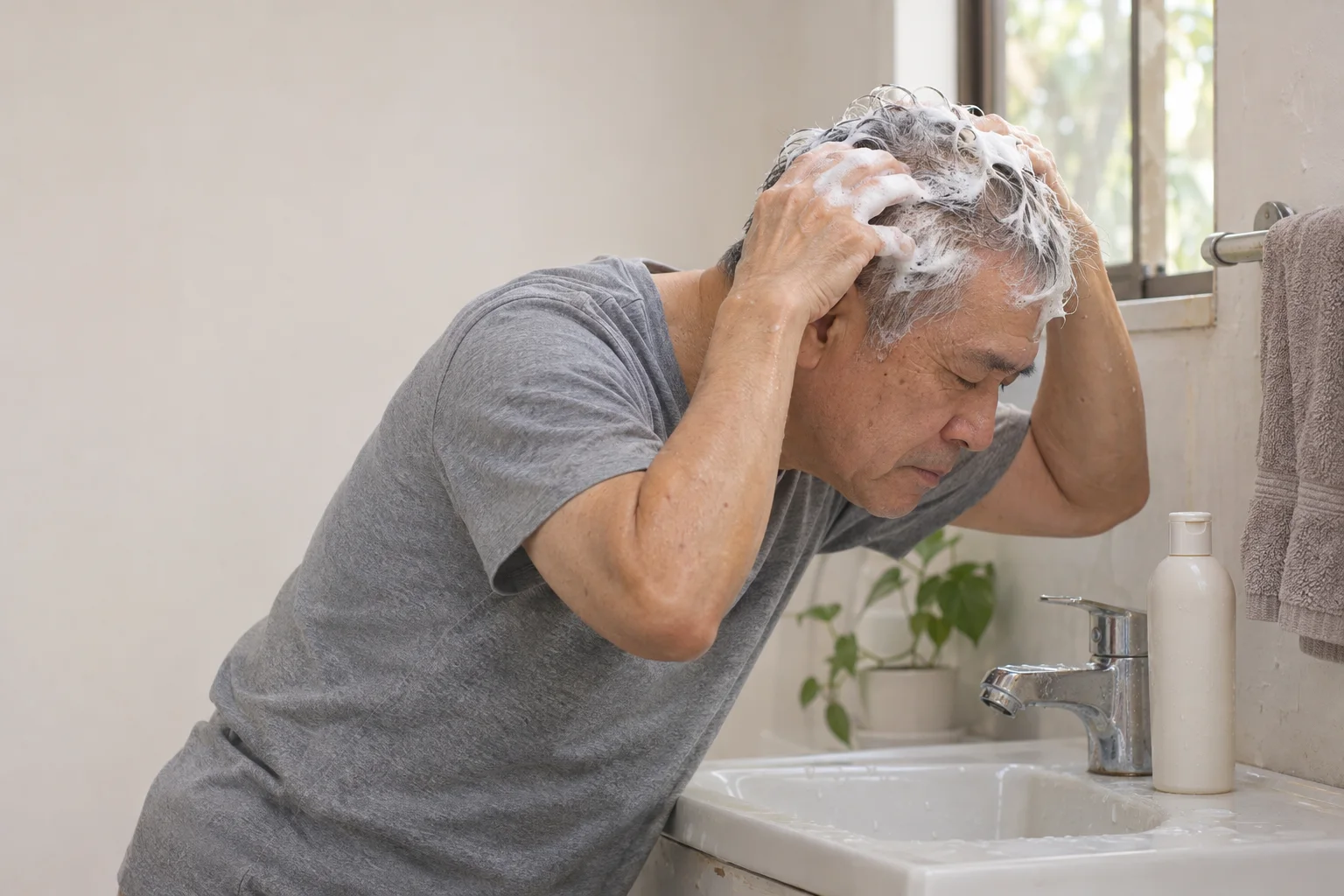
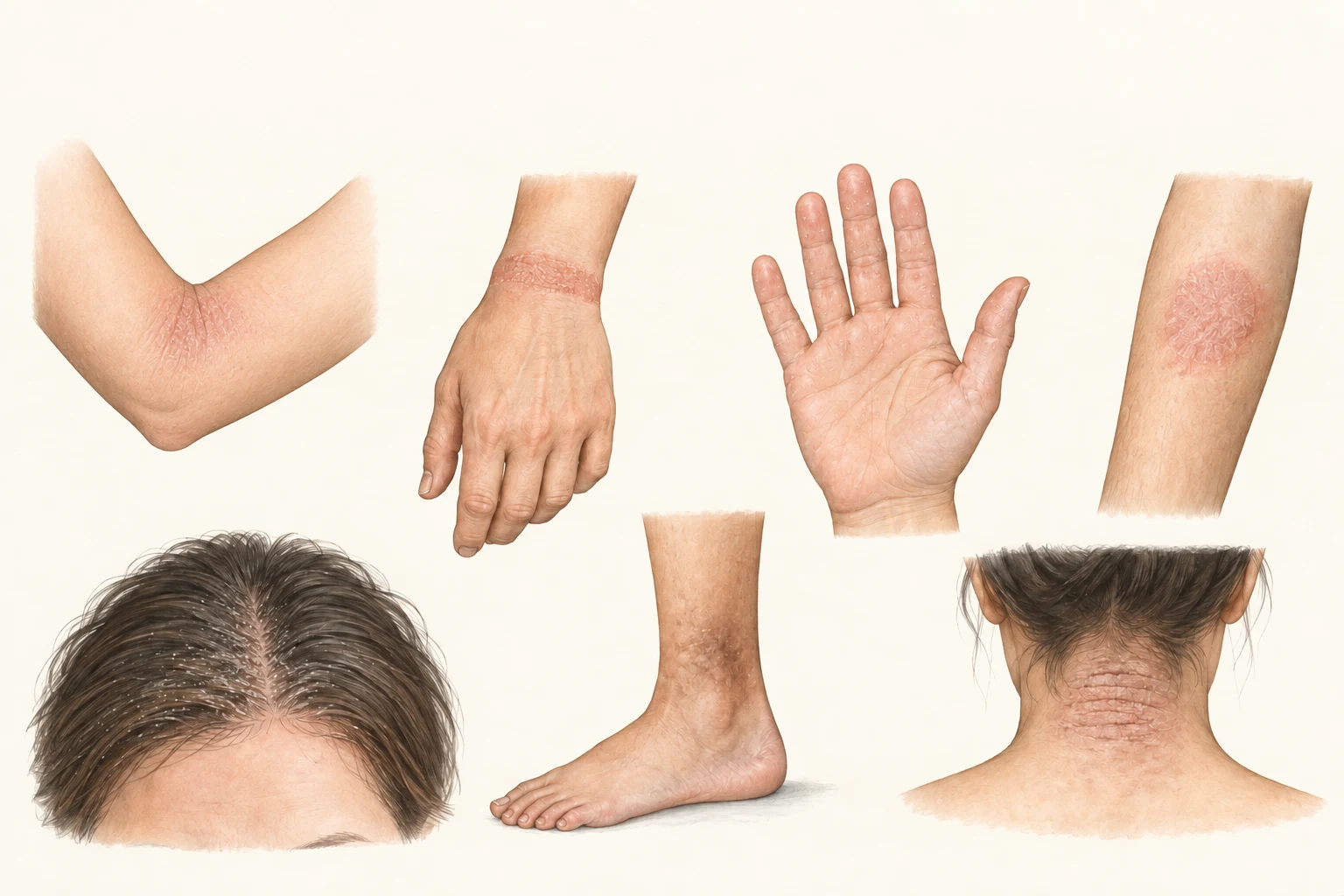
AI-generated illustration. Not an actual patient or treatment result.
Seborrheic Dermatitis on the Face and Scalp: What Works?
Chief Medical Officer
Start with ketoconazole 2% (cream on the face, shampoo on the scalp), use a mild steroid for a few days when it flares, and keep a weekly antifungal shampoo going once it clears. In a Cochrane review of 51 trials, about 50 in 100 people using ketoconazole were fully clear at 4 weeks, versus about 28 in 100 using a placebo (8 trials) (Okokon 2015). Once clear, once-weekly ketoconazole shampoo held 6-month relapse to 19% vs 47% on placebo shampoo (Peter 1995).
In this article
What is the best treatment for seborrheic dermatitis?
Ketoconazole 2% and a short course of a mild topical steroid are the best-proven first treatments, and they clear the rash about equally often. Ketoconazole fully cleared the rash in about 52 in 100 people at 4 weeks versus 59 in 100 on a steroid, a gap the review could not tell from chance, with fewer side effects (5 in 100 versus 10 in 100); ciclopirox 1% also beat placebo (Okokon 2015). In a Cochrane review of 36 trials, steroids cleared the rash in 34 in 100 people versus 8 in 100 on placebo (3 trials, 313 people), mild steroids worked as well as strong ones, and steroids matched calcineurin inhibitors with fewer side effects (Kastarinen 2014). Most of these trials lasted 4 weeks or less. The American Academy of Dermatology (AAD) describes hydrocortisone cream once or twice daily for flares (AAD). My order: ketoconazole first, a mild steroid for flares, and a prescription non-steroid when steroids keep coming back.
Which shampoos work for seborrheic dermatitis on the scalp?
Ketoconazole 2% and ciclopirox 1% have the strongest trial data. The over-the-counter (OTC) rules of the Food and Drug Administration (FDA) allow four ingredients for seborrheic dermatitis: coal tar 0.5% to 5%, pyrithione zinc 0.95% to 2% in rinse-off products, salicylic acid 1.8% to 3%, and selenium sulfide 1% (Code of Federal Regulations (CFR), 21 CFR 358.710).
| Shampoo | How it was used | Result |
|---|---|---|
| Ketoconazole 2% (prescription) | Twice weekly for 2 to 4 weeks | Excellent response in 88% of 575 patients, open phase with no placebo (Peter 1995) |
| Ciclopirox 1% (prescription) | Left on 3 minutes, twice weekly for 4 weeks | Effective treatment at week 4 in 58% vs 31% and 26% vs 13% on vehicle (ciclopirox label) |
| Zinc pyrithione 1% | 4 weeks, compared with ketoconazole 2% | 67% vs 73% drop in severity score (Piérard-Franchimont 2002) |
| Selenium sulfide 2.5% (above the 1% OTC strength) | Compared with ketoconazole 2% in dandruff | Both beat placebo; all 9 reported side effects were on selenium (Danby 1993) |
Sources: Peter 1995, the ciclopirox shampoo label, Piérard-Franchimont 2002 and Danby 1993. OTC Nizoral 1% is labeled for dandruff, every 3 to 4 days for up to 8 weeks (Nizoral Drug Facts).
Can you wash your face with ketoconazole shampoo?
Sometimes. The AAD says a dermatologist may recommend shampooing the beard, face or another affected area (AAD), but no label covers it: prescription ketoconazole 2% shampoo is labeled only for tinea versicolor (ketoconazole shampoo label), and the product labeled for facial seborrheic dermatitis is ketoconazole 2% cream. The cream is applied twice daily for 4 weeks or until clear; in trials, 5.0% had side effects such as irritation or stinging vs 2.4% on placebo, and it contains a sulfite that can cause allergic-type reactions (ketoconazole cream label). Off-label calcineurin inhibitors (tacrolimus, pimecrolimus) reduced seborrheic dermatitis within 2 weeks in studies, per the AAD (AAD), but carry a boxed warning about rare skin cancer and lymphoma reports (pimecrolimus label). For other facial rashes, see facial and eyelid eczema.
How long does Zoryve foam take to work on seborrheic dermatitis?
About 2 to 4 weeks for most people who respond. In the STRATUM trial (457 people aged 9 to 87), clear or almost clear skin with a 2-grade improvement was reached by 43.0% vs 25.7% on the base foam at week 2, 73.1% vs 47.1% at week 4, and 79.5% vs 58.0% at week 8 (Blauvelt 2024). Among people who started with itch of 4 or more out of 10, a 4-point itch drop at week 8 occurred in 62.8% vs 40.6% (Zoryve foam label). The base foam alone helped many people, and trial authors suggested the base itself has a benefit (Zirwas 2023). I judge it at 4 weeks. People with moderate to severe liver impairment must not use it (Zoryve foam label).
Is it seborrheic dermatitis or psoriasis?
Look at the scale: psoriasis on the scalp tends to look powdery with a silvery sheen, while seborrheic dermatitis looks yellowish and greasy, according to the National Psoriasis Foundation (NPF) (NPF). On darker skin, psoriasis plaques may look red, purple or brown. Some people have both, a pattern called sebopsoriasis, and a biopsy may be needed to tell them apart (AAD). One prescription covers both: roflumilast foam 0.3% is labeled for seborrheic dermatitis from age 9 and for scalp and body psoriasis from age 12 (Zoryve foam label). Our guide to the seven types of eczema includes a section on seborrheic dermatitis.
Does seborrheic dermatitis cause hair loss?
It is linked to extra shedding and to pattern hair loss, but the studies show an association and do not prove it causes balding. Among 311 people with pattern hair loss, 42.1% also had seborrheic dermatitis, and its scores rose with hair-loss severity (Menteşoğlu 2025). In 150 men with dandruff and pattern hair loss, 6 months of 1% ketoconazole, piroctone olamine or zinc pyrithione shampoo cut shedding by 17.3%, 16.5% and 10.1%, but hair density did not change (Piérard-Franchimont 2002, shedding study). In ketoconazole 2% shampoo trials, increased hair loss occurred in under 1% (ketoconazole shampoo label). If density keeps dropping after the flaking is controlled, have the hair loss evaluated on its own.
How often should you wash your hair with seborrheic dermatitis?
Use the medicated shampoo 2 to 3 times a week if your hair is straight or wavy, and about once a week if it is curly or tightly coiled, leaving it on for the time the label gives (AAD). In studies of adults without scalp disease, washing 5 to 6 times a week gave the best hair and scalp satisfaction, and daily washing beat weekly washing with no measured harm (Punyani 2021). That work was funded by a shampoo maker. I tell patients to wash with regular shampoo as often as the scalp feels oily.
Does MCT oil help seborrheic dermatitis?
A PubMed search turned up no human trial of medium-chain triglyceride (MCT) oil for seborrheic dermatitis or dandruff. The only evidence comes from the lab: caprylic acid esters, tested in place of MCT oil itself, inhibited four Malassezia yeast species in culture at about 1,000 to 8,000 parts per million, and the authors say testing in people is the next step (Koch 2020). In a study of 140 women, coconut oil on the scalp shifted the scalp microbes; that was a microbiome study, not a treatment trial (Saxena 2021). I would not use any oil in place of an antifungal.
Can seborrheic dermatitis be cured?
No. It is a chronic condition (Okokon 2015) that tends to return, and the AAD notes that patients often keep using dandruff shampoo once a week to prevent flares (AAD). After clearing, once-weekly ketoconazole 2% shampoo held relapse to 19% over 6 months vs 47% on placebo shampoo in 312 people (Peter 1995). Weekly ciclopirox 1% cut 12-week relapse to 14.7% vs 35.5% on vehicle (Shuster 2005). In a 52-week study of roflumilast foam, the 34.5% who reached completely clear skin and stopped went a median of 22.7 weeks without treatment (Alexis 2026). I keep patients on a weekly medicated shampoo indefinitely.
What should you do next?
Use a medicated shampoo 2 to 3 times a week and prescription ketoconazole 2% cream on facial patches for up to 4 weeks, then drop to weekly shampoo once clear. The OTC Nizoral label says to stop and ask a doctor if there is no improvement in 2 to 4 weeks (Nizoral Drug Facts). For the bigger picture on related rashes, read eczema basics to breakthroughs.
If the rash turns out to be eczema, KindleeRx offers an online eczema treatment program. Licensed clinicians (physician assistants and nurse practitioners working under a board-certified dermatologist's protocols) review each case and prescribe only when appropriate, with replies in under 5 hours on average. Not everyone qualifies, and if treatment is not prescribed, the refund is full, including the consultation fee.
Sources
- Polaskey MT, et al. The global prevalence of seborrheic dermatitis: a systematic review and meta-analysis. JAMA Dermatol. 2024.
- Okokon EO, et al. Topical antifungals for seborrhoeic dermatitis. Cochrane Database Syst Rev. 2015.
- Kastarinen H, et al. Topical anti-inflammatory agents for seborrhoeic dermatitis of the face or scalp. Cochrane Database Syst Rev. 2014.
- 21 CFR 358.710, Subpart H: Drug products for the control of dandruff, seborrheic dermatitis, and psoriasis. eCFR.
- Peter RU, Richarz-Barthauer U. Successful treatment and prophylaxis of scalp seborrhoeic dermatitis and dandruff with 2% ketoconazole shampoo. Br J Dermatol. 1995.
- Ciclopirox Shampoo 1% prescribing information (Actavis). DailyMed. 2026.
- Piérard-Franchimont C, et al. A multicenter randomized trial of ketoconazole 2% and zinc pyrithione 1% shampoos in severe dandruff and seborrheic dermatitis. Skin Pharmacol Appl Skin Physiol. 2002.
- Danby FW, et al. A randomized, double-blind, placebo-controlled trial of ketoconazole 2% shampoo versus selenium sulfide 2.5% shampoo in the treatment of moderate to severe dandruff. J Am Acad Dermatol. 1993.
- Ketoconazole Shampoo 2% prescribing information (Padagis). DailyMed. 2026.
- Nizoral Anti-Dandruff Shampoo Drug Facts (Kramer Laboratories). DailyMed. 2026.
- Ketoconazole Cream 2% prescribing information (Fougera). DailyMed. 2026.
- American Academy of Dermatology. Seborrheic dermatitis: Diagnosis and treatment. 2024.
- Pimecrolimus Cream 1% prescribing information (Glenmark). DailyMed. 2025.
- Blauvelt A, et al. Roflumilast foam 0.3% for adolescent and adult patients with seborrheic dermatitis (STRATUM). J Am Acad Dermatol. 2024.
- Zoryve (roflumilast) topical foam prescribing information. Arcutis Biotherapeutics. DailyMed. 2026.
- Zirwas MJ, et al. Efficacy of roflumilast foam, 0.3%, in patients with seborrheic dermatitis: a double-blind, vehicle-controlled phase 2a randomized clinical trial. JAMA Dermatol. 2023.
- National Psoriasis Foundation. Scalp psoriasis.
- Menteşoğlu D, et al. The possible bidirectional relationship between disease severity in androgenetic alopecia and seborrheic dermatitis. Indian Dermatol Online J. 2025.
- Piérard-Franchimont C, et al. Nudging hair shedding by antidandruff shampoos. Int J Cosmet Sci. 2002.
- Punyani S, et al. The impact of shampoo wash frequency on scalp and hair conditions. Skin Appendage Disord. 2021.
- Koch C, et al. Medium-chain fatty acid esters: optimising their efficacy as anti-Malassezia agents. Mycoses. 2020.
- Saxena R, et al. Longitudinal study of the scalp microbiome suggests coconut oil to enrich healthy scalp commensals. Sci Rep. 2021.
- Shuster S, et al. Treatment and prophylaxis of seborrheic dermatitis of the scalp with antipityrosporal 1% ciclopirox shampoo. Arch Dermatol. 2005.
- Alexis AF, et al. Long-term safety and efficacy of roflumilast foam 0.3% in patients with seborrheic dermatitis: a phase II, open-label trial of up to 52 weeks. Am J Clin Dermatol. 2026.
Related Articles
Eczema
Facial and Eyelid Eczema: Your Complete Guide to Treating Sensitive Skin Safely
Mar 12, 2026 · 9 min read
Eczema
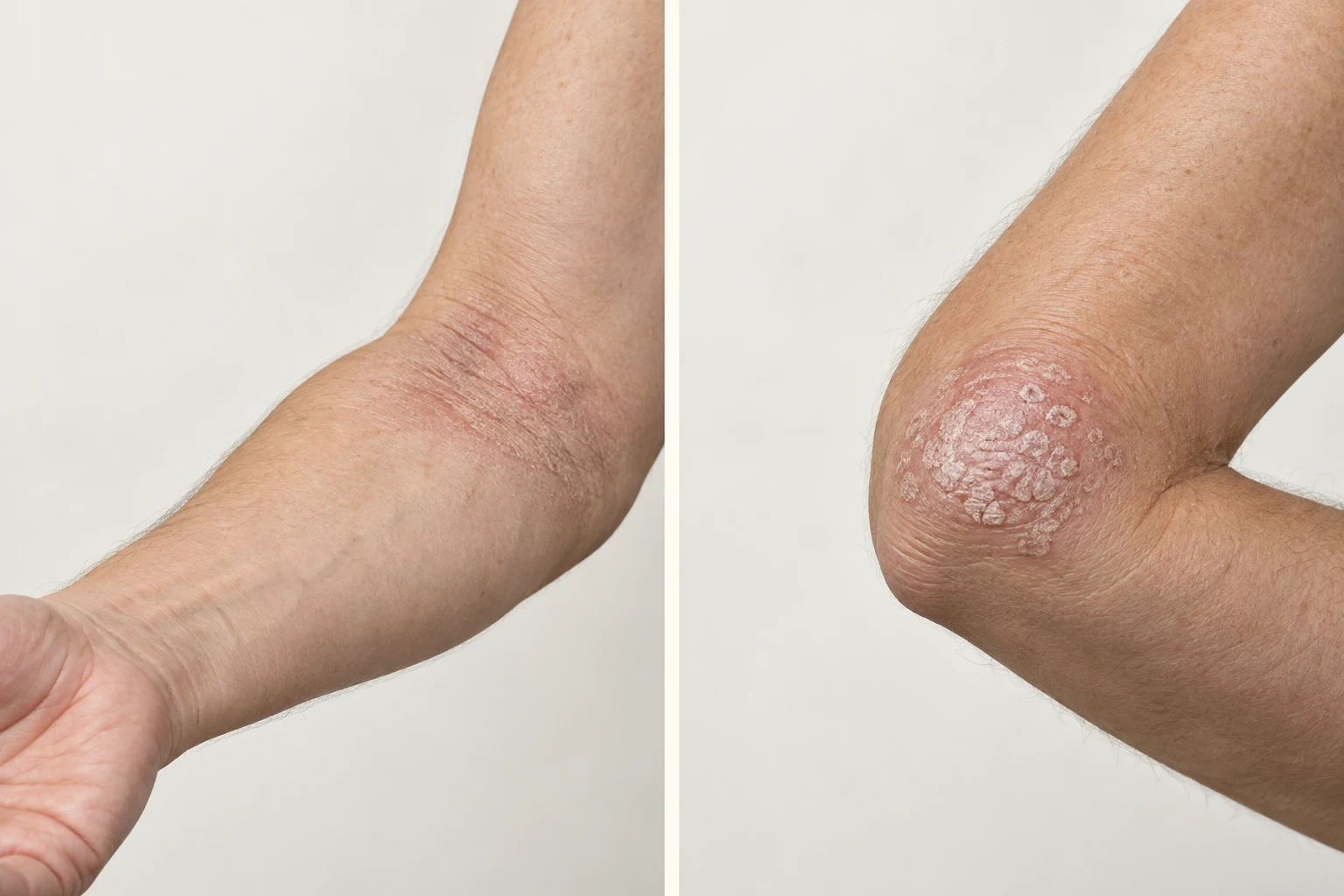
Eczema vs. Psoriasis: The 5-Minute Guide to Getting the Right Diagnosis
Feb 15, 2026 · 13 min read
Eczema
The 7 Types of Eczema: A Dermatologist's Complete Guide to Identifying and Treating Each
Feb 10, 2026 · 8 min read