
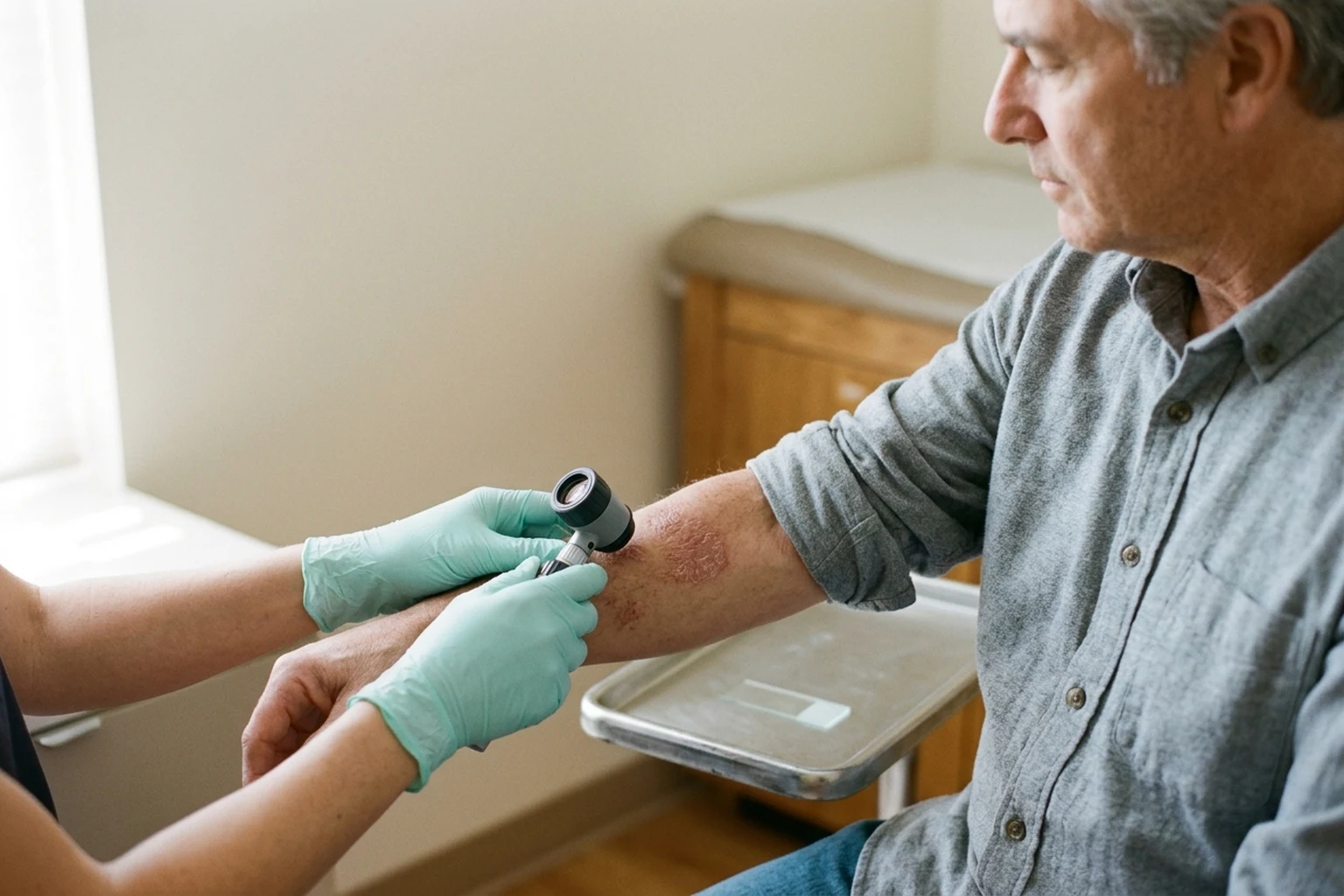
AI-generated image. Not an actual patient or treatment result.
Adult Eczema Worsening on Dupixent? When Dermatologists Biopsy for CTCL (Mycosis Fungoides)

Chief Medical Officer
If adult-onset "eczema" spreads, thickens, or flares harder after starting Dupixent (dupilumab), dermatologists pause to rule out early cutaneous T-cell lymphoma (CTCL), most commonly mycosis fungoides, using properly timed skin biopsies. Most people taking Dupixent for true atopic dermatitis do well and never have lymphoma. Still, dermatology centers nationwide have emphasized re-examining stubborn or unexpected adult rashes early, because catching a look-alike diagnosis changes the entire treatment plan (Hasan 2024; Liao 2025).
In this article
Why can early CTCL (mycosis fungoides) look exactly like adult eczema?
Mycosis fungoides begins with mature skin-homing T cells (marked by the surface protein CD4) accumulating slowly in the upper layers of the skin. In its early patch stage, those patches are pink, tan, or slightly scaly, itch persistently, and temporarily fade when someone applies triamcinolone or clobetasol cream. Even under a microscope, early specimens frequently show subtle inflammation that mimics ordinary allergic or atopic dermatitis, earning mycosis fungoides its reputation as dermatology's great imitator (Willemze 2019).
Two practical clues help separate typical lifelong eczema from a potential mimic:
- Age and history: Classic atopic dermatitis usually begins in infancy or childhood alongside asthma, seasonal allergies, or dry sensitive skin. New, persistent, widespread eczema starting after age 40 or 50 without childhood atopy deserves a wider differential diagnosis, including allergic contact dermatitis, drug eruptions, and early CTCL.
- Where the patches sit: Adult atopic dermatitis favors elbow creases, knee backs, hands, neck, and eyelids. Early mycosis fungoides classically prefers sun-protected ("bathing-trunk") skin across the buttocks, hips, lower trunk, and breasts, sometimes showing fine wrinkling, mottled pigment, and tiny visible blood vessels called poikiloderma.
Does Dupixent cause CTCL, or does it unmask missed lymphoma?
Researchers are actively studying both possibilities, and no study has proved that Dupixent causes cancer. Dupixent blocks interleukin-4 (IL-4) and interleukin-13 (IL-13) signaling, which drives classic atopic dermatitis. Published clinical data show an unmistakable signal that warrants vigilance without panic:
- Large database cohort (Hasan 2024): Comparing matched cohorts of atopic dermatitis patients in the TriNetX database, researchers found roughly a 4 times higher rate of CTCL diagnosis in patients who received dupilumab compared with those who never received dupilumab, with no elevation in other skin or blood cancers. Most diagnosed cases (27 of 41) were identified more than 1 year after starting dupilumab. The authors explicitly noted that database misclassification exists, baseline eczema severity could not be measured, and association does not prove cause and effect.
- Clinical case series (Espinosa 2020): Among 7 patients evaluated at a major academic center (4 treated for presumed eczema and 3 treated off-label for severe itch in known CTCL), 6 of 7 improved briefly for a median of 2 months on dupilumab before developing spreading plaques, worsening itch, or blood progression.
- Tertiary cancer center experience (Liao 2025): Follow-up cohort data from a specialized cutaneous lymphoma center reinforced that refractory adult "eczema" failing biologic therapies frequently represents previously unrecognized early-stage CTCL that becomes clinically obvious once IL-4 and IL-13 pathways are blocked.
The practical takeaway for patients is simple: whether pre-existing early CTCL is being unmasked or accelerated, a biopsy check before escalating or continuing failing biologic therapy is the safest move. Never stop Dupixent abruptly without speaking with your dermatologist, because stopping suddenly without a plan can worsen severe true eczema while you wait for an exam.
What red flags mean adult eczema needs a skin biopsy?
Most mild flares on Dupixent have benign causes such as facial redness (dupilumab-associated head and neck dermatitis), allergic contact dermatitis, or dry winter air. Ask an in-person dermatologist about a diagnostic biopsy if you notice any of the features below:
| Clinical clue | Typical benign eczema pattern | Red flag that warrants a biopsy evaluation |
|---|---|---|
| Onset age | Childhood onset or strong personal/family history of asthma and hay fever | New persistent widespread rash starting in midlife or older age without childhood eczema |
| Body locations | Inner elbows, behind knees, hands, eyelids, neck | Fixed asymmetric patches on sun-protected bathing-trunk sites (buttocks, hips, lower torso, breasts) |
| Response to Dupixent | Steady clearing of itch and plaques over 8 to 16 weeks (occasional localized facial redness) | Brief 1 to 2 month dip followed by spreading body plaques, thicker raised nodules, or body-wide redness (erythroderma) |
| Skin texture | Dry scaly patches or scratched thickened creases that move around | Cigarette-paper thinning, mottled brown/white pigment, fine red vessels (poikiloderma), or firm infiltrated plaques |
| General symptoms | Itchy skin without swollen glands or fevers | Swollen groin, armpit, or neck lymph nodes, drenching night sweats, unexplained fever, or unexplained weight loss |
Why must topical steroids pause before a CTCL skin biopsy?
One of the biggest reasons CTCL takes years to diagnose is a rushed biopsy taken on steroid-treated skin. Potent topical corticosteroids and ultraviolet phototherapy temporarily clear atypical lymphocytes out of the top skin layer. When a biopsy is performed the same week someone was applying clobetasol or triamcinolone, the dermatopathologist sees generic "spongiotic dermatitis" (eczema-like change) instead of the diagnostic T-cell infiltrate.
Dermatologists follow four practical rules to avoid false negatives:
- Wash out topical steroids and phototherapy for 2 to 4 weeks before biopsy whenever clinically safe, using bland fragrance-free ointment like plain petrolatum for comfort in the meantime.
- Sample the thickest, oldest, untreated plaque rather than a faint new pink edge.
- Take multiple biopsies from separate sites and plan repeat biopsies months later if suspicion persists after one equivocal report.
- Pair routine slides with special testing: dermatopathologists commonly add immunohistochemistry staining for T-cell surface protein markers (including CD2, CD3, CD4, CD5, CD7, CD8, and CD30) and T-cell receptor (TCR) gene rearrangement testing. Keep in mind that a clonal TCR result alone does not prove lymphoma, because benign inflammatory rashes can occasionally show a clone; diagnosis always combines exam findings, tissue appearance, and molecular results together (Olsen 2007).
What happens if early mycosis fungoides is diagnosed, and where does online care fit?
Hearing the word "lymphoma" understandably terrifies patients, yet early-stage mycosis fungoides behaves very differently from aggressive internal cancers. Under the International Society for Cutaneous Lymphomas (ISCL) staging system (Olsen 2007), Stage IA disease involves flat patches or thin plaques covering less than 10% of the body with no lymph node or blood involvement. Dermatologists typically control early-stage disease gently with skin-directed therapies such as prescription topical steroids, topical nitrogen mustard (mechlorethamine) gel, or narrowband ultraviolet B (NB-UVB) light therapy rather than systemic chemotherapy, and long-term survival in Stage IA closely matches peers without CTCL. More extensive plaques, tumors, blood involvement, or swollen nodes are co-managed at specialized cutaneous lymphoma centers.
Where online dermatology fits and where it stops: KindleeRx does not prescribe Dupixent, perform skin biopsies, or diagnose or manage CTCL. Any adult with worsening rash on Dupixent, new widespread midlife "eczema" without a clear cause, swollen lymph nodes, or body-wide redness needs an in-person evaluation with a board-certified dermatologist.
If you already have confirmed, straightforward mild-to-moderate atopic dermatitis and want convenient self-pay topical care without insurance hurdles, licensed clinicians (physician assistants and nurse practitioners working under a board-certified dermatologist's protocols) review your photos and history through the KindleeRx Eczema Regimen and reply in under 5 hours on average ($149 for the first 90-day automatic-refill order, then $149 every 90 days before coupons, including the $20 consultation fee, free shipping, and 90 days of messaging; or $181.25 one-time before coupons; steroid-free options are available; full refund if not prescribed; available in 44 states plus Washington, D.C., excluding Arkansas, Kansas, Maryland, Mississippi, Nebraska, and West Virginia). To understand how Dupixent compares with prescription creams for confirmed eczema, read our guides to Zoryve vs Dupixent for eczema and the seven types of eczema.
Important Information
KindleeRx provides online evaluation and prescription care for eligible patients with uncomplicated mild-to-moderate eczema, psoriasis, and toenail fungus. KindleeRx does not prescribe Dupixent, perform skin biopsies, or evaluate suspected skin cancer or cutaneous lymphoma. Compounded prescription medications offered through KindleeRx are prepared by licensed United States compounding pharmacies under a licensed prescriber's order; compounded medications are not approved by the Food and Drug Administration (FDA) and are not reviewed by the FDA for safety, effectiveness, or quality (FDA compounding guidance). KindleeRx is not affiliated with Regeneron Pharmaceuticals or Sanofi (Dupixent). Eligibility is determined by a licensed clinician after reviewing your medical history and photos. Not all patients qualify. Individual results vary. This article is educational and is not medical advice.
Sources
- Hasan I, Parsons L, Duran S, Zinn Z. Dupilumab therapy for atopic dermatitis is associated with increased risk of cutaneous T cell lymphoma: A retrospective cohort study. Journal of the American Academy of Dermatology 2024.
- Espinosa ML, Nguyen MT, Aguirre AS, Martinez-Escala ME, Kim J, Walker CJ, et al. Progression of cutaneous T-cell lymphoma after dupilumab: Case review of 7 patients. Journal of the American Academy of Dermatology 2020.
- Liao V, Lavin L, Pulitzer MP, Stuver R, Geller S. Diagnosis of cutaneous T-cell lymphoma following exposure to biologic agents for atopic dermatitis: A retrospective cohort study from a single tertiary cancer center. Journal of the American Academy of Dermatology 2025.
- Willemze R, Cerroni L, Kempf W, Berti E, Facchetti F, Swerdlow SH, et al. The 2018 update of the World Health Organization and European Organization for Research and Treatment of Cancer (WHO-EORTC) classification for primary cutaneous lymphomas. Blood 2019.
- Olsen E, Vonderheid E, Pimpinelli N, Willemze R, Kim Y, Knobler R, et al. Revisions to the staging and classification of mycosis fungoides and Sézary syndrome (ISCL/EORTC). Blood 2007.
- Regeneron Pharmaceuticals and Sanofi. DUPIXENT (dupilumab) Injection Prescribing Information, revised April 2026. DailyMed.
- Food and Drug Administration. Understanding the Risks of Compounded Drugs.
Related Articles
Eczema
Zoryve vs Dupixent for Eczema: Cream vs Biologic Injection Compared
Nov 24, 2026 · 12 min read
Eczema
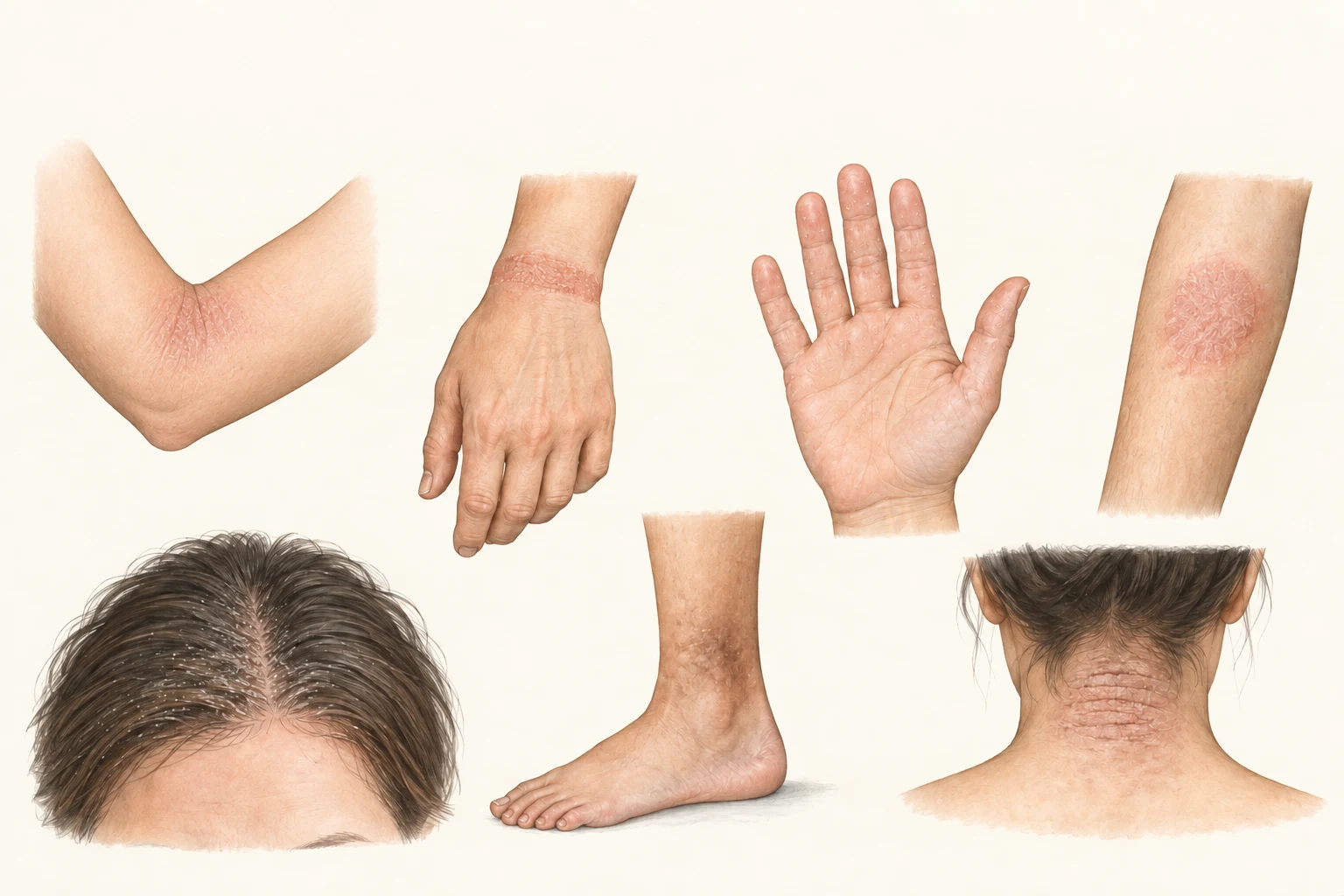
The 7 Types of Eczema: A Dermatologist's Complete Guide to Identifying and Treating Each
Feb 10, 2026 · 8 min read

Eczema
Topical Steroids for Eczema: Benefits, Safety, and the Rise of Steroid-Free Options
Mar 2, 2026 · 13 min read