
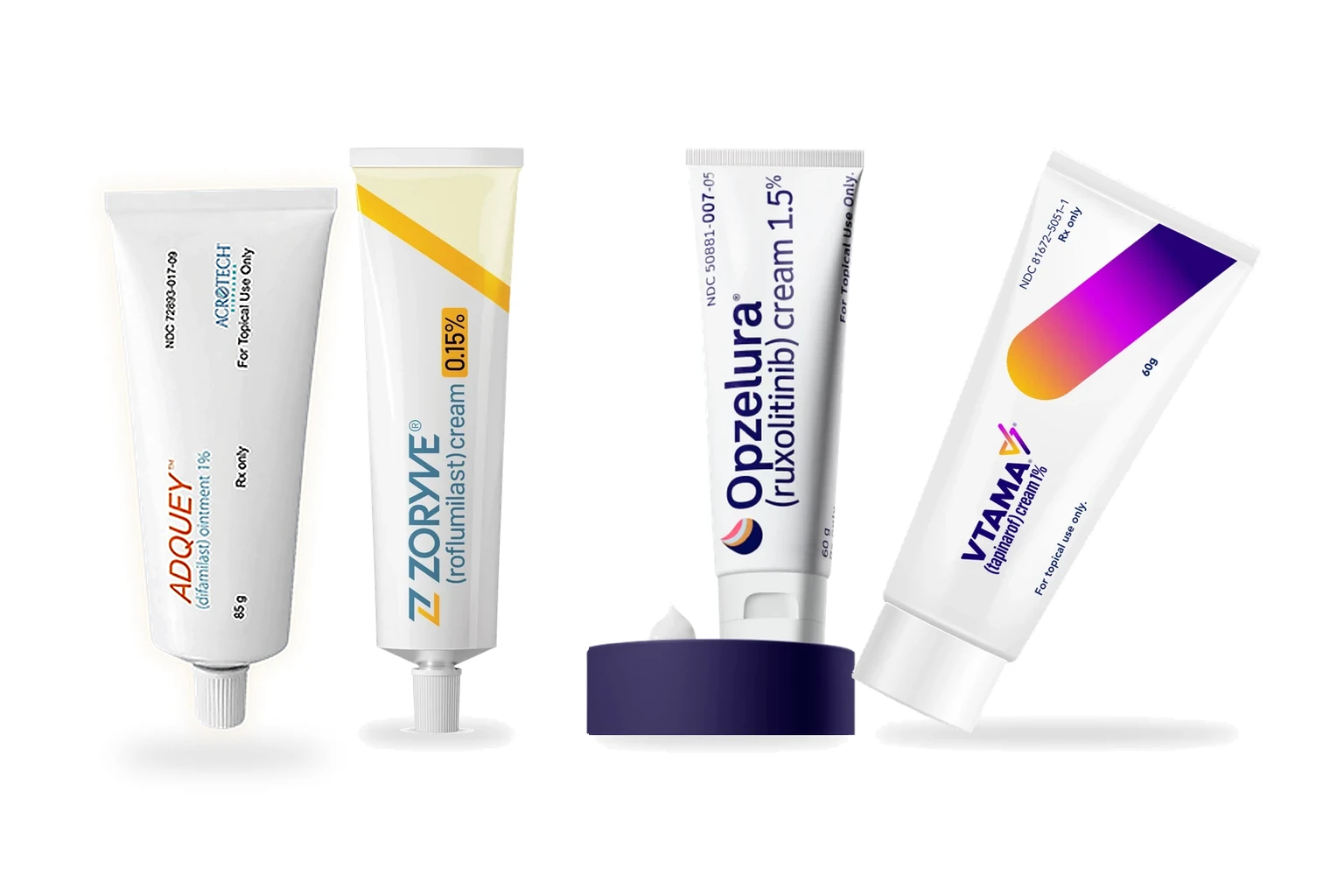
Product images shown for identification. Adquey (Acrotech Biopharma), Zoryve (Arcutis Biotherapeutics), Opzelura (Incyte), and Vtama (Organon) are trademarks of their respective owners. KindleeRx is not affiliated with or endorsed by these companies.
Adquey (Difamilast) vs Zoryve, Vtama and Opzelura: Comparing the 2026 Non-Steroid Eczema Topicals

Chief Medical Officer
Adquey (difamilast 1% ointment), approved by the FDA in February 2026, gives adults and children ages 2 and older a gentle, boxed-warning-free PDE4 ointment alongside Zoryve, Vtama, and Opzelura (FDA approval letter; Adquey label). No single steroid-free tube beats the others on every metric. Choosing the right one comes down to ointment versus cream feel, once-daily versus twice-daily habits, how much body surface area needs coverage, tolerance for boxed warnings, and what your insurance actually covers.
In this article
How does Adquey (difamilast) compare with Zoryve, Vtama, and Opzelura?
None of these four branded non-steroids has been tested head to head in a published Phase 3 trial. The efficacy numbers below come from separate studies with different patient ages, endpoints (Week 4 vs Week 8), and baseline severities, so treat them as each drug's own benchmark rather than a direct race.
| Product | Drug class & base | Ages, frequency & body area rule | Boxed warning? | Pivotal clear/almost clear (drug vs base) | Key label side effects |
|---|---|---|---|---|---|
| Adquey 1% (difamilast) | PDE4 inhibitor; ointment (Adquey label) | Mild-to-moderate, ages 2+; twice daily; no BSA cap on label | No | Week 4: 21% vs 3% (multinational); 38% vs 13% (ages 15+); 47% vs 18% (ages 2 to 14) | Nasopharyngitis 6% vs 4%; site reactions <1% in 4-week trials (burning/pain noted in 52-week open-label use) |
| Zoryve 0.15% / 0.05% (roflumilast) | PDE4 inhibitor; water-based cream (Zoryve label) | Mild-to-moderate, 0.15% ages 6+, 0.05% ages 2 to 5; once daily; no BSA cap | No | Week 4 (ages 6+): 32.0% vs 15.2% & 28.9% vs 12.0% (Simpson 2024) | Application site pain 1.5% vs 0.7%; contraindicated in Child-Pugh B/C liver impairment |
| Vtama 1% (tapinarof) | Aryl hydrocarbon receptor (AhR) agonist; cream (Vtama label) | Atopic dermatitis, ages 2+ (trials enrolled moderate-to-severe); once daily; no BSA cap | No | Week 8: 45% vs 14% & 46% vs 18%; itch drop ages 12+: 56% vs 34% & 53% vs 24% (Silverberg 2024) | Upper respiratory infection 12% vs 6%; folliculitis 9% vs 1% |
| Opzelura 1.5% (ruxolitinib) | Topical JAK1/JAK2 inhibitor; cream (Opzelura label) | Mild-to-moderate, ages 2+, non-immunocompromised, second-line; twice daily; ≤20% BSA, max 60 g/wk (ages 12+) or 60 g/2 wks (ages 2 to 11) | Yes (JAK class warning) | Week 8 (ages 12+): 53.8% vs 15.1% & 51.3% vs 7.6%; ages 2 to 11: 56.5% vs 10.8% (Papp 2021) | Nasopharyngitis 3% vs 1% (ages 12+); site reactions <1% (12+) and 5% vs 2% (ages 2 to 11); avoid with biologics/JAKs |
For a wider comparison that also includes older generic calcineurin inhibitors (tacrolimus and pimecrolimus) and crisaborole (Eucrisa), see our full non-steroid eczema creams comparison.
Why do Adquey trial clearing rates differ between the US and Japan studies?
Read Adquey's FDA label closely and you notice an unusual spread across its three efficacy studies (612 total participants):
- Trial 1 (United States, Australia, and Poland, ages 10+): A small dose-ranging trial (43 on Adquey vs 37 on vehicle) where 21% (9 of 43) achieved Week 4 IGA success versus 3% (1 of 37) on vehicle, and the face, neck, and head were excluded from the treated area (Adquey label).
- Trial 2 (Japan, ages 15+) and Trial 3 (Japan, ages 2 to 14): Larger Phase 3 trials originally conducted for Japan (where difamilast launched earlier under the name Moizerto), achieving 38% (70 of 182) vs 13% (23 of 182) in teens/adults and 47% (40 of 85) vs 18% (15 of 83) in children (Adquey label).
Notice the gap between active drug and plain ointment base stays surprisingly consistent across all three studies (roughly 18 to 29 percentage points above vehicle at Week 4). The main practical clinical takeaway is that Adquey delivers dependable mild-to-moderate PDE4 clearing similar in speed to Zoryve, wrapped in a rich petrolatum-style ointment base that locks moisture into cracked winter skin better than a light lotion, though some patients dislike a greasy feel on hands or clothing during the daytime.
Which 2026 non-steroid eczema topical stings the least or avoids a boxed warning?
Patients often quit steroid-free creams like tacrolimus or crisaborole (Eucrisa) during week one because open eczema fissures sting sharply on contact. All four 2026 leaders substantially lowered that barrier:
- Zero boxed warning: Adquey, Zoryve, and Vtama carry no FDA boxed warning and no 20% body surface area limit. Only Opzelura carries the FDA JAK-class boxed warning (covering serious infections, mortality, malignancy, major cardiovascular events, and blood clots, derived primarily from an oral JAK study in older rheumatoid arthritis patients, while noting non-melanoma skin cancers and blood clots also appeared in topical Opzelura trial follow-up) (Opzelura label).
- Lowest day-one burning: In controlled trials, application-site pain or burning remained below 1% in Adquey's 4-week studies (though open-label 52-week studies of 857 patients still documented rare discontinuations for burning, pain, or contact dermatitis), 1.5% vs 0.7% on Zoryve 0.15% cream, and below 1% on Opzelura in ages 12+ (5% vs 2% in ages 2 to 11).
- Watch folliculitis on Vtama: Vtama rarely stings, yet small pimple-like hair-follicle bumps (folliculitis) showed up in 9% (51 of 541) of eczema trial participants versus 1% (3 of 270) on vehicle (Vtama label). On hair-bearing legs or arms, PDE4 options (Adquey or Zoryve) avoid that bumpiness.
How much do Adquey, Zoryve, Vtama, and Opzelura cost without insurance?
Commercial insurance plans with manufacturer copay cards can bring eligible patients down to a zero copay at the counter, yet every one of these four branded tubes commands a steep cash price if you have a high deductible, no insurance, or a prior-authorization denial:
- Adquey 1% ointment (85 g tube): Cash pharmacy prices generally start around $1,124 to $1,315 per tube, with no generic equivalent available.
- Zoryve 0.15% cream (60 g tube): Retail cash prices typically run $950 to $1,263 per tube, with no generic available.
- Vtama 1% cream (60 g tube): Retail cash prices generally sit around $1,395 to $2,080 per tube, with no generic available.
- Opzelura 1.5% cream (60 g tube): Retail cash prices often reach $1,940 to $2,400+ per tube, with no generic available.
For uninsured or high-deductible patients comparing pharmacy costs, our eczema treatment without insurance guide breaks down generic prescriptions, manufacturer access rules, and self-pay options side by side.
How do you choose between a branded topical and a self-pay non-steroid cream?
Ask three quick questions before chasing a four-figure prior authorization:
- Do you have commercial insurance that covers a branded copay card cleanly? If yes, and you need heavy-duty itch relief on a limited area, Opzelura (short-term under dermatologist supervision) or once-daily Zoryve/Vtama or gentle Adquey ointment can work smoothly.
- Do you want a steroid-free topical without paying $1,000+ cash? KindleeRx does not prescribe brand-name Adquey, Zoryve, Vtama, or Opzelura. For eligible adults with mild-to-moderate eczema seeking predictable self-pay care, licensed clinicians (physician assistants and nurse practitioners working under a board-certified dermatologist's protocols) review your skin photos and history online and reply in under 5 hours on average.
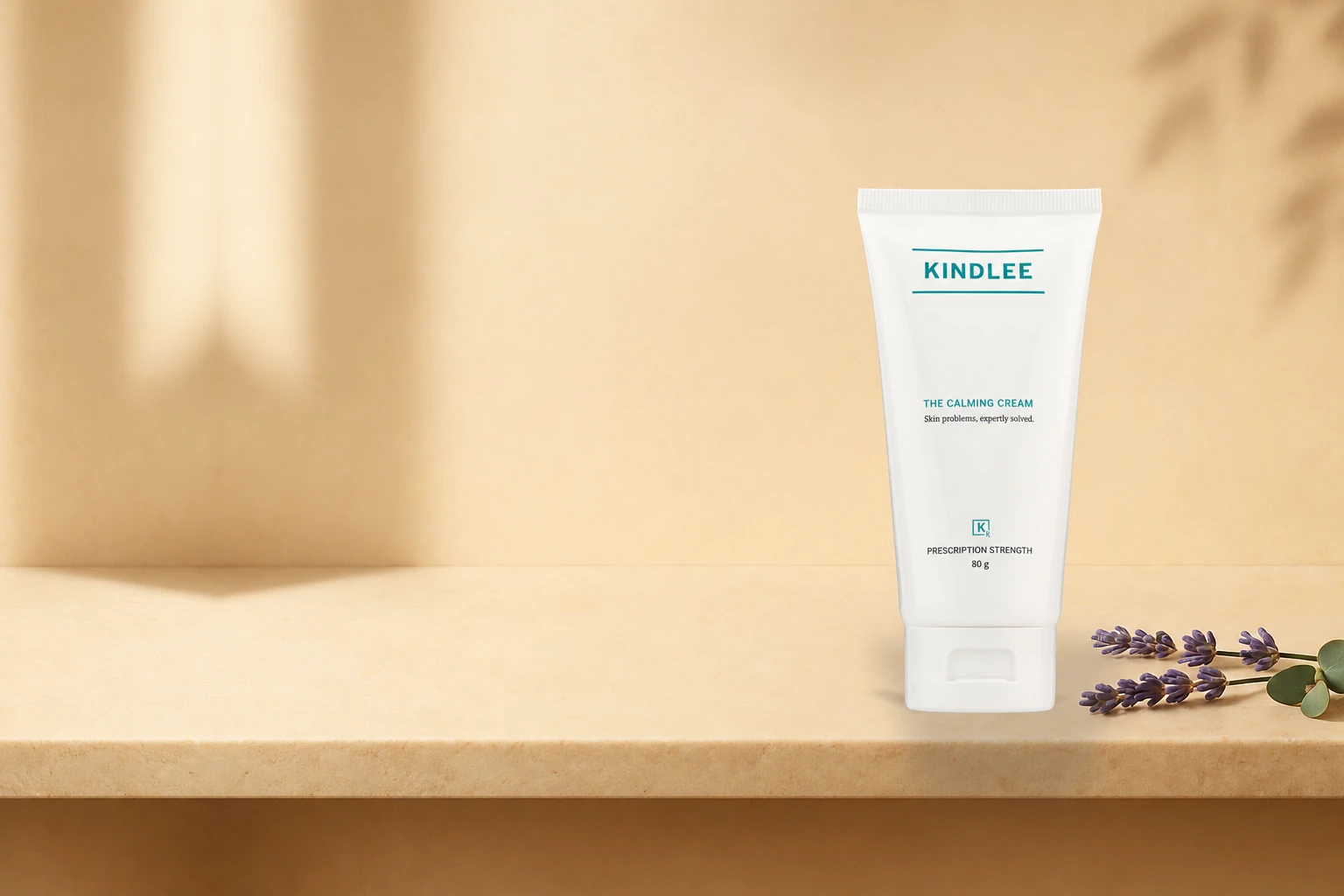
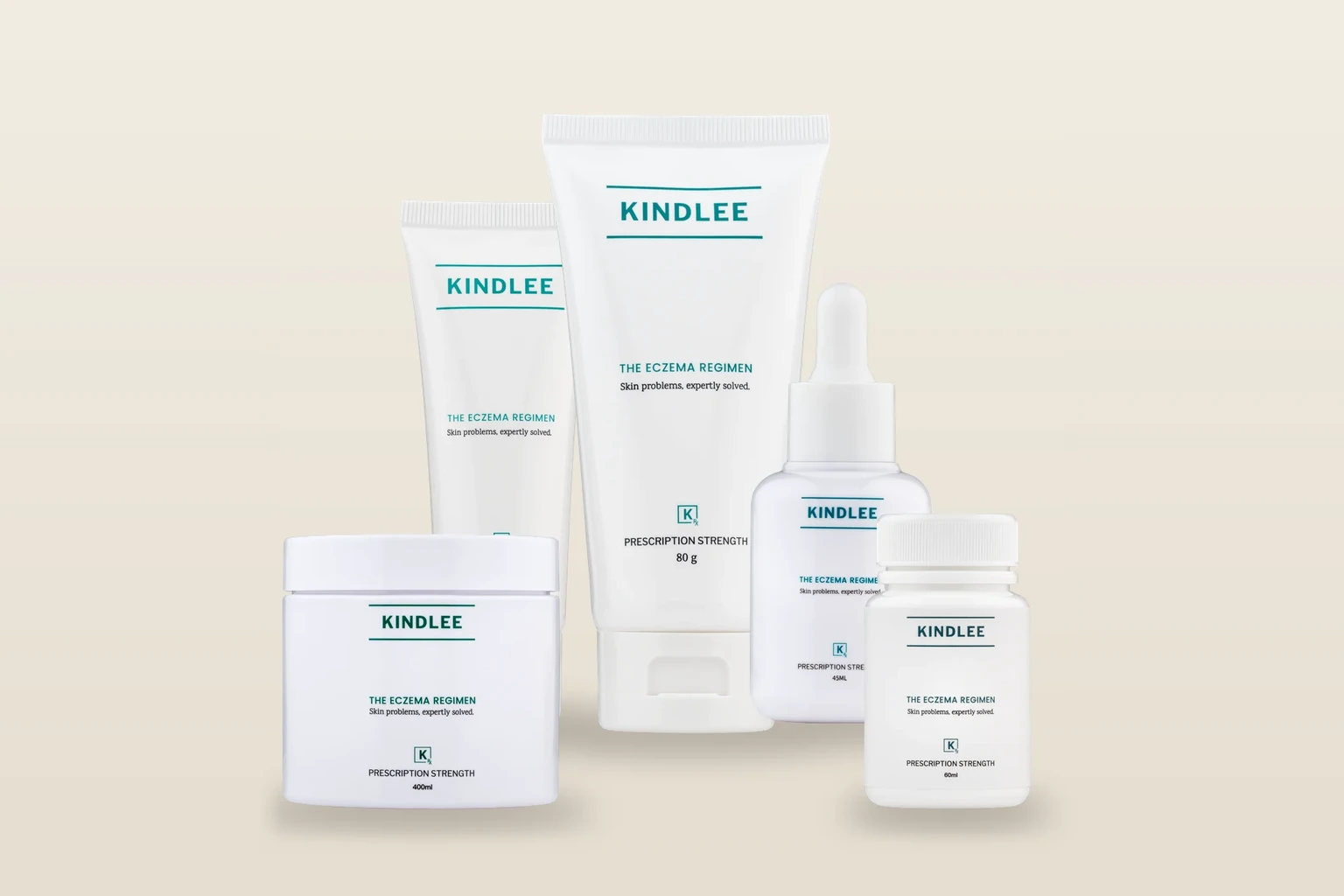
- Where KindleeRx's compounded options fit: When appropriate, clinicians may prescribe the KindleeRx Calming Cream (a compounded prescription formula combining roflumilast 0.2% and calamine 5% in an 80 g tube, once daily) for $70 on the first 90-day automatic-refill order, then $70 every 90 days before coupons (including the $20 consultation fee, free shipping, and 90 days of clinician messaging), or $80 one-time before coupons. For multi-site flares needing two prescriptions, the Eczema Regimen includes two clinician-selected prescriptions (steroid-free choices available) for $149 on the first 90-day automatic-refill order, then $149 every 90 days before coupons (including the $20 consultation fee, free shipping, and 90 days of clinician messaging), or $181.25 one-time before coupons. Available in 44 states plus Washington, D.C. (excluding Arkansas, Kansas, Maryland, Mississippi, Nebraska, and West Virginia), with a full refund if treatment is not prescribed. Learn how compounded roflumilast differs from branded Zoryve in our compounded roflumilast cream breakdown.
Important Information
The KindleeRx Calming Cream is a compounded prescription medication containing roflumilast 0.2% and calamine 5%, prepared by a licensed United States compounding pharmacy under a licensed prescriber's order. It is not Adquey, not Zoryve, not Vtama, not Opzelura, not a generic of any branded drug, and not an FDA-approved drug product. Compounded medications are not reviewed by the FDA for safety, effectiveness, or quality (FDA compounding guidance). KindleeRx is not affiliated with Acrotech Biopharma (Adquey), Arcutis Biotherapeutics (Zoryve), Organon (Vtama), or Incyte (Opzelura). Published clinical trial data reflect the branded products and studied concentrations alone, not any compounded formula. Eligibility is determined by a licensed clinician after reviewing your medical history and photos. Not all patients qualify. Individual results vary. This article is educational and is not medical advice.
Sources
- Food and Drug Administration. ADQUEY (difamilast) 1% Ointment NDA 219474 Approval Letter, February 12, 2026.
- Acrotech Biopharma. ADQUEY (difamilast) 1% Ointment Prescribing Information, revised February 2026. DailyMed.
- Arcutis Biotherapeutics. ZORYVE (roflumilast) Cream Prescribing Information, revised June 2026. DailyMed.
- Simpson EL, et al. INTEGUMENT-1 and INTEGUMENT-2 Trials of Roflumilast Cream 0.15% in Atopic Dermatitis. JAMA Dermatology 2024.
- Organon. VTAMA (tapinarof) 1% Cream Prescribing Information, revised May 2025 (DailyMed updated November 2026).
- Silverberg JI, et al. ADORING 1 and ADORING 2 Trials of Tapinarof Cream 1% in Atopic Dermatitis. Journal of the American Academy of Dermatology 2024.
- Incyte. OPZELURA (ruxolitinib) 1.5% Cream Prescribing Information, revised June 2026. DailyMed.
- Papp K, et al. TRuE-AD1 and TRuE-AD2 Trials of Ruxolitinib Cream in Atopic Dermatitis. Journal of the American Academy of Dermatology 2021.
- Food and Drug Administration. Understanding the Risks of Compounded Drugs.
Related Articles
Eczema
Zoryve vs Opzelura vs Vtama vs Eucrisa: Non-Steroid Eczema Creams Compared
Nov 19, 2026 · 13 min read
Eczema
I Got Tired of Watching Patients Walk Away From a $900 Cream. So I Built a $70 One.
Jun 13, 2026 · 8 min read
Eczema
Eczema Treatment Without Insurance: Self-Pay Costs, Prescriptions and Assistance
Nov 24, 2026 · 11 min read