AI-generated illustration. Not an actual patient or treatment result.
Why Is Eczema Itch Worse at Night, and What Stops It?

Chief Medical Officer
Eczema itch likely climbs at night as skin warms up, loses more water and has less natural cortisol, so the fix is to control the rash and keep skin cool and moisturized at bedtime. Sleep loss is common: a 2025 meta-analysis put sleep disorders at 43.4% of people with eczema (Zhang 2025). Oral antihistamines do little for the itch itself. A prescription cream that calms the eczema, applied consistently, is where I start.
In this article
Why does eczema itch more at night?
Three things shift in the evening: skin temperature rises as the body sheds heat, water loss through the skin increases, and cortisol, the body's natural corticosteroid, drops to its lowest level of the day (Lavery 2016). The review presents these as possible mechanisms, not proven causes. In 16 healthy adults measured every 2 hours, water loss and skin temperature followed a daily rhythm, and the researchers concluded that skin is more permeable in the evening and at night (Yosipovitch 1998). Heat matters most in practice. The American Academy of Dermatology (AAD) calls sweating and overheating the most common trigger of the itch-scratch cycle (AAD self-care guide), and the UK National Health Service (NHS) says being hot makes eczema itchier (NHS 2024).
How common is sleep loss from eczema?
Very common. A 2025 meta-analysis of 32 studies (85,921 people) found sleep disorders in 43.4% of people with eczema (Zhang 2025). In a US population survey, 40.7% of adults with eczema had at least 1 night of disturbed sleep in the past week, 9.5% had 5 to 7 such nights, and 79.7% reported at least some trouble sleeping in the past 3 days (Silverberg 2022). Children sleep about as long but sleep worse. In a UK study of 13,988 children followed to age 16, children with active eczema slept only 2 minutes a day less but more often woke at night or early, struggled to fall asleep or had nightmares, more so when it was severe (Ramirez 2019). Worse eczema tracked with worse sleep in the adult survey too (Silverberg 2022).
What stops eczema itching at night?
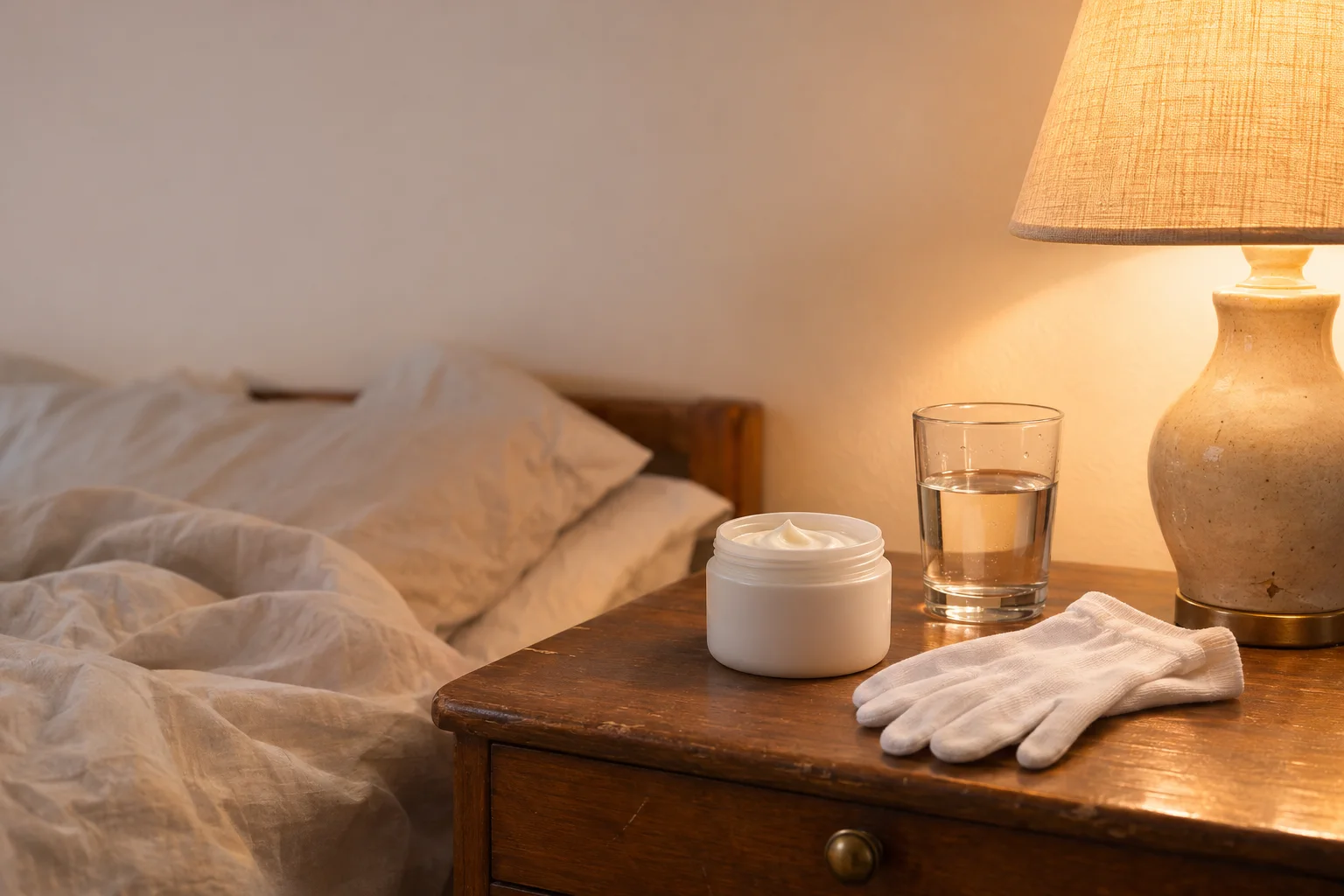
Treating the eczema comes first: in trials, prescription creams cut itch more than their base creams, while oral antihistamines cut it by under 1 point of 10. In the Zoryve cream 0.15% trials, itch scores improved more than with the base cream starting 24 hours after the first application (Simpson 2024). With Opzelura, in patients 12 and older whose itch started at 4 or more out of 10, 52.2% and 50.7% had at least a 4-point itch drop by week 8, vs 15.4% and 16.3% on the base cream (Opzelura label). Apply a prescription cream as labeled and keep it going until the rash is controlled. At night, the AAD advises cotton gloves to limit scratching during sleep and a bedroom that does not get too hot or too dry (AAD self-care guide). The National Eczema Association (NEA) suggests a cold compress or ice pack, since itchy skin is often warmer than normal (NEA itch guide).
What bedtime routine helps eczema itch?
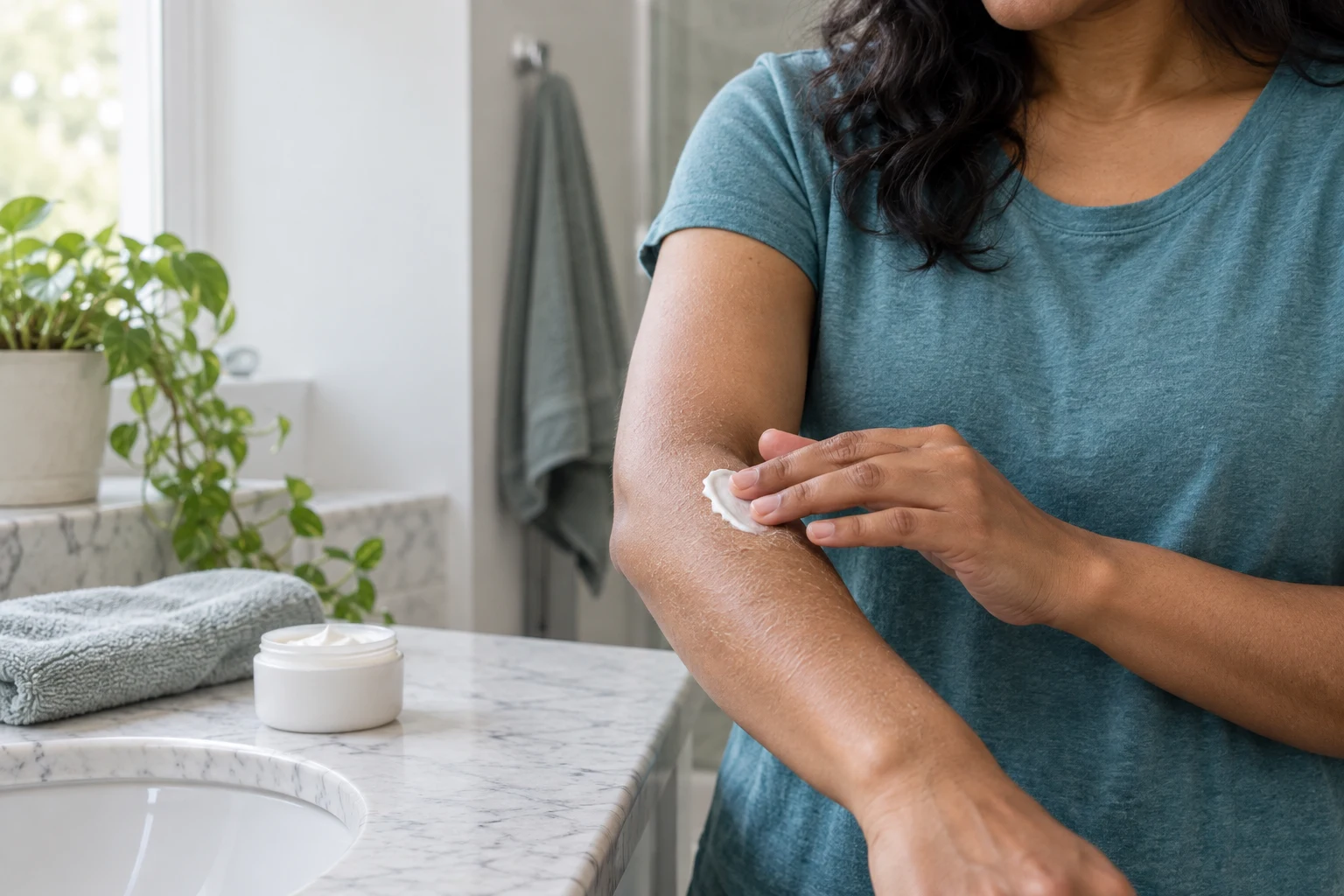
Moisturize before bed, keep the room cool, and keep the routine the same every night. The AAD advises moisturizing before bed, using an ointment if skin is dry, setting the thermostat to prevent overheating and running a humidifier when the air feels dry (AAD winter care). The NEA advises moisturizer within 4 minutes of leaving the bath or shower, at least once and ideally 3 to 4 times a day (NEA itch guide); the NHS says at least twice a day (NHS 2024). An NEA article by a pediatric sleep psychologist recommends a cool, dark, technology-free bedroom and the same 15 to 30 minute quiet routine each night (Meltzer 2025). For moderate to severe flares, the AAD guideline supports wet wraps (Eichenfield 2014), although a review of 6 small trials rated that evidence low quality (González-López 2017). My picks for products and bath timing are in the best moisturizers for eczema and bathing with eczema.
Do antihistamines help eczema itch?
Barely. A 2026 network meta-analysis of 47 trials (6,230 children and adults) found that adding an oral antihistamine cut itch by 0.89 points on a 0 to 10 scale, far below the 3 points patients notice; it may not improve sleep, and older sedating antihistamines probably impair thinking (Chu 2026). A Cochrane review of 25 trials found no consistent benefit as add-on therapy, with fexofenadine lowering itch by 0.25 points on a 0 to 8 scale (Matterne 2019). In 155 children with night itching, chlorpheniramine worked no better than placebo over 4 weeks (Munday 2002). The 2014 AAD guideline allows short, intermittent use of a sedating antihistamine for itch-driven sleep loss but not as a replacement for skin treatment, and does not recommend non-sedating ones unless hives or hay fever are also present (Sidbury 2014).
Does melatonin help eczema sleep?
It helps children fall asleep faster, and its effect on the rash is uncertain. In a crossover trial in 48 children, melatonin 3 mg nightly for 4 weeks cut the time to fall asleep by 21.4 minutes and lowered a 103-point eczema severity score by 9.1 points compared with placebo, with no side effects reported (Chang 2016). A 2026 meta-analysis of 3 pediatric trials confirmed faster sleep onset but found no significant change in total sleep time (Alghamdi 2026). The Chang trial ran 4 weeks per arm and gave no long-term safety data. I treat melatonin as a short-term aid for a child who cannot fall asleep, alongside treatment of the eczema itself.
Do anti-itch creams with pramoxine, menthol or doxepin work?
They give short-term relief on thin evidence. The Food and Drug Administration (FDA) over-the-counter monograph allows pramoxine at 0.5% to 1% and menthol at 0.1% to 1% as anti-itch ingredients and says to stop and get checked if itch lasts more than 7 days (FDA monograph M017). A ceramide cream with 1% pramoxine cut itch by 24.6% at 2 minutes and 58.0% at 8 hours, about the same as 1% hydrocortisone, in 66 people, with no placebo (Zirwas 2017). Doxepin 5% cream is labeled for adults for up to 8 days, and 22% of users became drowsy vs 2% on the base cream (doxepin cream label). The AAD guideline does not recommend topical antihistamines such as doxepin for eczema (Eichenfield 2014).
How does KindleeRx treat night-time eczema itch?
The KindleeRx eczema treatment program lists a compounded anti-itch lotion with doxepin 1%, pramoxine 1%, menthol 1% and colloidal oatmeal 1%. It contains doxepin, the drug in the 5% cream above at a lower strength; that label warns of drowsiness, cautions against driving, says alcohol and other sedating drugs can add to the drowsiness, and does not recommend it for children (doxepin cream label). Tell the clinician if a child would use it, or if you drive, drink alcohol or take sleep medicines. A licensed clinician decides whether it is appropriate. It is a compounded medication and is not FDA-approved; the FDA does not verify the safety, effectiveness or quality of compounded drugs before they are marketed (FDA 2025). Licensed clinicians (physician assistants and nurse practitioners working under a board-certified dermatologist's protocols) review each case online and reply in under 5 hours on average. A prescription is never guaranteed, and if treatment is not prescribed, the refund is full, including the consultation fee. For the full range of treatments, start with the complete eczema guide.
Sources
- Zhang N, et al. Archives of Dermatological Research 2025 (meta-analysis of sleep disorders in atopic dermatitis).
- Silverberg JI, et al. Dermatitis 2022 (US survey of sleep disturbance in adults with atopic dermatitis).
- Ramirez FD, et al. JAMA Pediatrics 2019 (UK birth cohort, atopic dermatitis and sleep in children).
- Yosipovitch G, et al. Journal of Investigative Dermatology 1998 (daily rhythm of skin water loss, pH and temperature).
- Lavery MJ, et al. Nocturnal pruritus: the battle for a peaceful night's sleep. International Journal of Molecular Sciences 2016.
- American Academy of Dermatology. Atopic dermatitis: self-care.
- American Academy of Dermatology. In winter, will my child need different eczema skin care?
- National Health Service. Atopic eczema. Reviewed September 2024.
- National Eczema Association. Ways to relieve itch from eczema.
- Meltzer L. Why people with eczema have trouble sleeping (and what to do about it). National Eczema Association, updated 2025.
- Simpson EL, et al. JAMA Dermatology 2024 (INTEGUMENT-1 and INTEGUMENT-2 trials of roflumilast cream 0.15%).
- Incyte. OPZELURA (ruxolitinib) cream prescribing information, revised June 2026. DailyMed.
- Eichenfield LF, et al. Guidelines of care for the management of atopic dermatitis, section 2. Journal of the American Academy of Dermatology 2014.
- González-López G, et al. British Journal of Dermatology 2017 (systematic review of wet-wrap therapy).
- Chu AWL, et al. BMJ 2026 (network meta-analysis of oral antihistamines in atopic dermatitis).
- Matterne U, et al. Cochrane Database of Systematic Reviews 2019 (oral antihistamines as add-on therapy for eczema).
- Munday J, et al. Dermatology 2002 (chlorpheniramine vs placebo in children with night itching).
- Sidbury R, et al. Guidelines of care for the management of atopic dermatitis, section 3. Journal of the American Academy of Dermatology 2014.
- Chang YS, et al. JAMA Pediatrics 2016 (melatonin crossover trial in children with atopic dermatitis).
- Alghamdi F, et al. Frontiers in Medicine 2026 (meta-analysis of melatonin trials in children with eczema).
- US Food and Drug Administration. OTC Monograph M017: External analgesic drug products for over-the-counter human use.
- Zirwas MJ, Barkovic S. Journal of Drugs in Dermatology 2017 (pramoxine ceramide cream vs hydrocortisone, split-body studies).
- Sun Pharmaceutical Industries. Doxepin hydrochloride cream 5% prescribing information. DailyMed.
- US Food and Drug Administration. Compounding and the FDA: questions and answers.