
If you or your child has eczema, you know the cycle all too well. Dry, irritated skin that itches relentlessly, scratching that makes it worse, and nights spent tossing and turning. Finding relief becomes a daily mission. Among the many remedies you'll hear about, two keep coming up in conversations with dermatologists: bleach baths and oatmeal baths.
These aren't new ideas. Medical professionals have recommended both for years, but do they actually work? And if so, how do you use them safely? In this article, we'll walk through what the research shows, how each bath works, and how to incorporate them into your eczema care routine. Therapeutic baths can soothe your skin, but for moderate or severe eczema, they're usually one piece of a larger treatment plan that may include prescription medications.
Bleach Baths for Eczema
The idea of adding bleach to your bath sounds alarming at first, but when diluted properly, a bleach bath contains about the same amount of chlorine as a swimming pool. Many eczema patients find real relief from this simple, inexpensive approach.
How bleach baths help your skin
Dermatologists originally recommended bleach baths because people with eczema tend to have higher levels of Staphylococcus aureus bacteria on their skin. About 70% of patients have this colonization on their eczema patches. The thinking was that bleach would kill these bacteria and reduce flares.
The reality turns out to be more interesting. Recent research shows that the dilute bleach concentrations used in baths (around 0.005%) probably don't kill bacteria directly. Instead, bleach appears to calm inflammation in the skin itself. Studies have found that dilute bleach can quiet down overactive immune signals and may even help strengthen the skin barrier. Many patients experience less itching and fewer flares with regular bleach baths, even if the exact mechanism isn't what we originally thought.
What the evidence shows
A comprehensive analysis of clinical trials found that bleach baths modestly improve eczema severity by roughly 22% compared to plain water baths. That may not sound dramatic, but for someone dealing with constant itching, even modest relief can meaningfully improve quality of life and sleep.
The American Academy of Dermatology includes bleach baths as a recommended add-on therapy for eczema, particularly for patients with moderate-to-severe symptoms or those prone to skin infections. They're not a cure-all, but they can be a valuable part of your overall approach.
Safety and precautions
When done correctly, bleach baths are quite safe for both children and adults. The key is proper dilution. You want to keep the dilution at the swimming-pool level, not stronger. Keep in mind that if you have severely cracked or raw skin, the bleach may sting, so you may want to wait until things calm down a bit before trying this. Always supervise children closely to prevent them from drinking the water or getting it in their eyes. Keep the bath from the neck down to protect eyes and mucous membranes. Use only plain, unscented household bleach. Avoid "splashless" formulas or those with added detergents and other ingredients that can irritate eczema-prone skin. If you notice your skin becoming drier or more irritated, reduce the frequency or use a bit less bleach.
How to take a bleach bath safely
Fill your bathtub with lukewarm water (not hot, which can aggravate eczema). For a full standard bathtub of about 40 gallons, add approximately half a cup of regular household bleach. For a half-full tub, use a quarter cup. If you're bathing a baby or toddler in a smaller tub of about 4 gallons, just a teaspoon or two is enough. Add the bleach after the tub is filled and stir the water to mix it evenly.
Soak for 5 to 10 minutes, making sure the affected skin is submerged. Don't go longer than 10-15 minutes. When you're done, rinse off with fresh lukewarm water to remove any residual bleach, then gently pat your skin dry with a soft towel — don't rub. Here's the crucial step: while your skin is still slightly damp, apply a thick layer of fragrance-free moisturizer everywhere. This "soak and seal" approach locks in the hydration from the bath.
Most dermatologists recommend starting with one to two bleach baths per week. Some patients with more severe eczema may benefit from up to three times weekly. Pay attention to how your skin responds and adjust accordingly.
Oatmeal Baths for Eczema
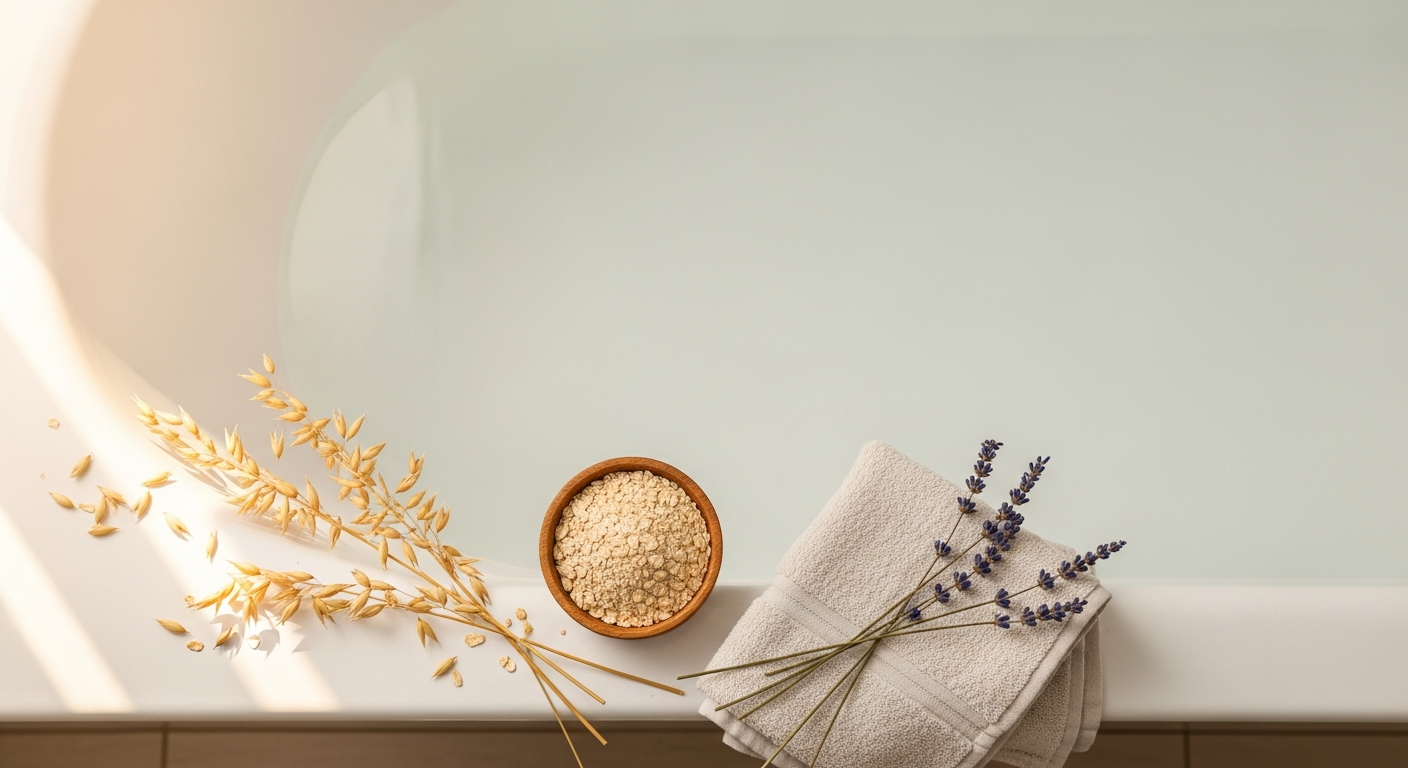
Colloidal oatmeal baths are a gentler option that's been used for generations to soothe itchy, irritated skin. Unlike bleach baths, which are mainly recommended for moderate-to-severe eczema, oatmeal baths can help anyone with dry, itchy skin.
How oatmeal helps your skin
Colloidal oatmeal (finely ground oats that dissolve in water) isn't just a folk remedy — it's actually recognized by the FDA as a skin protectant. Oats contain natural compounds called avenanthramides that have anti-inflammatory and anti-itch properties. These compounds help calm redness and irritation at the skin level.
Beyond fighting inflammation, oatmeal baths work in another important way. The starches and beta-glucans in oats create a protective film on the skin that helps hold moisture in. When you step out of an oatmeal bath, you'll notice your skin feels softer and more hydrated. This barrier effect helps protect against irritants and reduces water loss from the skin.
What the evidence shows
Clinical studies have confirmed that colloidal oatmeal improves eczema symptoms and itch. Research shows it can help restore the skin's natural barrier function and even support a healthier balance of bacteria on the skin. One of the biggest advantages is the excellent safety profile. Oatmeal baths are gentle enough for babies and can be used as often as needed during flares. Some families make daily oatmeal soaks part of their routine during bad stretches, which is considered perfectly safe.
Safety and precautions
Oatmeal baths have very few downsides. The main consideration is if you or your child has a known oat allergy. In that case, you should talk to your doctor before using any oatmeal products. Keep in mind that oatmeal can make the bathtub a bit slippery, so be careful getting in and out. As with any bath, keep the water lukewarm rather than hot.
How to take an oatmeal bath
You can buy pre-made colloidal oatmeal packets at any drugstore, or make your own by grinding about one cup of plain whole oats (not instant or flavored) into a very fine powder using a blender or coffee grinder. The powder should be fine enough to dissolve in water. Test a pinch in a glass of water, and if it mostly sinks or looks clumpy, grind it finer.
Fill the tub with lukewarm water and sprinkle in the colloidal oatmeal while the tap is running. The water will turn milky and feel silky. Soak for 10 to 15 minutes, gently rubbing the oat water onto particularly itchy areas. You don't need soap during an oatmeal bath. When you're done, you can do a quick rinse with clean water or simply pat dry. The slight film you feel on your skin is actually beneficial. As always, apply your moisturizer while skin is still slightly damp.
Oatmeal baths can be done several times a week, and daily baths are fine during acute flares. Many families find them to be a relaxing bedtime ritual that helps children (and adults) wind down and sleep better. For more guidance on natural and holistic approaches to eczema relief, including which botanical remedies have real evidence behind them, see our dedicated guide.
What About Other Bath Additives?
You may have heard about other things people add to baths for eczema — things like apple cider vinegar, Epsom salt, Dead Sea salt, or baking soda. Here's what the evidence actually shows:
Apple cider vinegar has been disappointing in clinical testing. Despite theories that it might help restore skin pH and fight bacteria, a study found that 73% of participants experienced skin irritation from dilute vinegar soaks, with no meaningful improvement in skin barrier function. Most dermatologists do not recommend vinegar baths for eczema.
Dead Sea salt has the most promising evidence among these alternatives. Studies have shown that bathing in solutions containing Dead Sea salt (which is unusually high in magnesium) can improve skin hydration and reduce redness. If you want to try salt baths, dissolve one to two cups in a full tub and rinse off afterward. Be aware that salt will sting on open cuts or raw skin. If your eczema is very active, this may not be a good option.
Epsom salt and baking soda are commonly suggested home remedies, but there's very little scientific evidence that they help eczema specifically. Some people find them soothing, while others notice no benefit. If you try baking soda, use only about a quarter cup per bath, and stop if you notice any increased dryness or irritation.
When Baths Aren't Enough: The Role of Prescription Treatment
Soothing baths and diligent moisturizing are essential parts of eczema care, but it's important to be realistic. For those with moderate or severe eczema, these measures alone won't be enough to control the condition. Eczema is an inflammatory disease, and sometimes you need medications that directly address that inflammation.
If your eczema is mild, excellent skincare habits like gentle cleansing, therapeutic baths, and consistent moisturizing may be all you need. Signs that you may benefit from prescription treatment include persistent redness and itching despite weeks of good skincare, eczema that disrupts your sleep or daily life, signs of infection like weeping or crusting, or needing to use over-the-counter hydrocortisone constantly just to stay comfortable. Keep in mind that factors like stress, diet, and allergies can also drive flares, so addressing those triggers alongside your bathing routine leads to better outcomes.
Topical corticosteroids have long been the mainstay of eczema treatment, and they work well for flares. However, concerns about long-term steroid use (skin thinning, stretch marks, rebound flares) have led to the development of newer options. Today there are effective steroid-free prescription creams that can be used safely on sensitive areas like the face and eyelids, and for longer periods without the typical steroid risks. One example is roflumilast cream, a newer non-steroid treatment that works by blocking inflammatory pathways in the skin. Patients often notice itch relief within the first day or two, and it's safe for use on delicate skin areas where you'd hesitate to use steroids long-term.
The key insight is that baths and prescription treatments work together. Bathing hydrates the skin and can enhance how well topical medications absorb. Moisturizing afterward seals everything in and targeted prescription treatments address the underlying inflammation that drives eczema. A complete eczema care plan often includes all of these elements.
Putting It All Together
Both bleach baths and oatmeal baths have earned their place in eczema care. Bleach baths can reduce inflammation and may help prevent flares and infections, particularly for those with more severe eczema or frequent bacterial issues. Oatmeal baths are a gentle, moisturizing way to soothe itchy skin that works for eczema of any severity. Used correctly, neither should worsen your condition, and many people find real relief from incorporating them into their routine.
Think of therapeutic baths as ways to comfort and protect your skin while you tackle eczema at its source. For mild cases, optimized bathing and moisturizing may be enough. For more persistent eczema, combining these practices with appropriate prescription treatment often yields the best results.
If you're struggling with eczema that isn't responding to over-the-counter care, it may be time to explore prescription options. KindleeRx offers convenient access to dermatologist-prescribed treatments, including steroid-free options like roflumilast cream, shipped directly to your door. Our providers can help you build a personalized regimen that works with your bathing routine, not against it.
Don't settle for a life of constant itching and irritation. Effective eczema management is possible, and it starts with understanding your options. Start your KindleeRx consultation now and receive your personalized treatment plan within 24 hours.
Sources
- Bakaa L, et al. Bleach baths for atopic dermatitis: A systematic review and meta-analysis. Annals of Allergy, Asthma & Immunology. 2022.
- Leung DYM, et al. Topical hypochlorite ameliorates NF-kB-mediated skin diseases in mice. Journal of Clinical Investigation. 2013.
- Sur R, et al. Avenanthramides, polyphenols from oats, exhibit anti-inflammatory and anti-itch activity. Archives of Dermatological Research. 2008.
- Capone K, et al. Effects of colloidal oatmeal topical atopic dermatitis cream on skin microbiome and skin barrier properties. Journal of Drugs in Dermatology. 2020.
- Luu LA, et al. Apple cider vinegar soaks do not alter the skin barrier integrity in atopic dermatitis. Pediatric Dermatology. 2019.
- Proksch E, et al. Bathing in a magnesium-rich Dead Sea salt solution improves skin barrier function. International Journal of Dermatology. 2005.
- American Academy of Dermatology. Guidelines of care for the management of atopic dermatitis. 2023-2025.
- U.S. Food and Drug Administration. Skin Protectant Drug Products for Over-the-Counter Human Use; Final Monograph. 2003.
- National Eczema Association. Bathing and Eczema. nationaleczema.org.
- Mayo Clinic. Atopic dermatitis (eczema) — Diagnosis and treatment. mayoclinic.org.