
Many adults in their 30s, 40s, and beyond notice a frustrating pattern: sleep becomes less restorative, recovery from workouts takes longer, and body fat accumulates in places it never used to, despite maintaining the same habits. These changes are not simply a matter of willpower or discipline. They are, in large part, driven by the natural decline in growth hormone (GH) production that begins around age 30 and accelerates with each passing decade.
Sermorelin peptide therapy targets this decline directly by stimulating the pituitary gland to restore more youthful patterns of growth hormone release. The three areas where patients consistently report the most noticeable improvements are sleep quality, physical recovery, and body composition.
The Growth Hormone and Sleep Connection
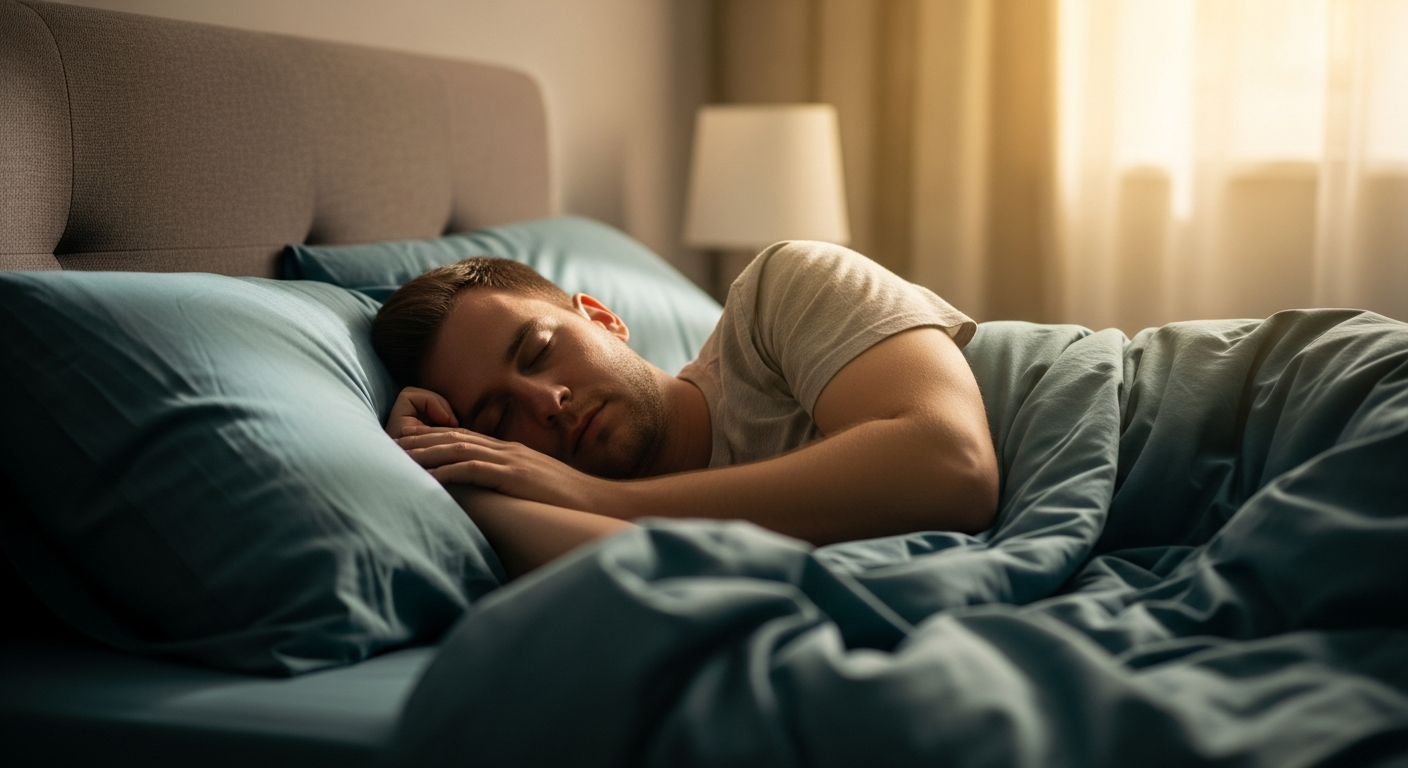
Growth hormone and sleep are deeply interconnected, and the relationship runs in both directions. Approximately 70% to 80% of daily growth hormone secretion occurs during slow-wave sleep (also called deep sleep or Stage 3 NREM sleep). This is the most physically restorative phase of sleep, when the body performs critical maintenance: repairing damaged tissue, consolidating memories, clearing metabolic waste from the brain, and regulating immune function.
As growth hormone production declines with age, slow-wave sleep also diminishes. This creates a vicious cycle: less GH leads to less deep sleep, and less deep sleep further reduces GH secretion. By age 50, most adults spend 60% less time in deep sleep compared to their 20s.
How Sermorelin Breaks the Cycle
Sermorelin is typically administered before bedtime specifically because of this GH-sleep relationship. By stimulating GHRH receptors on the pituitary gland at the time when the body is naturally primed for GH release, sermorelin enhances the amplitude and duration of the growth hormone pulse that occurs during deep sleep.
Clinical research has demonstrated that GHRH administration increases both the amount and quality of slow-wave sleep in older adults. In a study published in the Journal of Clinical Endocrinology and Metabolism, nightly GHRH injections significantly increased slow-wave sleep duration in healthy older men, restoring a more youthful sleep architecture.
What Patients Actually Experience
Improved sleep is typically the first benefit patients notice, often within the first 1 to 3 weeks of therapy. Common reports include:
- Falling asleep faster with less tossing and turning
- Sleeping through the night with fewer awakenings
- Waking feeling genuinely refreshed rather than groggy
- Vivid, more memorable dreams (a marker of improved sleep cycling)
- Less reliance on sleep aids or supplements like melatonin
- Improved daytime alertness and mental clarity
These sleep improvements are not just subjectively felt. They reflect measurable changes in sleep architecture that have downstream effects on virtually every aspect of health.
Recovery: Why You Heal Slower as You Age (and How Sermorelin Helps)
Recovery, whether from a hard workout, a minor injury, or even a stressful week, depends heavily on growth hormone. GH and its downstream mediator, IGF-1, are among the most important anabolic signals in the body. They drive:
- Muscle protein synthesis: The process of repairing and building muscle tissue after exercise-induced microdamage
- Collagen production: Repair and strengthening of tendons, ligaments, and connective tissue
- Glycogen replenishment: Restoring muscle energy stores after exercise
- Inflammation modulation: Regulating the inflammatory response that occurs after tissue damage
- Immune function: Supporting the immune cells that clear damaged tissue and fight infection
When GH levels are optimal, recovery happens efficiently. Muscles rebuild stronger, joints feel less stiff, and you can train again sooner with less soreness. When GH levels decline, each of these processes slows, leading to the prolonged recovery times and increased susceptibility to overuse injuries that many aging athletes and active adults experience.
The Sermorelin Effect on Recovery
By restoring more physiological levels of growth hormone, sermorelin supports faster and more complete recovery. Patients typically notice:
- Reduced delayed-onset muscle soreness (DOMS) after intense training
- Faster resolution of minor aches and joint stiffness
- Improved tolerance for higher training volumes and frequencies
- Better resilience to physical and mental stress
- Quicker healing from minor injuries and cuts
These effects become particularly apparent in the 4 to 8 week range after starting therapy, as sustained GH optimization translates into measurable tissue-level changes.
A Note for Active Adults and Athletes
Sermorelin is especially compelling for individuals who maintain an active lifestyle but are noticing that their body no longer keeps up with their ambitions. The goal is not to achieve supraphysiological growth hormone levels (as with synthetic HGH), but to restore the recovery capacity that has been lost through normal aging. Combined with proper nutrition, progressive training, and adequate sleep, sermorelin can help active adults continue performing at a high level well into middle age and beyond.
Body Composition: Shifting the Balance Back
One of the most frustrating aspects of aging is the gradual shift in body composition: lean muscle mass decreases while body fat, particularly visceral abdominal fat, increases. This happens even in people who maintain consistent exercise and dietary habits, because the hormonal environment that supported a lean physique in younger years has changed.
Growth hormone is a key driver of body composition through two primary mechanisms:
Fat Metabolism
Growth hormone is one of the most potent lipolytic (fat-burning) hormones in the body. It stimulates the breakdown of stored triglycerides in fat cells and promotes the use of free fatty acids as fuel. When GH levels decline, the body becomes less efficient at mobilizing and burning fat, leading to gradual fat accumulation, particularly in the abdominal region.
Visceral fat (the fat surrounding internal organs) is especially responsive to growth hormone. This is significant because visceral fat is the most metabolically dangerous type of fat, strongly associated with insulin resistance, cardiovascular disease, and systemic inflammation.
Lean Muscle Preservation
Growth hormone stimulates muscle protein synthesis through IGF-1 and also promotes the uptake of amino acids into muscle cells. As GH declines, the rate of muscle protein breakdown begins to outpace synthesis, leading to gradual loss of lean mass. This process, called sarcopenia, accelerates after age 40 and is a major contributor to decreased metabolism, reduced strength, and increased fall risk in older adults.
What Sermorelin Does for Body Composition
By optimizing growth hormone levels, sermorelin helps shift the body's metabolic balance back toward fat loss and muscle preservation. Clinical and observational data suggest:
- Reduction in visceral abdominal fat, often measurable within 3 to 4 months
- Preservation or modest increases in lean muscle mass, particularly when combined with resistance training
- Improved metabolic rate due to maintained lean tissue
- Better insulin sensitivity, which further supports healthy body composition
- Improved skin quality and thickness due to enhanced collagen synthesis
It is important to note that sermorelin is not a weight loss medication. The body composition changes are gradual and are most pronounced when therapy is combined with regular exercise (especially resistance training) and a diet adequate in protein. Patients who are sedentary or consuming a poor diet will see significantly less benefit.
Bringing It All Together
Sleep, recovery, and body composition are not independent variables. They are deeply interconnected, and growth hormone sits at the center of that intersection:
- Better sleep leads to more GH release and better recovery
- Better recovery allows for more consistent, productive exercise
- More productive exercise stimulates additional GH release and improves body composition
- Improved body composition supports better metabolic health, which enhances sleep quality
Sermorelin therapy initiates a positive feedback loop. By addressing the hormonal decline that undermines all three of these pillars, it can help restore a virtuous cycle of better sleep, faster recovery, and healthier body composition.
When to Consider Sermorelin Therapy
If you are experiencing progressive difficulty with sleep, recovery, or body composition that does not respond to lifestyle changes alone, the underlying cause may be hormonal. A simple IGF-1 blood test can provide insight into your current growth hormone status and help determine whether sermorelin therapy is appropriate.
At KindleeRX, our clinicians take a comprehensive approach. We evaluate your lab work, health history, and goals to create a personalized treatment plan. If sermorelin is right for you, we provide the medication, injection training, and ongoing monitoring to help you feel and perform your best.
Frequently Asked Questions
How soon will I notice better sleep on sermorelin? Most patients report improved sleep quality within the first 1 to 3 weeks. Falling asleep faster and waking more refreshed are typically the earliest changes.
Do I need to exercise while on sermorelin? You do not need to exercise for sermorelin to improve your sleep and energy. However, the body composition benefits are significantly greater when combined with regular exercise, particularly resistance training. Exercise and sermorelin have a synergistic relationship.
Can sermorelin replace HGH? For most adults seeking to optimize age-related GH decline, sermorelin is preferred over synthetic HGH. It is safer, legal without controlled substance restrictions, and produces a more physiological pattern of growth hormone release. Synthetic HGH is generally reserved for diagnosed clinical GH deficiency under endocrinologist supervision.
Sources
- Van Cauter E, et al. Age-related changes in slow wave sleep and REM sleep and relationship with growth hormone and cortisol levels. JAMA. 2000;284(7):861-868.
- Vittone J, et al. Effects of single nightly injections of GHRH on pulsatile GH secretion and sleep EEG in aging men. J Clin Endocrinol Metab. 1997;82(6):1819-1824.
- Rudman D, et al. Effects of human growth hormone in men over 60 years old. N Engl J Med. 1990;323(1):1-6.
- Bartke A, et al. GH and ageing: pitfalls and new insights. Best Pract Res Clin Endocrinol Metab. 2017;31(1):113-125.