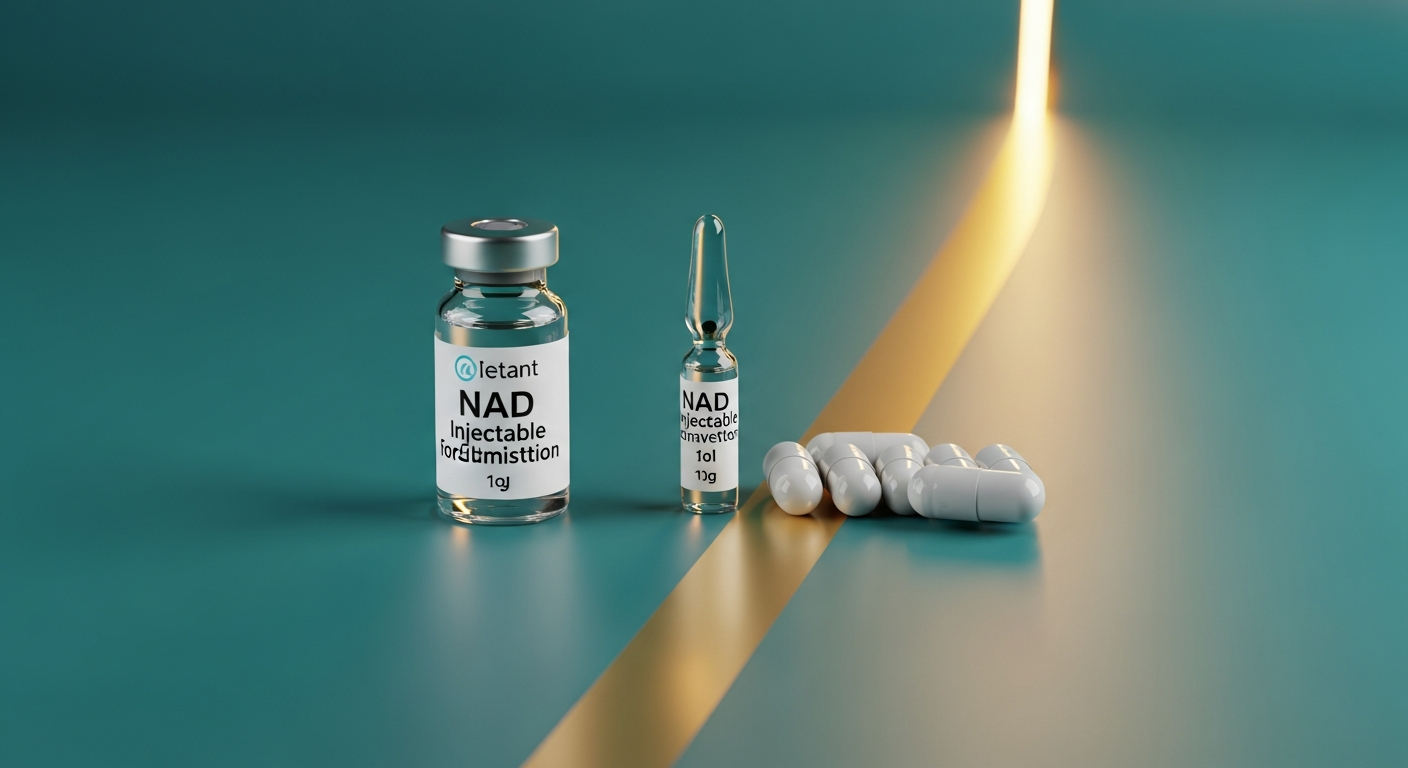

Growth hormone (GH) plays a central role in body composition, recovery, sleep quality, and overall vitality throughout adulthood. After age 30, growth hormone production declines by roughly 14% per decade, contributing to increased body fat, decreased muscle mass, slower recovery, reduced energy, and disrupted sleep. Sermorelin peptide therapy offers a way to address this decline by stimulating your body's own natural growth hormone production rather than replacing it with synthetic HGH.
What Is Sermorelin?
Sermorelin is a synthetic peptide consisting of the first 29 amino acids of growth hormone-releasing hormone (GHRH), the natural signal your brain uses to tell the pituitary gland to produce and release growth hormone. By mimicking this natural signal, sermorelin stimulates the pituitary gland to increase its own GH production in a physiologically regulated manner.
This distinction is critical. Unlike synthetic human growth hormone (HGH), which introduces an external supply of growth hormone and bypasses the body's regulatory feedback loops, sermorelin works within the body's existing control system. The pituitary gland retains its ability to regulate how much growth hormone is released, which significantly reduces the risk of excessive GH levels and their associated side effects.
Sermorelin was originally FDA-approved in 1997 for diagnosing and treating growth hormone deficiency in children. While its commercial brand name product was discontinued, the peptide itself remains available through compounding pharmacies for off-label adult use under clinician supervision.
How Sermorelin Works in the Body
When sermorelin is administered (typically as a subcutaneous injection), it binds to GHRH receptors on the pituitary gland and triggers a pulsatile release of growth hormone. This mimics the natural pattern of GH secretion, which occurs primarily during deep sleep and after exercise.
The growth hormone released by the pituitary in response to sermorelin then stimulates the liver to produce insulin-like growth factor 1 (IGF-1), which mediates many of GH's beneficial effects throughout the body. These include:
- Protein synthesis and muscle repair: IGF-1 stimulates muscle protein synthesis, supporting lean muscle development and faster recovery from exercise or injury
- Fat metabolism: Growth hormone promotes lipolysis (the breakdown of stored fat) and shifts the body's energy utilization toward fat oxidation
- Bone density maintenance: IGF-1 stimulates osteoblast activity, which helps maintain bone mineral density
- Collagen synthesis: GH and IGF-1 support connective tissue health, skin elasticity, and wound healing
- Sleep architecture: Growth hormone secretion is closely tied to slow-wave (deep) sleep, and optimizing GH levels can improve sleep quality
Sermorelin vs. Synthetic HGH: Why the Difference Matters
The distinction between sermorelin and synthetic HGH is not just academic. It has practical implications for safety, legality, and clinical outcomes.
Synthetic HGH introduces a fixed dose of growth hormone directly into the body, bypassing the pituitary gland entirely. At supraphysiological doses, this can cause side effects including joint pain, fluid retention, carpal tunnel syndrome, insulin resistance, and potentially increase the risk of certain cancers. HGH is also a controlled substance with strict prescribing regulations.
Sermorelin stimulates the pituitary to produce GH within its natural capacity. Because the pituitary has built-in negative feedback mechanisms, sermorelin is unlikely to cause excessive GH levels. The result is a more physiological, pulsatile pattern of growth hormone release that resembles what a younger, healthier body produces naturally. Sermorelin is not a controlled substance, though it does require a prescription.
Who Benefits from Sermorelin Therapy?
Sermorelin therapy is generally appropriate for adults who are experiencing symptoms consistent with age-related growth hormone decline. Common indicators include:
- Progressive increase in abdominal fat despite consistent diet and exercise
- Decreased lean muscle mass or difficulty building muscle
- Slower recovery from workouts, injuries, or illness
- Poor sleep quality, particularly difficulty achieving deep, restorative sleep
- Reduced energy, motivation, or mental clarity
- Thinning skin, slower wound healing, or increased wrinkles
Sermorelin is not appropriate for everyone. It should not be used by patients with active malignancies, untreated hypothyroidism, or during pregnancy. A thorough clinical evaluation, including baseline lab work (IGF-1, metabolic panel, thyroid function), is necessary before starting therapy.
What Does a Typical Sermorelin Protocol Look Like?
Dosing
Sermorelin is administered as a subcutaneous injection, typically in the abdominal area or upper thigh. Most protocols call for daily injections, usually given before bedtime to coincide with the body's natural peak in growth hormone secretion during sleep.
Starting doses typically range from 200 to 300 mcg per day, with adjustments based on clinical response and IGF-1 levels. Some clinicians use a 5-days-on, 2-days-off schedule to prevent receptor desensitization, while others prescribe daily administration. Your clinician will determine the optimal protocol based on your individual needs.
Timeline of Expected Results
Results from sermorelin therapy develop gradually, as the body ramps up its natural GH production over time:
- Weeks 1 to 4: Improved sleep quality is often the first noticeable change. Patients frequently report falling asleep more easily, sleeping more deeply, and waking feeling more refreshed.
- Weeks 4 to 8: Increased energy, improved recovery from exercise, and enhanced mental clarity. Some patients notice improved skin quality.
- Months 2 to 4: Measurable changes in body composition begin to appear, including reduced abdominal fat and increased lean muscle mass, particularly when combined with regular exercise and adequate protein intake.
- Months 4 to 6: More significant body composition changes, improved exercise performance, and consolidated improvements in sleep, energy, and recovery.
Monitoring
Regular follow-up is essential during sermorelin therapy. Your clinician will monitor IGF-1 levels (the primary biomarker for growth hormone activity), metabolic markers, and your clinical response to ensure optimal dosing and safety. Lab work is typically checked at baseline, 6 to 8 weeks after starting therapy, and periodically thereafter.
Lifestyle Factors That Enhance Sermorelin's Effects
Sermorelin works best as part of a comprehensive health optimization strategy. The following lifestyle factors significantly amplify its benefits:
Exercise
Resistance training and high-intensity interval training (HIIT) naturally stimulate growth hormone release. When combined with sermorelin, the GH response to exercise is enhanced, creating a synergistic effect on muscle growth and fat loss. Aim for at least 3 to 4 sessions of resistance training per week.
Nutrition
Adequate protein intake (0.7 to 1.0 grams per pound of body weight daily) is essential for muscle protein synthesis. Minimizing refined carbohydrates and processed foods helps maintain insulin sensitivity, which is important because insulin and growth hormone have an inverse relationship. Elevated insulin levels suppress GH release.
Sleep
Because sermorelin stimulates GH release during sleep, optimizing your sleep environment and habits is critical. Aim for 7 to 9 hours in a cool, dark room. Avoid screens for 30 to 60 minutes before bed, and maintain a consistent sleep schedule.
Fasting
Brief fasting periods (12 to 16 hours overnight) can enhance growth hormone secretion. This aligns with the recommendation to take sermorelin before bed on an empty stomach, which avoids the GH-suppressing effect of elevated insulin from a recent meal.
When to Consider Sermorelin Therapy
If you are noticing the gradual effects of aging on your body composition, energy, recovery, or sleep quality, and you want to address these changes at a hormonal level without resorting to synthetic HGH, sermorelin peptide therapy is worth exploring.
At KindleeRX, our clinicians provide a comprehensive evaluation that includes lab work, medical history review, and a discussion of your health goals. If sermorelin is appropriate for you, we provide ongoing monitoring and dose optimization to help you achieve the best possible results.
Frequently Asked Questions
Is sermorelin legal? Yes. Sermorelin is a legal prescription medication available through compounding pharmacies. It is not a controlled substance. However, it does require a prescription from a licensed clinician.
How long should I use sermorelin? Most patients use sermorelin for 3 to 6 months initially, followed by reassessment. Some patients continue therapy long-term, while others cycle on and off. Your clinician will recommend a plan based on your response and goals.
Does sermorelin have side effects? Side effects are generally mild and may include injection site redness or irritation, headache, flushing, or dizziness. These are typically transient and resolve within the first few weeks. Because sermorelin works within the body's feedback system, the risk of serious GH-related side effects is significantly lower than with synthetic HGH.
Will sermorelin show up on a drug test? Sermorelin is not a substance that standard drug tests screen for. However, if you are subject to athletic testing governed by WADA or similar organizations, you should disclose any peptide use to the relevant authority.
Sources
- Merriam GR, et al. Growth hormone-releasing hormone in normal aging. Endocrinol Metab Clin North Am. 2013;42(2):187-196.
- Corpas E, et al. Human growth hormone and human aging. Endocr Rev. 1993;14(1):20-39.
- Walker RF. Sermorelin: a better approach to management of adult-onset growth hormone insufficiency. Clin Interv Aging. 2006;1(4):307-308.
- Vittone J, et al. Effects of single nightly injections of GHRH on pulsatile GH secretion and sleep EEG in aging men. J Clin Endocrinol Metab. 1997;82(6):1819-1824.